
SOLUTIONPowered Roller Conveyor
For the e-commerce warehousing industry, seasonal surges in order volume are a constant challenge, especially during major promotional periods like trade fairs and procurement festivals. The inefficiency, high cost, and instability of manual handling often become the core bottleneck restricting warehouse turnover efficiency. A daily necessities e-commerce warehouse was once deeply mired in this predicament, handling only 2,000 packages per day during peak periods. To cope with the order surge, it had to temporarily hire 10 additional handlers, significantly increasing labor costs. The lack of proficiency among these temporary workers also led to frequent package misplacement and delays, directly impacting customer experience and brand reputation. For this typical scenario, our customized powered roller conveyor solution successfully helped the warehouse achieve unmanned transformation in its handling processes, completely overcoming the operational difficulties during peak periods.
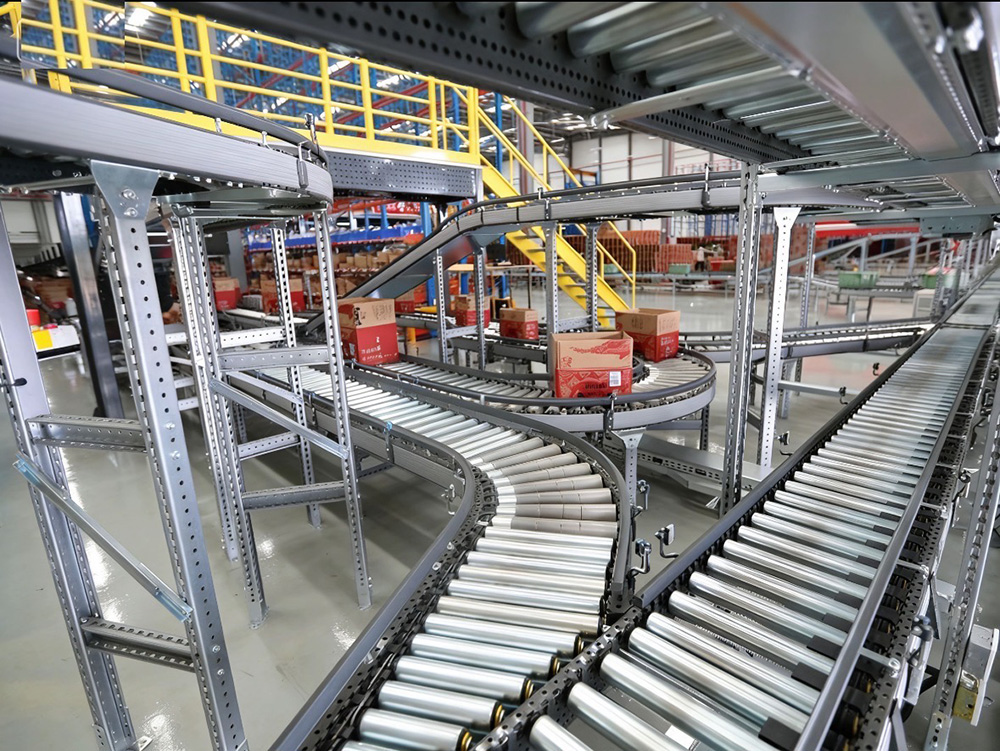
After in-depth research into the warehouse's layout, package specifications (mainly daily necessities cartons, each weighing 5-20kg), and workflow, we identified three core needs: first, to replace manual handling and address manpower shortages during peak periods; second, to improve conveying efficiency to match the high order volume during promotional periods; and third, to ensure workflow stability and reduce package handling errors. Based on this, we deployed three 15m long and 800mm wide powered roller conveyors, precisely connecting the sorting station and packing area to create an automated "sorting-conveyance-packing" workflow.
This solution, centered on powered roller conveyors, is perfectly suited to the high-frequency workflow requirements of e-commerce warehousing. The roller conveyors use galvanized rollers, combining wear resistance and load-bearing capacity, easily supporting various daily necessities cartons and preventing equipment wear from prolonged high-frequency use. They are also equipped with variable frequency speed control motors, precisely adjusting the conveyor speed to 2m/s, perfectly matching the sorting rhythm of the sorting station. This prevents package accumulation due to excessive speed or slowdowns due to insufficient speed. To further ensure conveying stability, we have also installed anti-deviation guards on both sides of the roller conveyor, effectively preventing packages from slipping or becoming misaligned during transport, completely solving the problem of errors that easily occur during manual handling.
Compared to traditional manual handling methods, this powered roller conveyor solution has achieved multiple value breakthroughs. In terms of efficiency, the handling process is completely unmanned; packages are automatically transported from the sorting station to the packing area without human intervention. Daily processing capacity has increased dramatically from 2,000 pieces to 5,000 pieces, a 150% increase in efficiency, fully capable of handling order surges during peak periods such as Double 11. In terms of cost, there is no need to temporarily hire more handling staff during peak periods, directly reducing labor costs by 60%. It also reduces costs associated with package rework and delays due to human error, resulting in significant long-term operational benefits. In terms of management, automated conveying replaces repetitive manual labor, not only reducing employee workload but also avoiding the management challenges of temporary staff, making the overall warehouse flow more standardized and controllable.
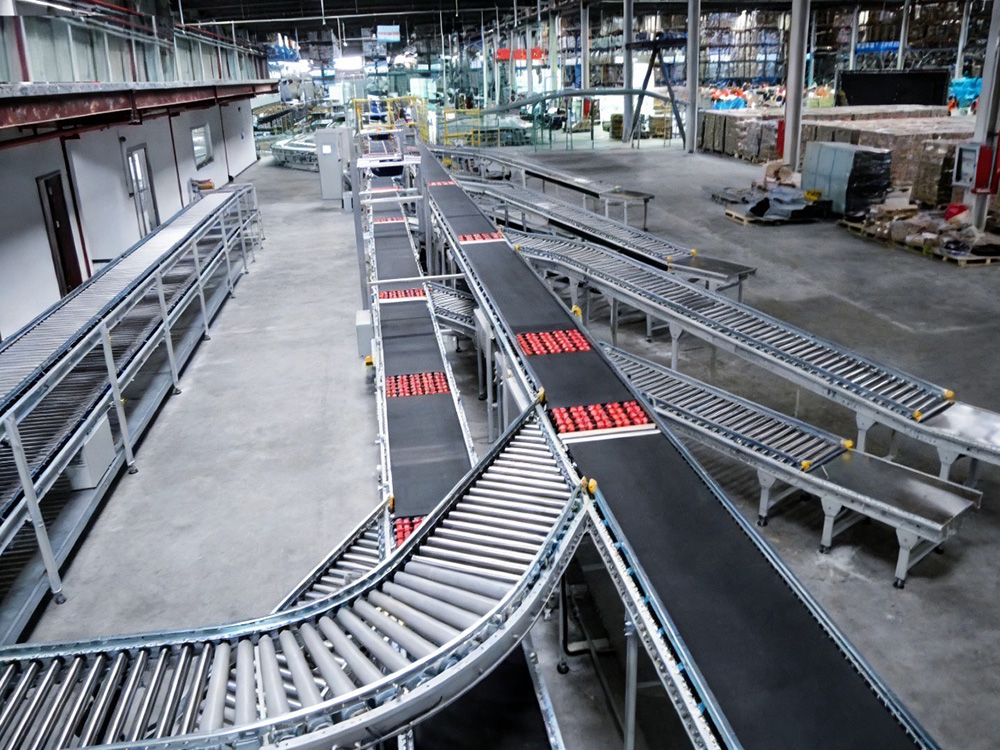
For similar e-commerce warehousing companies, this solution centered on powered roller conveyors is highly adaptable. Whether it's transporting light to medium-weight parcels such as daily necessities, apparel, and household goods, or coordinating the flow of multiple stages including sorting, packing, and warehousing, customized roller conveyor layouts can achieve efficient adaptation. We provide a full-process service from site survey, solution design, equipment deployment to installation, commissioning, and employee training, ensuring that the equipment quickly integrates into the existing warehousing system. This helps businesses completely eliminate inefficient manual handling, achieve automated and efficient upgrades to warehousing operations, and confidently cope with operational challenges during peak order periods.
