
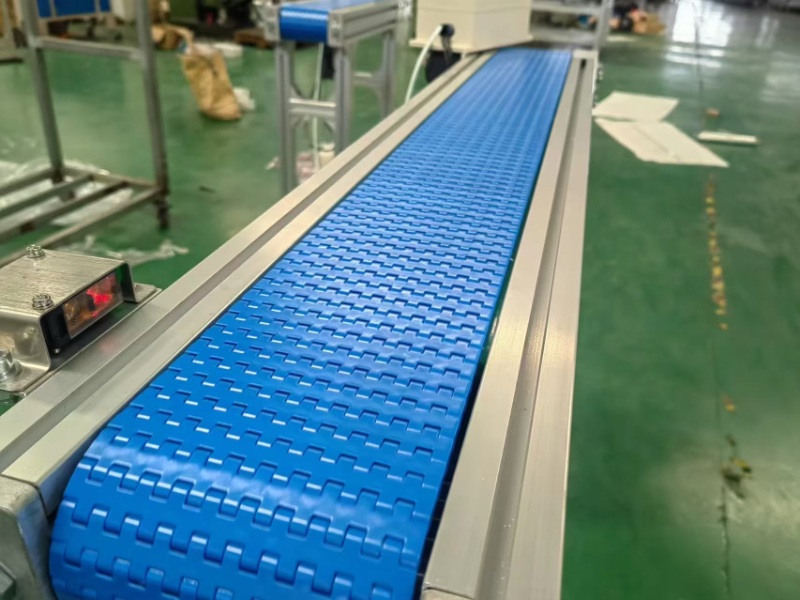
What is a speed chain assembly line? Why can it double production capacity?
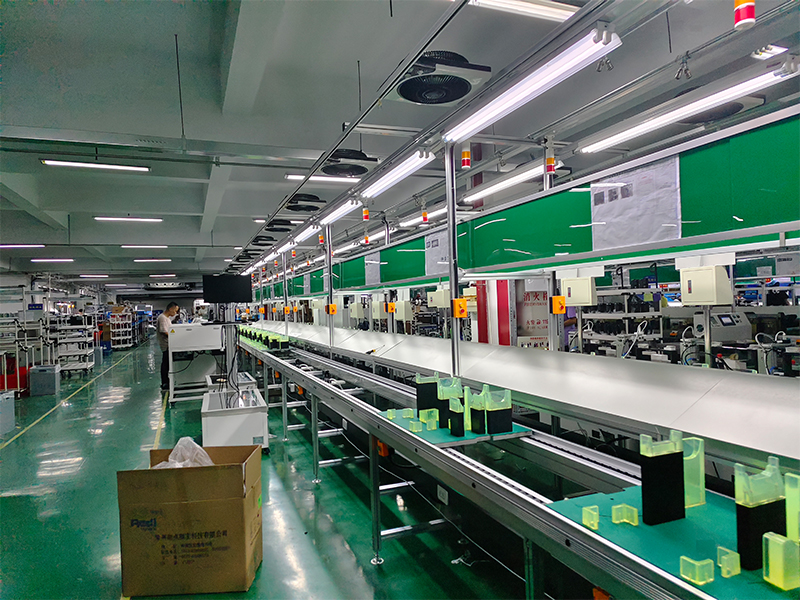
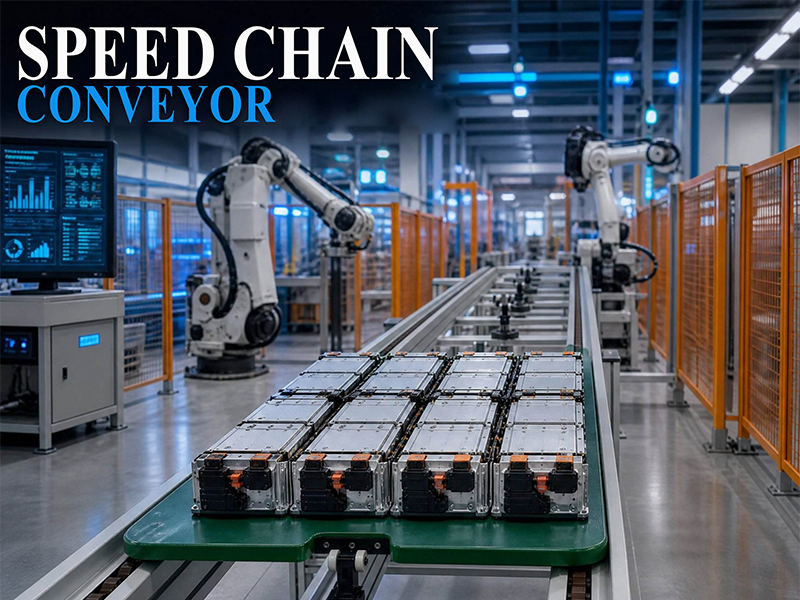
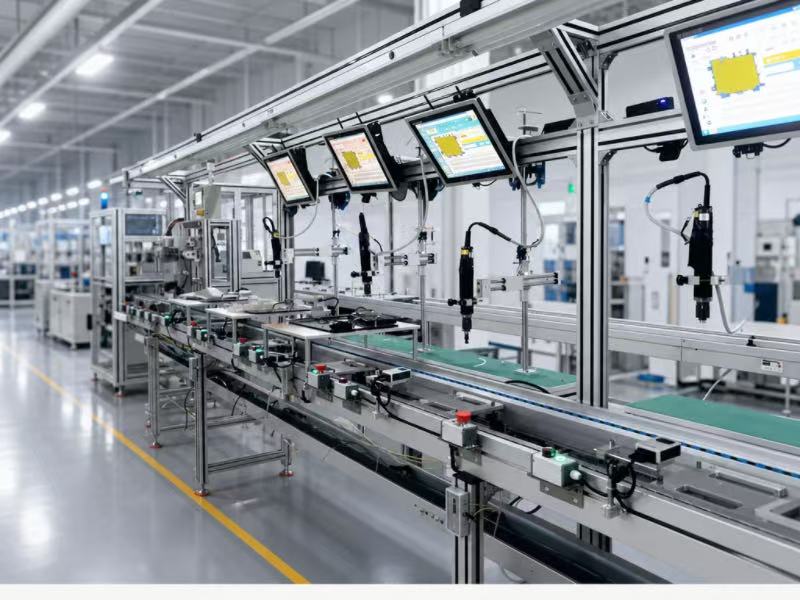
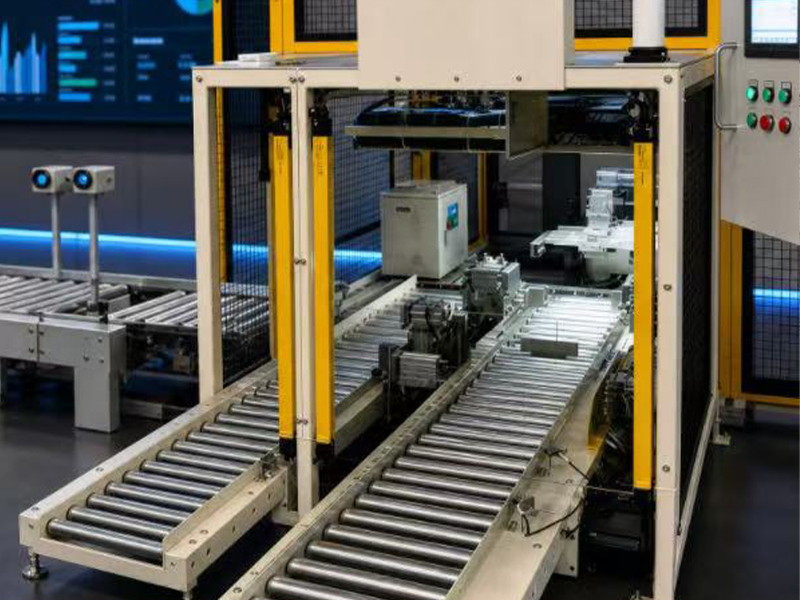
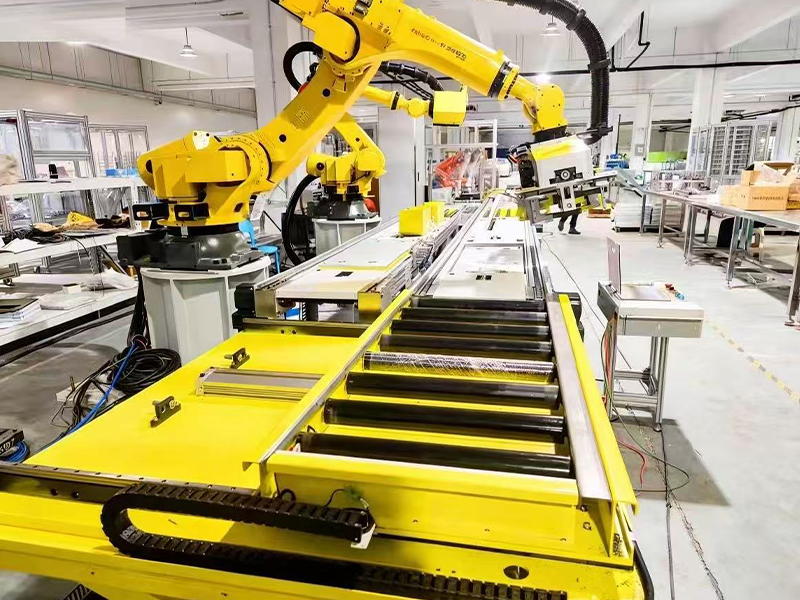
Some factory owners may not be very familiar with this equipment yet. Simply put, a speed chain assembly line is an automated conveying device that can achieve "accelerated transportation and precise stopping" of materials. Its core lies in a special chain structure that allows the speed of the tooling plates carrying workpieces to be flexibly adjusted — it can quickly flow between workstations while precisely pausing at key processes, perfectly matching the takt time requirements of different processes.
Its logic for improving production capacity mainly relies on these 4 "black technologies":
-
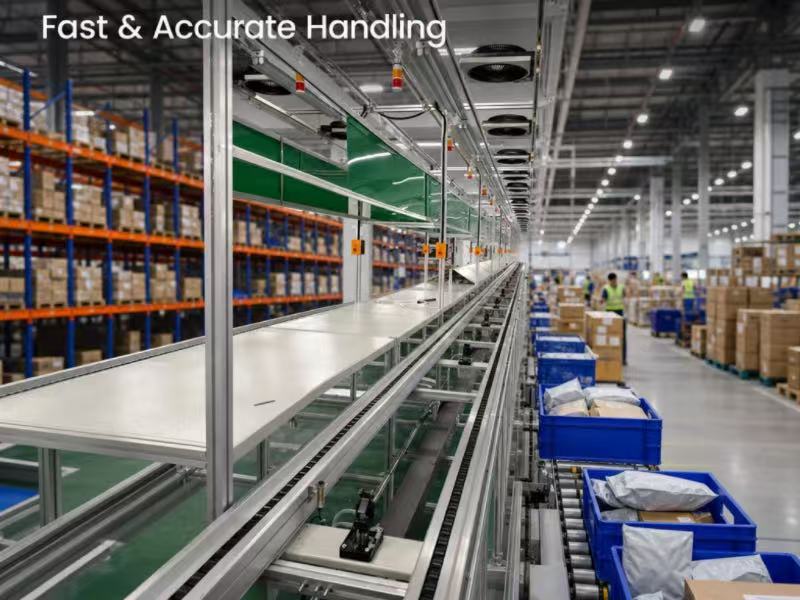
Automatic flow saves labor: Say goodbye to traditional handcart transport. Workpieces automatically flow to the workers, giving each person an extra 1.5 hours of effective working time per day, with no more time wasted running back and forth.
-
Accumulation function prevents work delays: If one workstation gets stuck, workpieces will automatically queue up and wait without affecting the operation of the entire line. For example, if the packaging process temporarily needs to replenish boxes, the preceding assembly processes can continue normal production.
-
Standardized takt time improves efficiency: A fixed takt time is set through a PLC control system, forcing all personnel to operate in sync, eliminating "slacking off" and making the production line run efficiently as if it were on "double speed."
-
Stable conveying reduces losses: Tooling plates run smoothly, reducing collisions and damage to workpieces. This not only lowers the defect rate but also reduces customer complaints, indirectly enhancing brand reputation.
-
These industries see immediate results when using it!
The speed chain assembly line has extremely strong adaptability and is now widely used in many manufacturing fields. Especially in these scenarios, the upgrade results are most obvious:
-
Automotive manufacturing
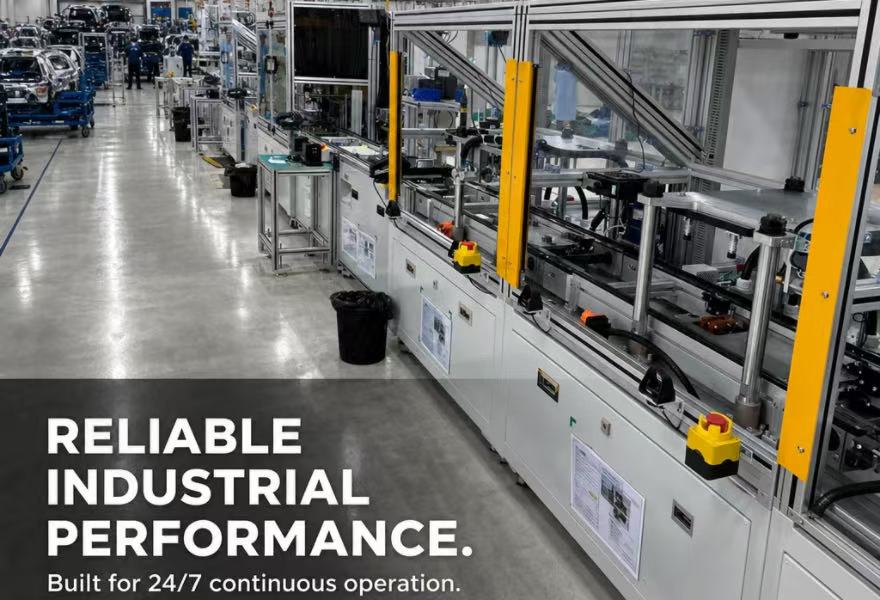
As the largest application market, the speed chain assembly line has become core equipment in new energy vehicle production. After some leading new energy vehicle companies adopted a double-speed chain assembly system, single-line capacity increased to 120 units per hour, a 40% efficiency improvement over traditional production lines. From engine assembly to complete vehicle final assembly, it can precisely match the mixed-model production needs of multiple vehicle models, with positioning accuracy reaching ±0.1mm.
-
3C electronics
The assembly processes for products such as mobile phones and tablets are complex and require high precision. The speed chain assembly line can transport components such as motherboards, screens, and batteries to different workstations in sequence to complete operations such as welding, inspection, and packaging. When paired with a visual inspection system, it can also monitor assembly quality in real time, greatly improving the product qualification rate.
-
Home appliance manufacturing
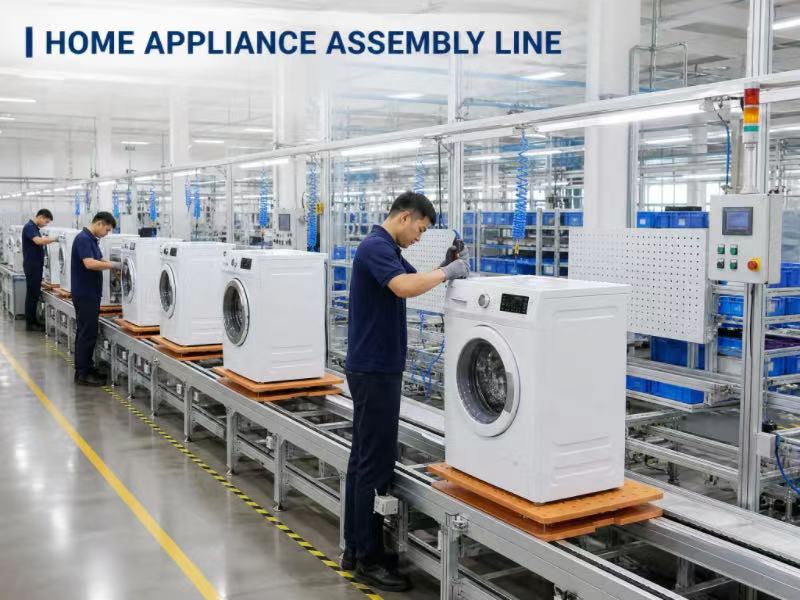
The assembly processes for major home appliances such as refrigerators, washing machines, and air conditioners are long and involve many parts. The modular design of the speed chain allows the production line layout to be flexibly adjusted. Just like the small home appliance factory case mentioned earlier, a 10-meter basic line with an investment of 80,000 yuan recouped its cost in 3 months through additional profits, while also saving the labor cost of 2 workers.
-
Pharmaceutical/food
In processes such as pharmaceutical sub-packaging and beverage packaging, the high degree of automation of the speed chain assembly line can reduce manual intervention and ensure hygiene and safety. At the same time, precise speed control can perfectly match the needs of continuous processes such as filling, sealing, and labeling, improving packaging efficiency and consistency.
2026 Trends: Intelligence + Green Transformation — Only the Right Choice Will Keep You from Being Eliminated
With the advancement of Industry 4.0, speed chain assembly lines are also continuously upgrading. In 2026, the industry will show two core trends, and you must pay close attention to them when choosing equipment:
-
Intelligent upgrading: More and more equipment is beginning to integrate AI visual recognition, IoT sensors, and 5G real-time monitoring functions. It can monitor production status in real time, predict equipment failures, and even optimize production line layout in advance through digital twin technology, raising overall equipment effectiveness (OEE) to above 85%.
-
Green transformation: Policies are driving the construction of "zero-carbon factories." The new generation of speed chain assembly lines uses permanent magnet synchronous motors, which can reduce energy consumption by 25% and pollutant emissions by 50%. This not only meets environmental protection requirements but also further reduces operating costs.
Selection Pitfall Avoidance Guide: 5 Key Points to Precisely Match Your Needs
Many factory owners worry about "buying something unsuitable." In fact, when choosing a speed chain assembly line, you only need to grasp 5 core points to avoid common pitfalls:
-
Clarify load requirements: For light loads (≤200kg), choose AC2/H type, suitable for electronic components; for medium and heavy loads (200-2200kg), choose AC2 type, suitable for auto parts; for ultra-heavy loads (≤4000kg), directly customize widened and thickened chain models.
-
Confirm conveying parameters: Determine the length of each single section based on workshop space (maximum 30 meters), plan in advance whether forward and reverse operation is needed, and reserve installation space.
-
Match precision requirements: For precision assembly (such as motor assembly), choose the high-precision model with ±0.05mm; for ordinary conveying, ±0.5mm is sufficient.
-
Consider the production scenario: For new energy and heavy machinery, choose heavy-load customized models; for electronics and small home appliances, choose light-load standard models, controlling costs while meeting efficiency needs.
-
Pay attention to supporting services: Give priority to manufacturers that support non-standard customization and 24-hour after-sales response, so that later debugging and maintenance are better guaranteed.
Note: If your factory has a daily output of less than 100 units, a single product type, or plans to relocate in the near future, it is recommended to first try an agency operation model to avoid equipment disassembly and installation losses and resource waste.
If your factory is currently facing problems such as capacity bottlenecks, high labor costs, or low product qualification rates, you might as well try the speed chain assembly line, this "efficiency magic tool." Leave your industry and capacity requirements, and get a free customized upgrade plan!
-