
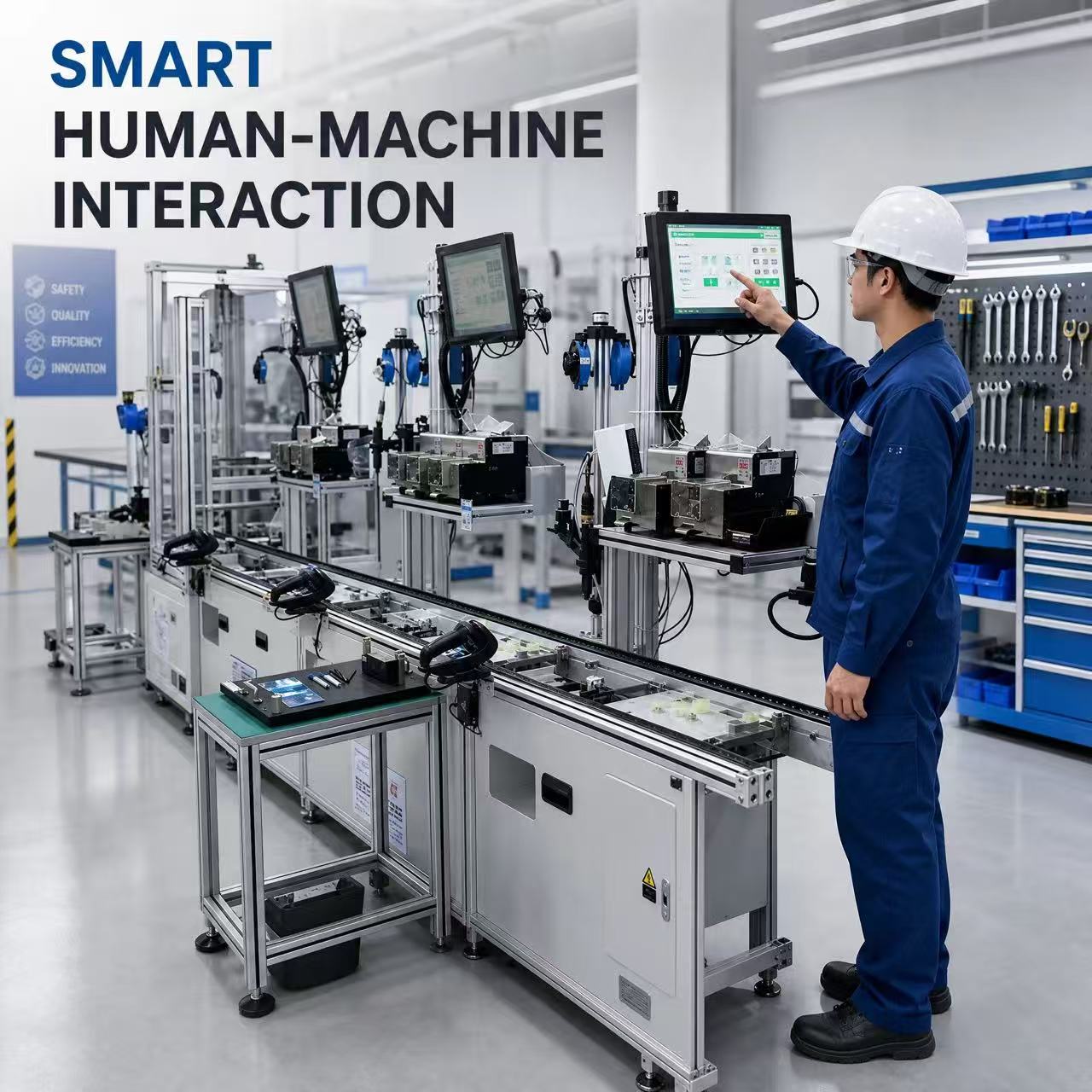
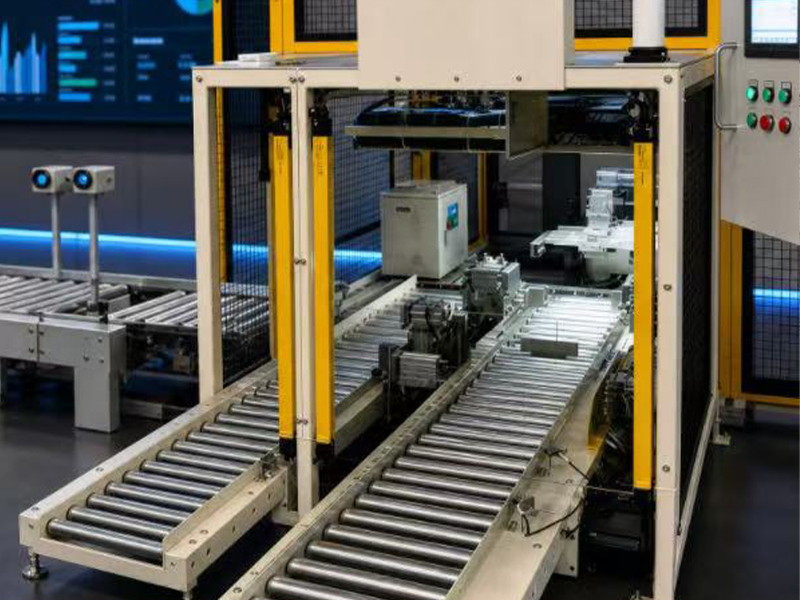
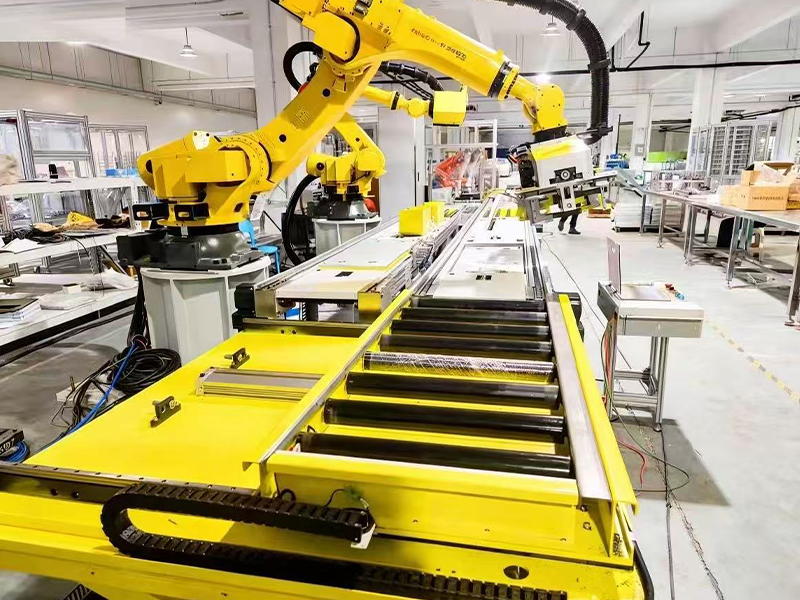
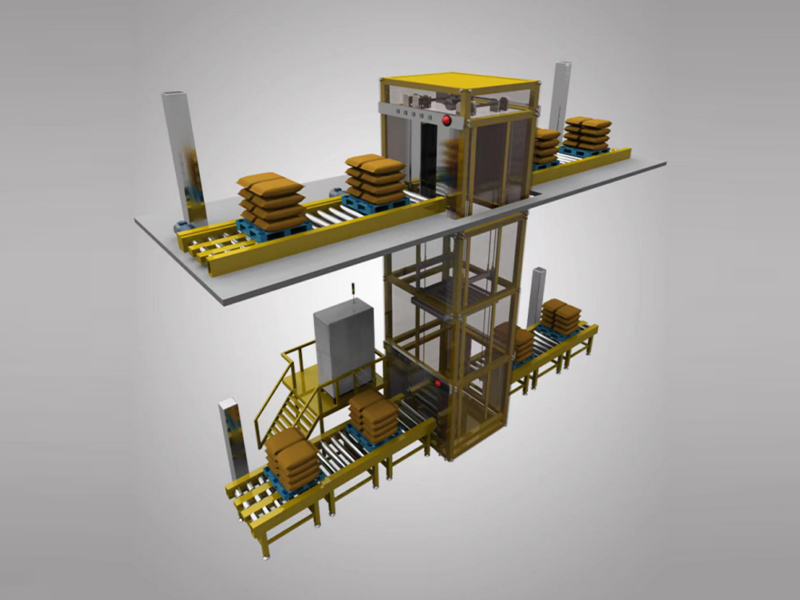
Speed Chain Conveyor + Modular Workstations: How to Build an Assembly Line That Fits Your Process(①)
What a Factory Is Really Buying with a Speed Chain Conveyor
When a factory invests in a speed chain conveyor, the real objective is not the conveyor. It is that every process on that line runs without friction.
The conveyor decides how parts move between stations. The modular workstations decide what happens once a part stops. When these two are quoted separately and designed separately, the interface between them is usually the last thing anyone thinks about — and the first place problems show up during commissioning.
Four questions follow: What workstations can be mounted on a speed chain conveyor? How do the line and the workstations actually interlock? What goes wrong most often in projects like this? And where is this heading next?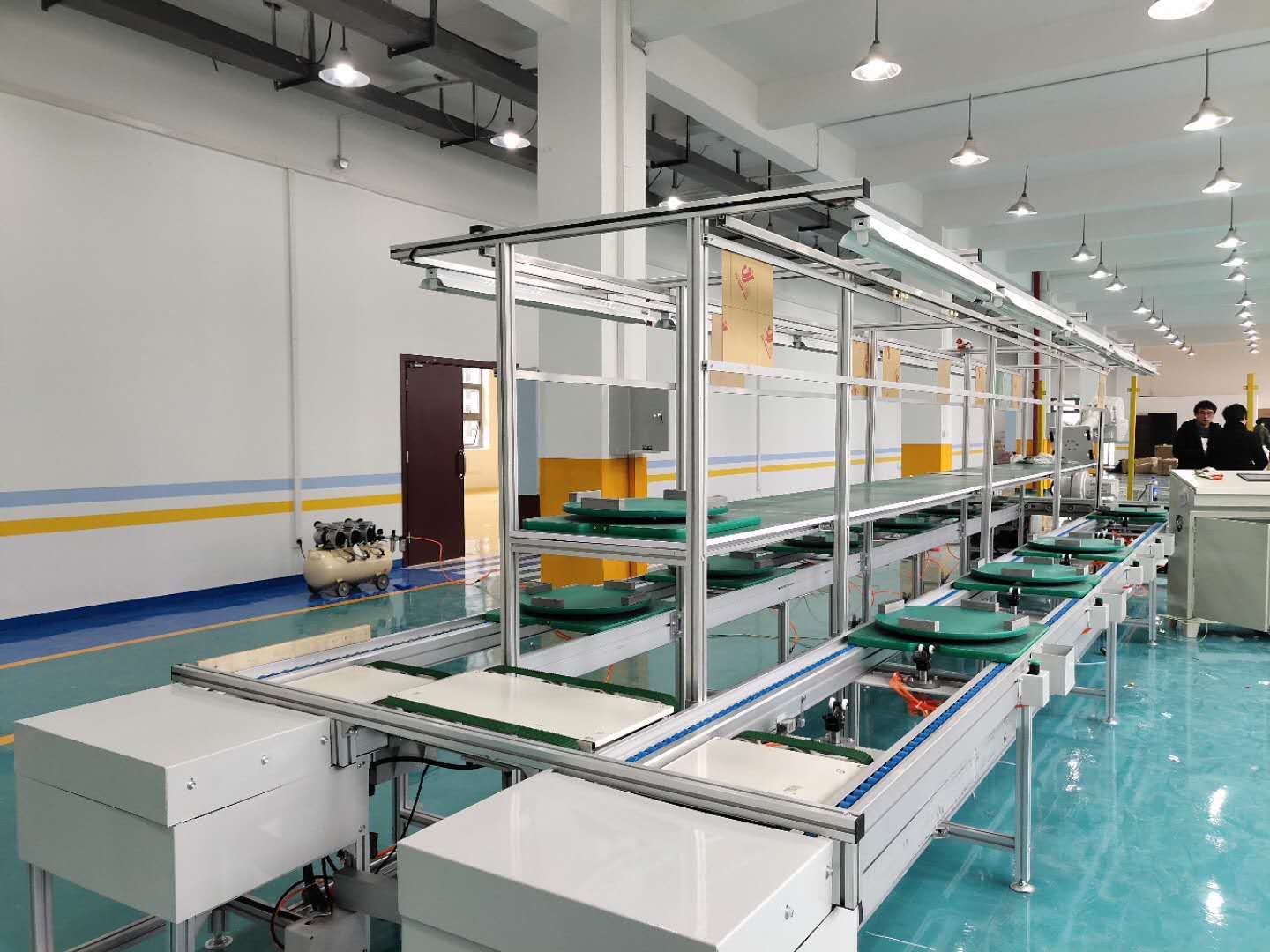
1. What Can Be Mounted on a Speed Chain Conveyor
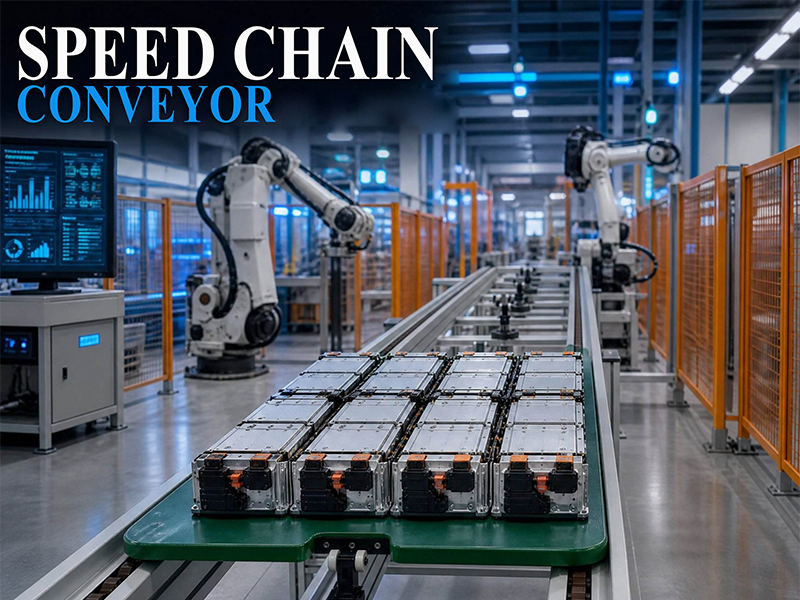
Start with the structure. Pallets ride on a roller chain housed inside aluminum extrusion. The chain runs faster than the pallet and drives it by friction. This is why a pallet can be held by a stopper while the chain underneath keeps moving. That accumulation capability is precisely what makes a speed chain conveyor usable as the backbone of a production line rather than a piece of transport equipment.
How many stations fit on the line, and how tightly they can be packed, comes down to four factors: pallet pitch, extrusion section length, the footprint each station needs for tooling and operator access, and the takt time the conveyor has to hold. These four constrain each other — which is why station count is a calculated output of the layout, not a target set in advance.
Common station types:
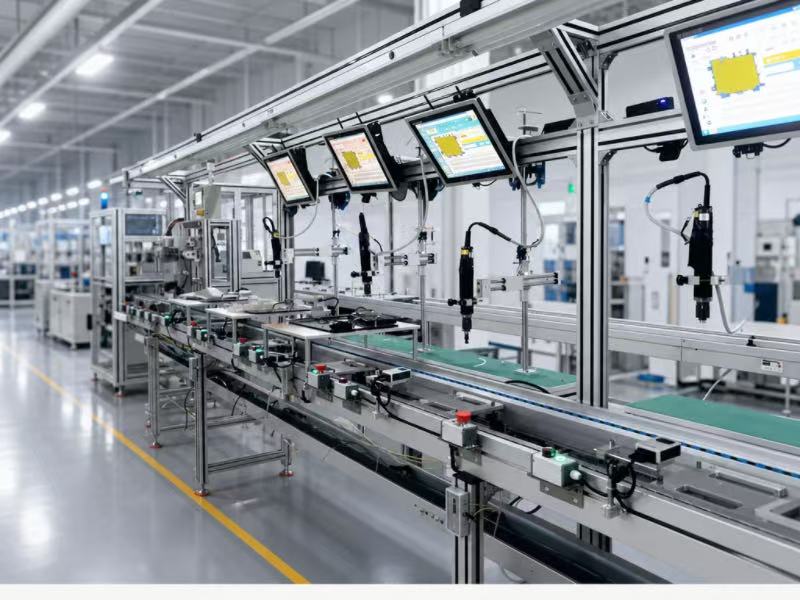
- Pneumatic screwdriver stations — multi-spindle or handheld tightening tools suspended from tool balancers; the pallet is typically lifted and clamped so the operator works at a fixed height.
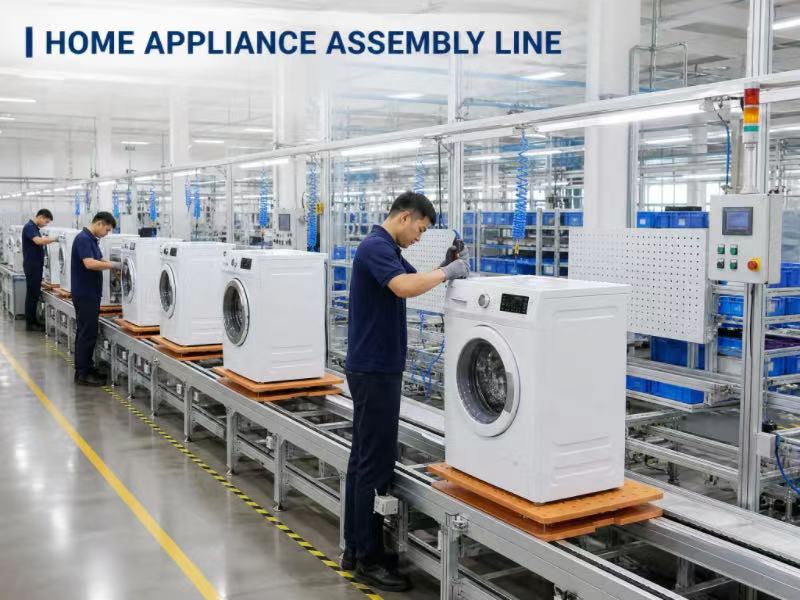
- Welding stations — spot welding, ultrasonic welding, laser welding; most common in home appliances and automotive components. Here the pallet usually carries a locating fixture rather than a flat plate.
- Laser engraving and marking stations — date codes, serial numbers, QR codes. Marking is done with the part still on the pallet, so there is no need to unload it and re-clamp.
- Vision inspection stations — presence or absence, orientation, cosmetic defects; rejected pallets are diverted automatically.
- Dispensing and potting stations — adhesive, sealant, grease, thermal compound, applied by a fixed head as the pallet indexes.
- Functional test stations — ICT, FCT, leak testing, hipot; the pallet provides the electrical and pneumatic connections.
- Labeling, packaging and offload stations — usually at the end of the line, where the conveyor hands parts off to a packing table or an automatic case packer.
Most of these share one prerequisite: the pallet is used as a fixture, not as a board. The jig is mounted on the pallet and travels with the product, so each station only has to perform a single action — it does not need to bring its own locating fixture along. On a speed chain conveyor, fixtures travel with the product, and that is what keeps the stations simple.
2. How the Conveyor and the Workstations Actually Interface
Three things must be defined before the line design is frozen: how pallets are stopped and detected, how the station and the conveyor confirm readiness to each other, and how the station knows what is on the pallet.
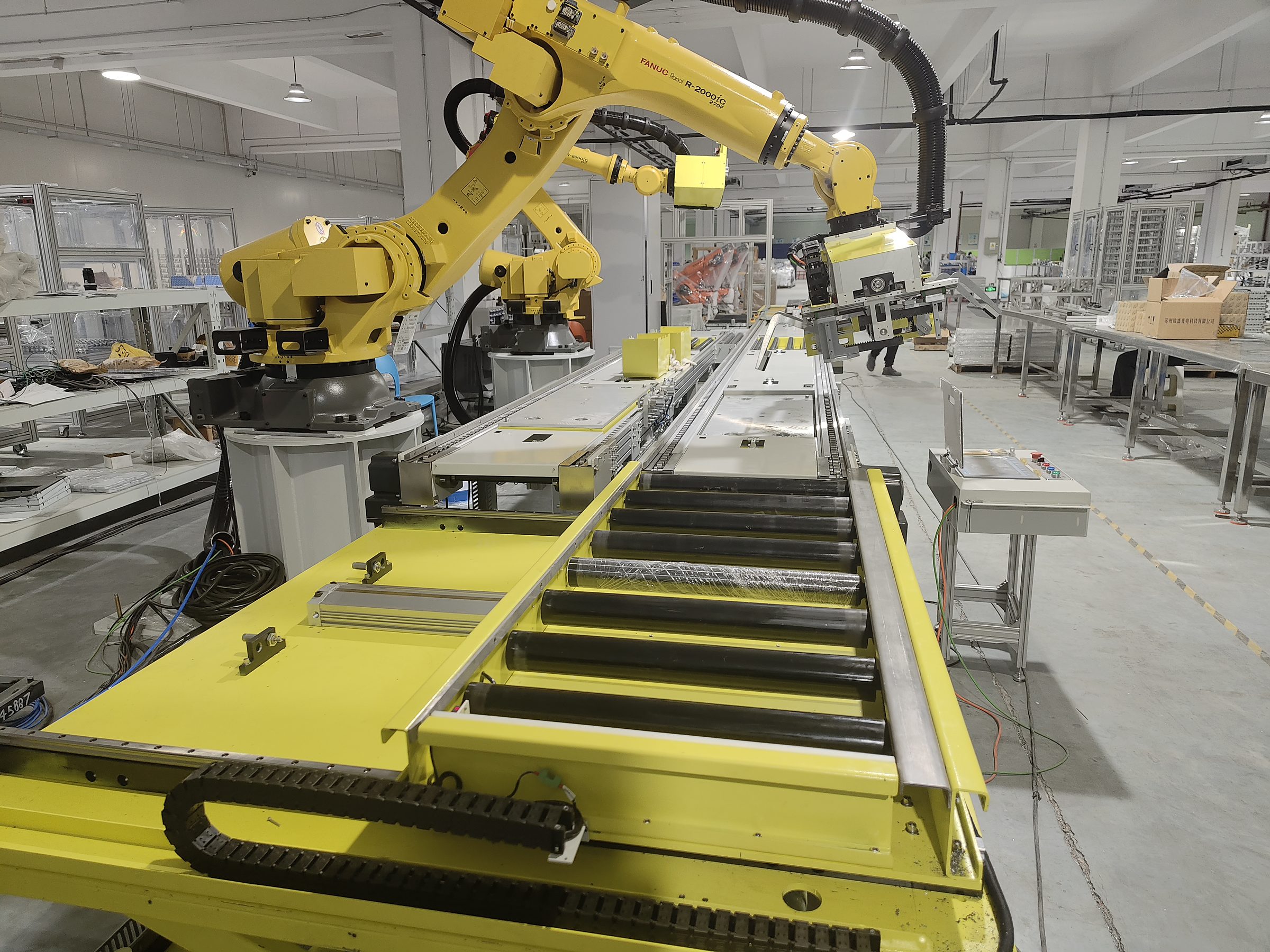
Stopping and detection. The stopper holds the pallet at the station position; a proximity or photoelectric sensor confirms that the pallet has arrived. How much confirmation is required depends on the station itself. Some operations only need to know that a part is present; others must confirm the pallet is fully seated against the stopper before the tool can come down. The stopper and the sensing elements belong to the conveyor. What happens after the signal is received belongs to the station.
Signal handshake. The station sends a ready signal; the conveyor releases the pallet. The station sends a complete signal; the conveyor indexes again. In most cases this amounts to a few digital I/O lines. What actually goes wrong is timing, not wiring: ready must come before the stopper releases, and the line must not move on until the complete signal arrives. Capturing this as a timing chart at the drawing stage is a short exercise; discovering it on site can consume days of commissioning.
Identification. Pallets carry RFID tags or barcodes so the station knows in advance which product is coming. On a line running multiple models this is mandatory, because it allows the recipe to change without changing mechanical fixtures. On a single-product line, identification is optional, and many projects skip it entirely.
Controlling Positioning Accuracy
Repeat positioning accuracy at a station is not a fixed property of the conveyor itself. It is controlled through measures such as locating bushings on the pallet, matching locating pins on the station, a lift-and-locate unit at the station, and maintaining the wear condition of the chain and the pallet supports.
For manual assembly, or for operations where the operator positions the part by hand, the accuracy requirement is modest. But for robots, laser heads, or vision systems that measure, we have to use lift-and-locate to guarantee it — because in those cases the tolerance is set by the process, not by the conveying equipment. Tolerance requirements should be requested from the station supplier and then compared against what the line can deliver, not the other way round.
Takt Time
A speed chain conveyor indexes at fixed intervals. If the longest station exceeds that interval, pallets back up in front of it and the conveyor turns into a buffer rather than a flow line — which is, in fact, one of the characteristics of this type of conveyor. That is why takt has to be resolved at the concept stage: do you divert, or do you accumulate?