High-Speed Chain Conveyor for Lithium Battery Production Lines | China Suppliers & Factory Solutions
Advantages
Adopting 2.5 to 3-speed differential transmission, the chain runs at low speed while tooling plates move rapidly. The overall production capacity is tripled, labor costs cut by 60%, and idle time at workstations is effectively eliminated.
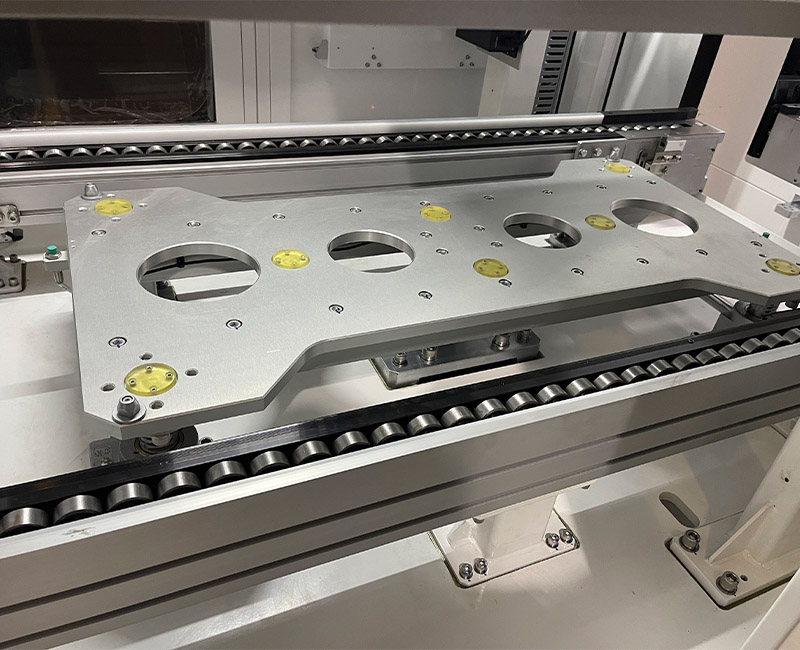
Equipped with precision-machined guide rails and imported electrical control components, it achieves a repeat positioning accuracy of ±0.05mm, fully meeting stringent requirements for precision fastening, inspection and assembly processes.
The entire line can operate non-stop. Stoppers lock tooling plates at designated positions to realize staggered production and automatic material buffering, ideal for multi-process interleaved operations on production lines.
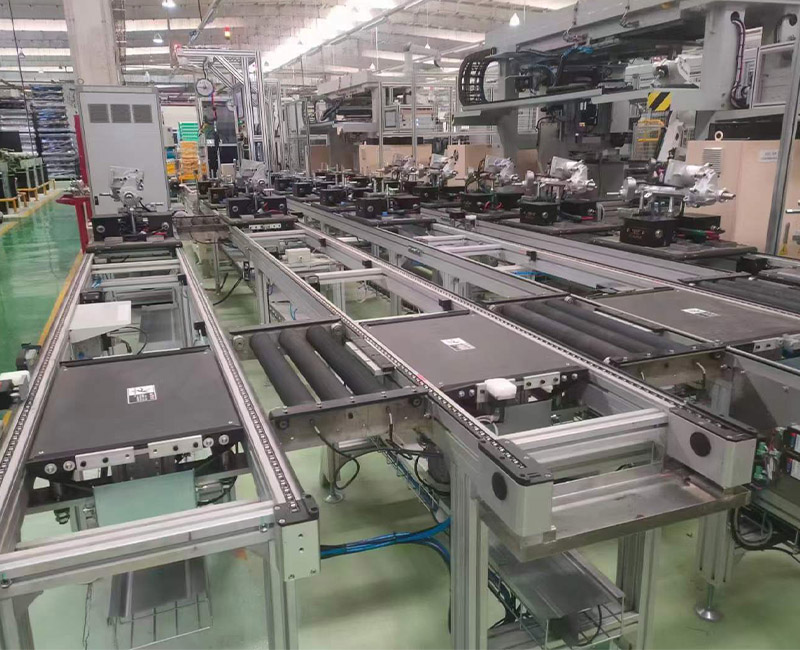
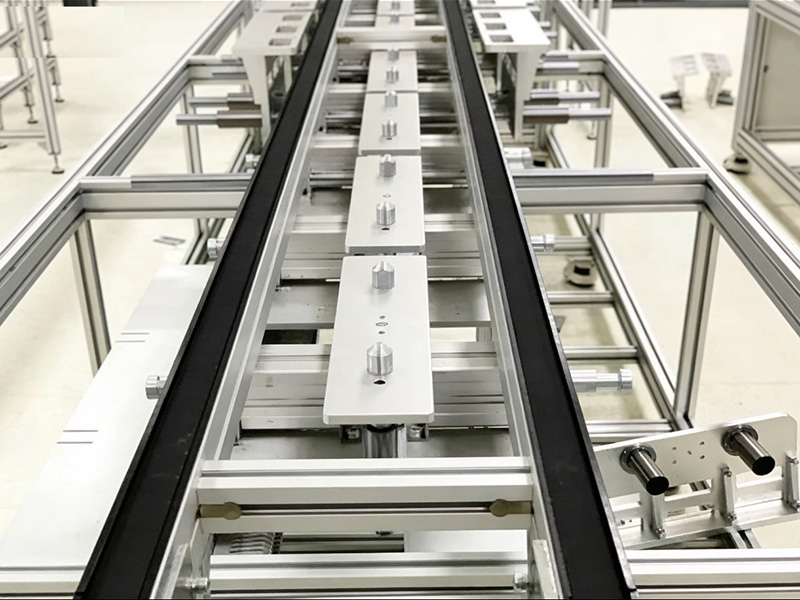
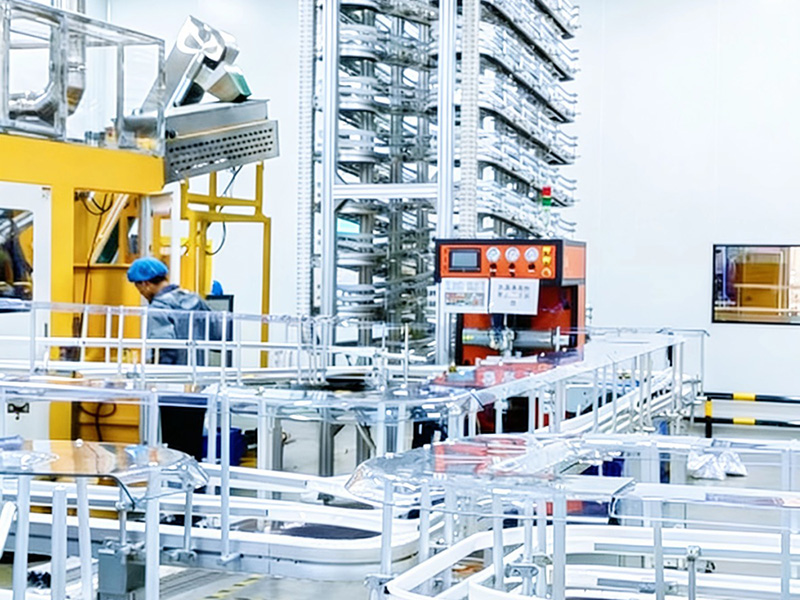
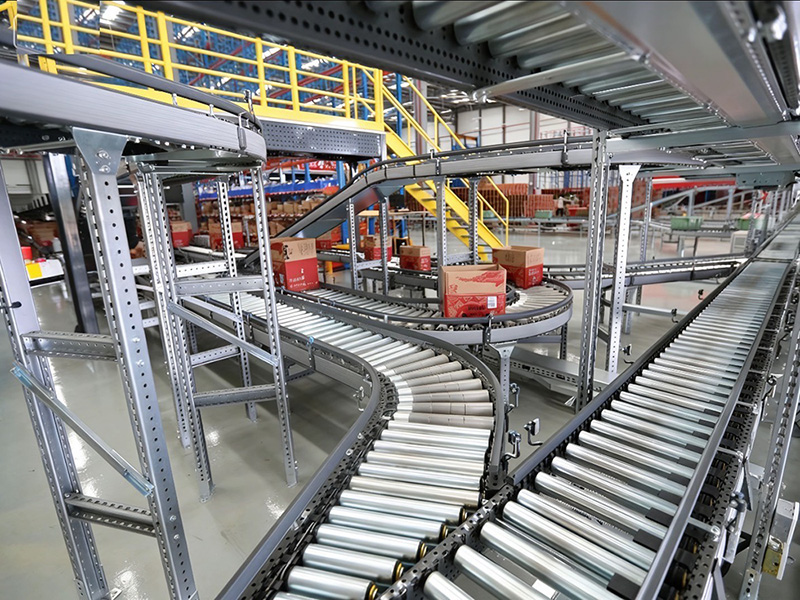
Available in loop, double-layer and S-curve layouts. Combined with lifting transfer units and 90° to 360° rotary transfer mechanisms, it enables cross-line material handling without manual work. It adapts to irregular factory spaces and saves 30% of workshop area.
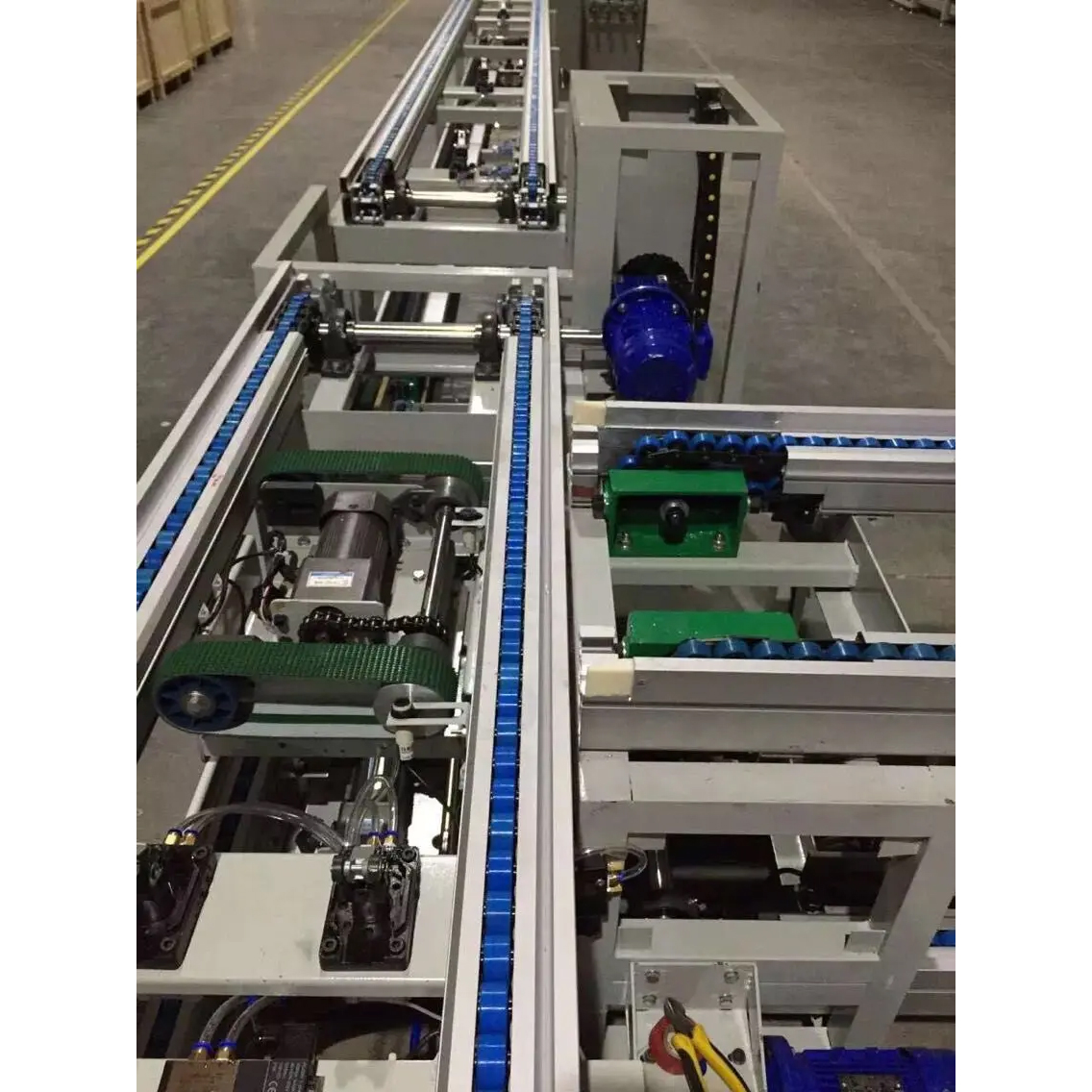
The frame is made of thickened national standard aluminum profiles, paired with wear-resistant steel chains. Featuring dust-proof and anti-static treatment, the equipment can run stably under full load for 72 consecutive hours, delivering long service life in dusty environments and constant-temperature workshops.
Product Description
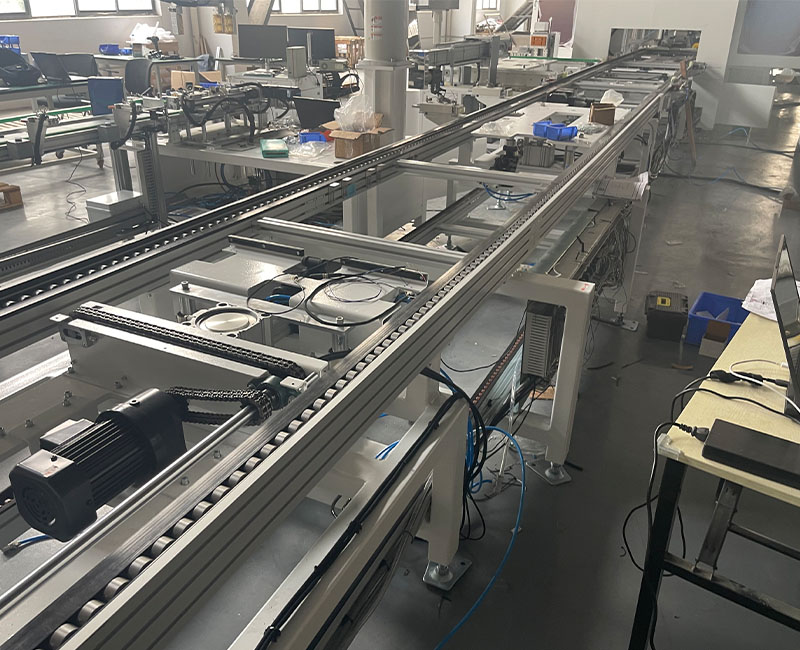
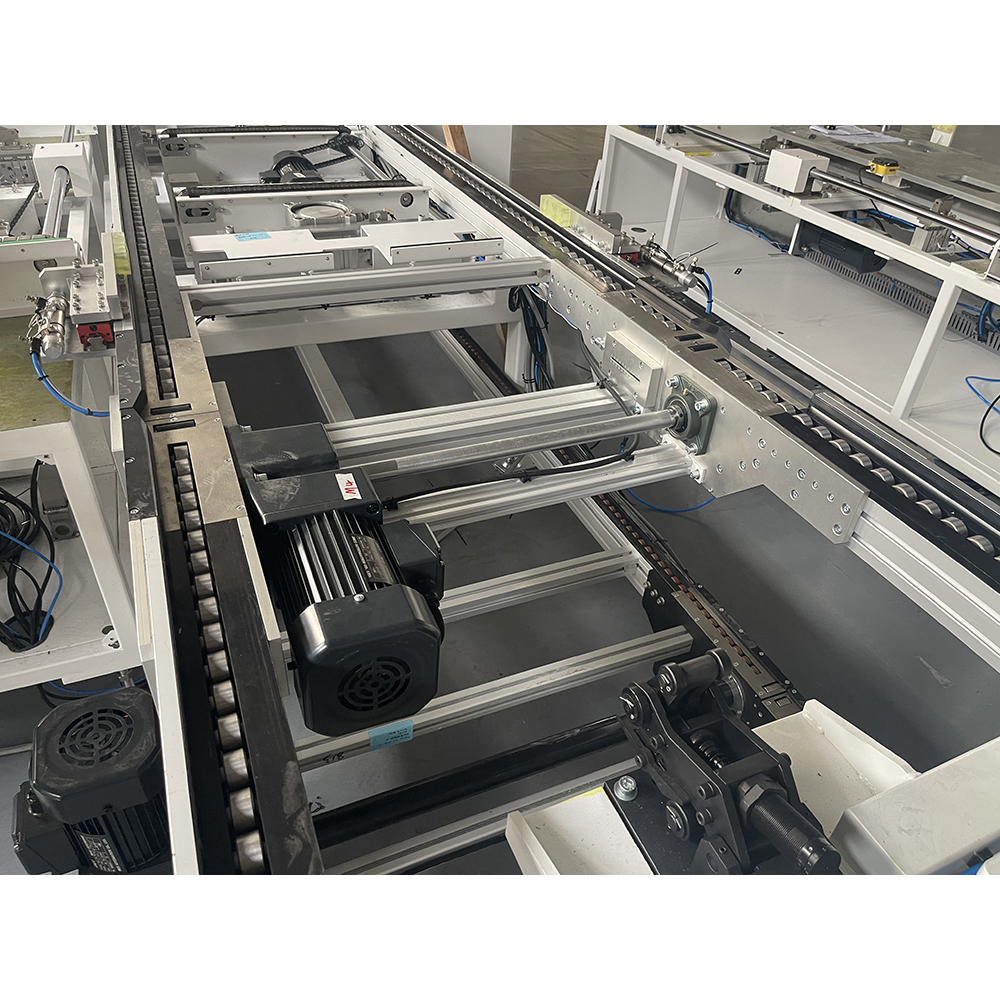
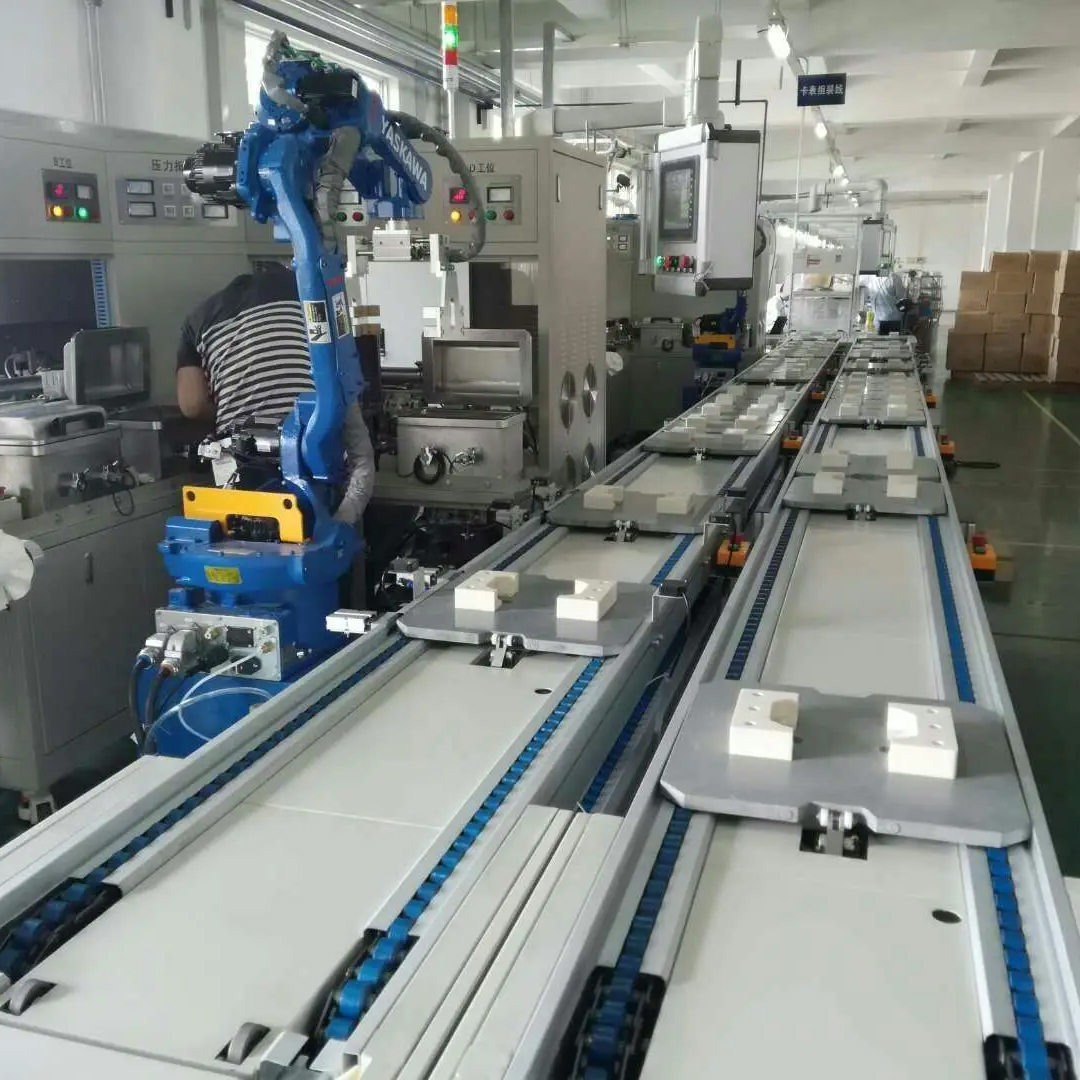
Double plus chain, also known as differential speed chain, is a dedicated roller conveyor chain for automated production lines. The tooling plates can move at 2.5 to 3 times the speed of the chain, delivering high conveying efficiency. Fitted with stoppers, it enables flexible tact time control to accommodate assembly and inspection processes. Featuring a proven and robust structure, it is widely applied to multi-station production lines in automotive, electronics, home appliances, new energy batteries and other industries.
Product Specifications
| Parameter | Specification Parameters |
|---|---|
| Speed | Customizable |
| Load | Variable |
| Chain Pitch | Usually 38.1mm or 58mm, 3x speed chain |
| Chain Material | Carbon steel galvanized, stainless steel, nylon |
| Frame Material | Carbon steel galvanized, aluminum profile, 304 Stainless Steel (Customizable) |
| Drive Power | Variable frequency |
| Ambient Temperature | -10℃~60℃ |
| Certification | CE/ISO9001 |
Successful Case
Frequently Asked Questions (FAQ)
What is a double plus chain conveyor and how does it operate?
A double plus chain conveyor (differential speed chain) uses specialized multi-diameter rollers. The chain itself moves at a lower base speed, while the tooling plates or pallets riding on the larger rollers advance at 2.5 to 3 times the chain speed, delivering faster cycle times and reduced mechanical wear.
How does accumulation work without stopping the main motor?
When a pallet is stopped by a pneumatic or mechanical stopper at an assembly station, the rollers rotate freely underneath the stationary pallet. This allows continuous line movement while buffering workpieces smoothly without damaging parts.
What positioning accuracy can be achieved for automated stations?
With high-precision guide rails, dedicated pneumatic positioning units, and stop pins, the system achieves a repeat positioning accuracy of ±0.05mm, making it ideal for robotic assembly, screwdriving, and optical inspection.
Can the conveyor line layout be customized for complex workshop spaces?
Yes. The system supports loop layouts, double-deck over-under return configurations, and S-curves. It integrates seamlessly with lifters, 90°–360° turn tables, and cross-transfer shuttles to optimize floor space.
What materials are available for harsh or cleanroom environments?
Frames can be configured in anodized industrial aluminum profiles, galvanized carbon steel, or SUS304 stainless steel. Chains are offered in engineering plastic/nylon, carbon steel, and stainless steel with anti-static and dust-resistant options.
What maintenance is required for long-term continuous operation?
Thanks to heavy-duty engineering profiles and wear-resistant components, maintenance is minimal. Routine checks include chain tension inspection, periodic lubrication of drive sprockets, and keeping roller tracks free of debris.