Leave Your Message
Global sourcing teams don't just need material-handling gear that looks good in a showroom—it has to hold up in the real world. That's where an Industrial Chain Conveyor comes in. It keeps cartons, pallets, containers, and even heavy components moving steadily through tough facilities. Because it's chain-driven, it gives you more controlled transport—especially in spots where standard rollers might slip or stall. You really notice the difference around loading docks, storage racks, and production stations.
If you've been around the block, you know buying an industrial chain conveyor isn't just about the price tag. Sure, that matters—but experienced buyers dig deeper. They'll look at things like chain pitch, load capacity, frame strength, drive power, safety guarding, and how easy it is to get in there for maintenance. And a well-designed conveyor? It should fit your product shape and the pace your operation actually runs at. It also needs to play nicely with sensors, transfer units, and your warehouse controls. That said, sometimes an Industrial Conveyor Belt can still be the smarter way to go. Honestly, it really comes down to a few things—how the load behaves, how much surface contact there is, what kind of cleaning you need, and whatever layout constraints you're dealing with.
Don't overlook supplier evaluation--it deserves just as much attention as everything else. Ask them for drawings, test records, material specs, installation guidance, and spare-parts support. And check if they can actually explain things like noise levels, lubrication intervals, emergency stops, and the service conditions you can expect. Get references from similar industries, not just vague promises. Honestly, it's the small details that matter.
That said... no system is perfect.
A conveyor can look tough as nails and still let you down if loads are uneven or alignment is off. And when you source globally, you're also signing up for communication snags, packaging headaches, shipping issues, and commissioning surprises. So buyers should build in some time for technical review and local compliance checks. The best decisions come from documented proof, real-world testing, and being honest about what a system can and can't do. Do that, and an Industrial Chain Conveyor feels like a thoughtful investment—not something you grabbed from a catalog in a hurry.
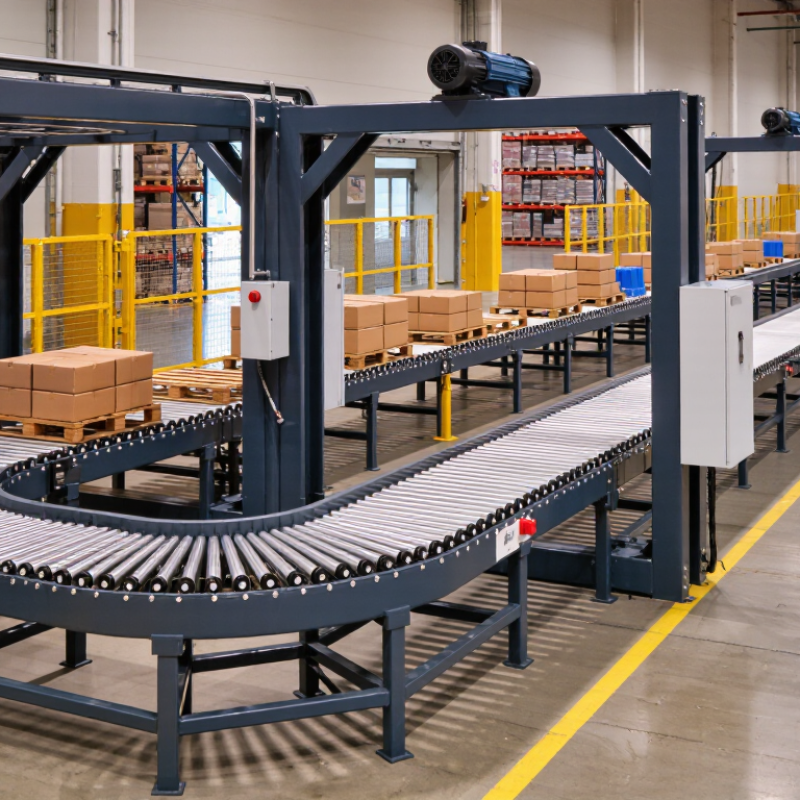
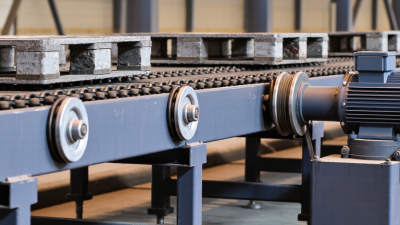
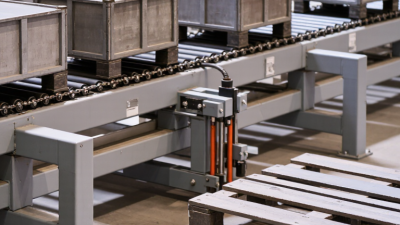
An industrial chain conveyor is a mechanical system that moves products through a production or storage area. It uses linked metal chains, sprockets, shafts, and a powered drive unit. The chains carry pallets, bins, crates, or specially designed fixtures along a fixed route.
Unlike belt conveyors, chain conveyors handle heavy loads, hot surfaces, and rough working conditions. Their open structure also allows easier cleaning and maintenance. In factory inspections, buyers should check chain tension, sprocket alignment, frame strength, and emergency stopping access. Small alignment errors can create noise, vibration, or uneven movement. The conveyor is durable, but it is not maintenance-free.
For global sourcing, specifications must be precise. Confirm load weight, product dimensions, speed range, transfer points, voltage, and operating temperature. Ask for drawings, material details, test records, and maintenance instructions. A qualified engineer should review the layout before production begins. This step prevents expensive changes later. Sometimes, a simpler conveyor may fit better than a heavily customized system.
Tips: Measure the heaviest product, not the average one. Leave space for cleaning and repairs. Request a trial run with your actual load. Check spare-chain availability and response times before placing an order.-vesm
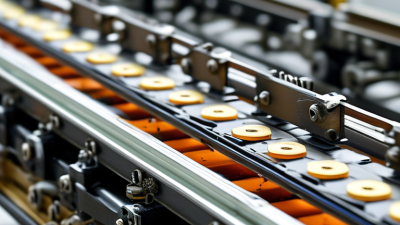
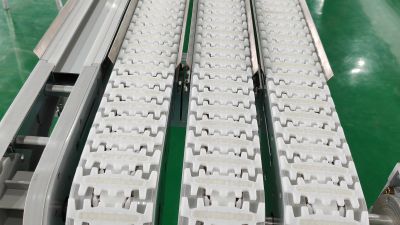
Compact flexible chain conveyors are helping workshops address two persistent challenges: limited floor space and rising material-handling demands. The 2024 MHI Annual Industry Report indicates that 55% of supply-chain professionals are increasing investment in technology, reflecting the growing need for adaptable automation. With modular flexible chain plates, this conveying solution supports straight, turning, climbing, and lifting routes within one system, reducing the need for multiple dedicated conveyors and helping manufacturers make better use of narrow or irregular production areas.
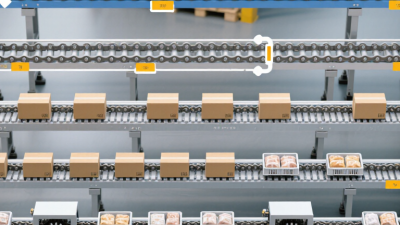
Its adjustable minimum turning radius allows the conveyor path to follow existing walls, machinery, and workstations without extensive reconstruction. This is particularly valuable in food and beverage, pharmaceutical, electronics, warehousing, and logistics facilities, where smooth product flow and hygienic, organized layouts are essential. The system can connect processing equipment, sorting stations, packaging lines, and finished-goods transfer points, creating a continuous movement path for containers, cartons, components, and other unit loads.
The International Federation of Robotics reported more than 541,000 industrial robots were installed worldwide in 2023, demonstrating the continued expansion of automated production. Flexible chain conveyors complement this trend by providing reliable material movement between automated machines while accommodating changing production routes. Their modular design also supports phased expansion, allowing suppliers to improve throughput and process connections without redesigning an entire workshop layout.
It is a powered system that moves pallets, crates, bins, or fixtures along a fixed route. Metal chains, sprockets, shafts, and a drive unit create movement.
It suits heavy products, hot surfaces, and rough factory conditions. Measure the heaviest product, not the average one. That detail matters.
Confirm load weight, product dimensions, speed, transfer points, voltage, and operating temperature. Request drawings, material details, test records, and maintenance instructions.
An engineer can identify clearance problems, transfer issues, and unsuitable customization. A simpler conveyor may perform better. Customization is not always improvement.
Check chain tension, sprocket alignment, frame strength, and emergency-stop access. Small errors may cause noise, vibration, or uneven movement.
Align chains, sprockets, shafts, and guides before applying power. Use laser tools and record shaft measurements during commissioning. Do not guess tension.
Excess tension increases bearing loads and heat. Insufficient tension causes unstable movement or tooth skipping. The correct setting depends on measured conditions.
Inspect components according to operating hours, load changes, and environmental exposure. Look for cracking, glazing, frayed edges, and embedded debris. Keep parts clean and dry.
Require fixed guards around pinch points and reachable emergency stops. Servicing should isolate electrical and stored mechanical energy. Training and checklists matter more than attractive claims.
Leave room for cleaning and repairs. Request a trial run using the actual load. Check spare-chain availability and response times before ordering. My checklist may still miss site-specific problems.
An Industrial Chain Conveyor is a durable material-handling system that uses linked chains to move products, pallets, containers, or heavy loads through manufacturing and distribution environments. Its powered chain mechanism provides steady, controlled movement and can be adapted to different layouts, load weights, speeds, and operating conditions. Common types for global sourcing applications include flat-top chain conveyors, pallet conveyors, drag chain systems, and multi-strand designs, each suited to specific material shapes and transportation requirements.
For international material handling, Industrial Chain Conveyor systems offer reliable performance, high load capacity, flexible integration, and long service life when properly selected. Buyers should evaluate suppliers worldwide by reviewing engineering capability, product quality, customization options, technical support, delivery reliability, documentation, and total ownership cost. Before operation, installation should follow approved site plans and equipment specifications. Regular inspection, lubrication, chain tension adjustment, guarding, emergency stops, operator training, and preventive maintenance are essential for safe and efficient performance.