Picking the right material-handling equipment isn’t just about moving stuff from A to B. It shapes throughput, keeps workers safer, cuts down maintenance time, and affects operating costs. If you’re dealing with heavy loads, uneven floors, or products that need controlled movement, a Chain Driven Conveyor is often a solid fit. Its linked chain pushes force along a tough, durable path, handling pallets, crates, bins, and packaged goods. At loading points, a steel pallet might pause, start up again, and then roll through dust or temperature swings. But capacity alone shouldn’t decide the conveyor. You also need to look closely at product dimensions, chain pitch, speed, incline, cleaning needs, and how much floor space you actually have. Honestly, small details matter.
Experienced engineers usually compare duty cycles and possible failure points before they recommend anything. A well-specified drive motor, protected sprockets, accessible bearings, and aligned rails can help reduce avoidable downtime. That said, no conveyor is truly maintenance-free. If someone claims otherwise, be skeptical. Lubrication, tension checks, guarding inspections, and operator training are still essential. Depending on the vertical transfer task, related lifting options might include an Enclosed reciprocating elevator, Open-type reciprocating elevator, Chain-driven reciprocating elevator, or Belt-driven reciprocating elevator. Each design brings its own trade-offs for cleaning, access, noise, and load control. Reliable suppliers should give you load calculations, installation guidance, spare-parts support, and clear maintenance records. Site trials can uncover problems that drawings miss—especially around product jams and transfer gaps. This article looks at where a Chain Driven Conveyor performs well, and when another solution might be smarter. Practical evidence should guide the final call.
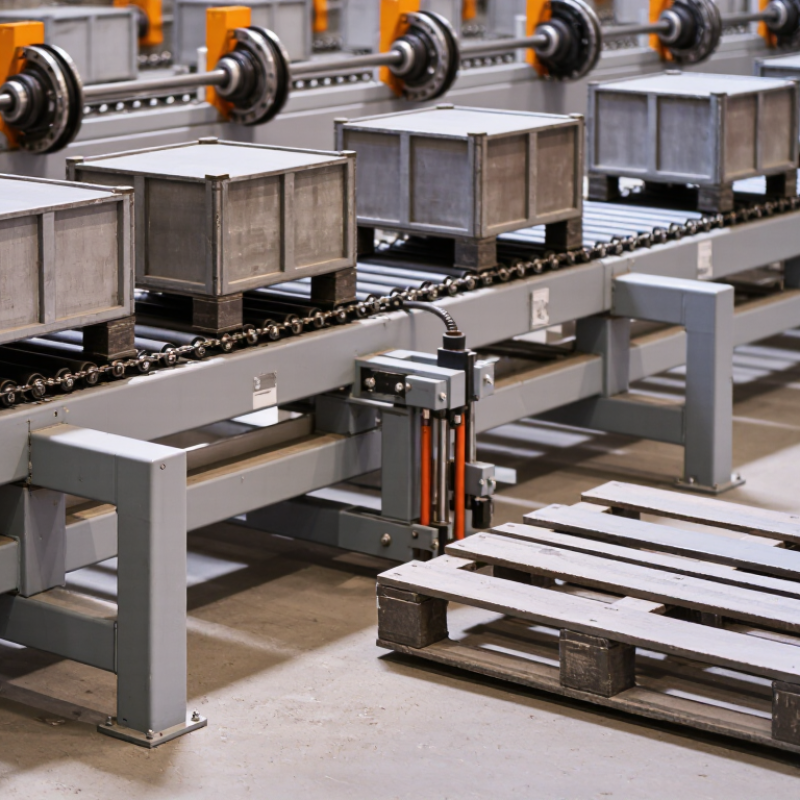
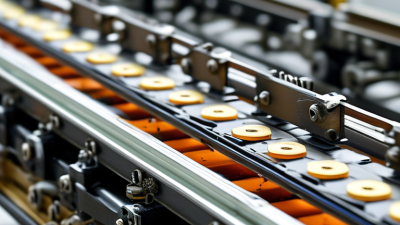
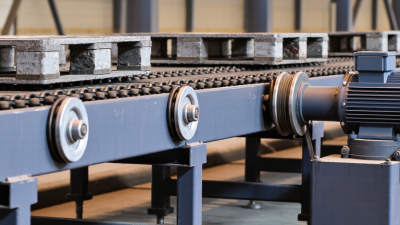
A chain driven conveyor uses an endless chain loop, sprockets, and a motor to move products along a fixed path. Unlike belt conveyors, it transfers force through chain links and sprocket teeth. This design suits pallets, crates, metal containers, and other heavy loads with rigid bases. A typical system can move products through loading, assembly, cooling, or packing areas. You may hear a steady mechanical rhythm near the drive station.
Industry demand supports this choice. Grand View Research reported that the global conveyor systems market reached about USD 8.9 billion in 2023. Its report also projects continued growth through 2030. The figure reflects wider automation demand, not chain conveyors alone. Still, it shows why reliable material movement remains important. Chain conveyors handle heat, dust, and uneven loads better than many lighter systems. They also support accumulation zones when engineers add suitable controls and spacing.
The trade-off deserves attention. Chains need lubrication, tension checks, and regular inspection for elongation. Poor alignment can create noise, vibration, or uneven movement. The Occupational Safety and Health Administration identifies conveyor nip points as serious machine hazards, so guarding and emergency stops require careful planning. A chain driven conveyor is not automatically the best answer. Product weight, surface condition, speed, cleaning needs, and maintenance skill should guide the decision. In practice, an oversized chain can waste energy and increase operating noise.
Why Choose a Chain Driven Conveyor for Your Business?
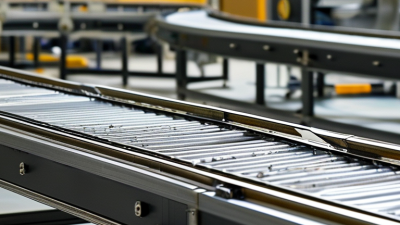
A Chain Driven Roller Conveyor moves products through powered rollers linked by chains. An electric motor turns a drive sprocket. The sprocket pulls the chain. Each connected roller then rotates and transfers the load forward. This design handles heavy cartons, pallets, and uneven bottoms more reliably than belt systems. It also supports controlled accumulation when sensors stop selected zones. That detail matters. Operators can inspect a carton without stopping the entire line. The U.S. Census Bureau reported that e-commerce represented 16.1% of total U.S. retail sales in 2024. Rising order volumes make predictable material flow increasingly valuable.
In practice, engineers size the chain, sprockets, motor, and roller spacing around the actual load. A 500-kilogram pallet needs different torque than a small parcel. Material Handling Institute’s 2024 Annual Industry Report found that 55% of surveyed companies planned to increase supply-chain technology investment. That pressure encourages automation, but installation decisions still require care. Poor alignment creates noise, wear, and uneven movement. Unprotected pinch points can also expose workers to serious injuries. Guards, emergency stops, and scheduled inspections are essential. I have seen designs fail because teams measured average loads, not peak loads. It is an easy mistake. A quieter chain, sealed bearings, and accessible lubrication points can improve daily operation, although maintenance is never completely eliminated.
| Data Dimension | Typical Data or Operating Principle | Why It Matters |
|---|---|---|
| Primary power transmission | An electric motor and gearbox rotate one or more drive sprockets. The sprocket teeth engage the chain links and create positive traction. | Positive engagement reduces slip and provides consistent movement compared with friction-driven conveying. |
| Load-supporting element | The chain, flights, slats, rollers, or attached carriers support and move the product along a guided path. | The conveyor can be configured for pallets, containers, bulk materials, fixtures, or products with irregular bottoms. |
| Drive arrangement | Common arrangements include end-drive, center-drive, and dual-chain configurations. The arrangement depends on conveyor length, load, and layout. | Correct drive placement helps manage chain tension, tracking, and available installation space. |
| Typical conveying speed | Many industrial chain conveyors operate at approximately 0.05–0.5 m/s, although the actual range depends on product, chain design, incline, and control requirements. | Lower speeds support controlled handling and positioning; higher speeds require suitable chain lubrication, guarding, and product stability. |
| Load capacity | Capacity is calculated from chain working load, number of strands, support spacing, conveyor length, friction, incline, and starting torque. It should be specified by engineering calculation rather than a universal rating. | A properly sized system can handle heavier loads and accumulation more reliably than many light-duty belt systems. |
| Incline capability | Chain conveyors can transport products horizontally or on an incline when the chain surface, flights, guides, and product stability are designed for the angle. | Positive chain engagement helps control movement where products could slide on a smooth belt. |
| Accumulation capability | Designed accumulation zones may allow products to queue while upstream conveying continues, provided the chain surface and controls are suitable for contact pressure. | Useful for buffering between processing, packaging, inspection, and storage operations. |
| Operating environment | Steel chains and frames can be selected for abrasive dust, elevated temperatures, moisture, washdown, or heavy industrial service, subject to material and lubrication choices. | Material selection affects corrosion resistance, wear life, sanitation, and maintenance frequency. |
| Tracking method | Sprockets, guide rails, wear strips, and correctly aligned shafts keep the chain on its intended path. | Good tracking limits uneven wear, noise, vibration, and unplanned downtime. |
| Maintenance points | Routine checks typically include chain tension, sprocket wear, lubrication where required, shaft alignment, guide condition, fasteners, guarding, and motor-gearbox performance. | Preventive maintenance helps reduce elongation, tooth wear, chain derailment, and unexpected stoppages. |
| Energy and control | Power demand varies with load, speed, conveyor length, incline, friction, acceleration, and accumulation. Variable-frequency drives can regulate speed and provide controlled starts. | Accurate sizing and controlled acceleration can improve efficiency and reduce mechanical shock. |
| Safety requirements | Moving chains, sprockets, shafts, and nip points require suitable guarding, emergency stops, lockout procedures, and operator training in accordance with applicable safety regulations. | Protection against entanglement and unexpected startup is essential for safe operation. |
| Best-fit applications | Common applications include pallet handling, containers, totes, assembly fixtures, metal parts, packaging lines, recycling, and heavy industrial material movement. | The design is especially suitable when the product is heavy, the surface is uneven, controlled positioning is required, or positive traction is beneficial. |
Note: Actual speed, load capacity, chain size, motor power, incline angle, and material selection must be confirmed through application-specific engineering calculations and applicable safety standards.
Why Choose a Chain Driven Conveyor for Your Business?
Which Materials Can It Transport?
A chain driven conveyor can move cartons, plastic totes, wooden pallets, metal bins, and packaged components. Its positive drive handles heavy loads with less slipping than many belt systems. In working facilities, operators often use it for engine parts, filled containers, drums, and stacked boxes. It can also carry products through assembly, inspection, and packing areas.
Not every material belongs on a chain conveyor. Loose powder, small fragile pieces, and wet food products may need enclosed or sanitary equipment. Sharp metal edges can damage the chain surface or create unsafe contact points. Material weight, shape, temperature, and bottom condition all affect performance. A pallet with uneven boards may travel poorly. That detail is easy to miss.
The conveyor can transport hot components when its chain, guides, and frame match the operating temperature. Oily materials may require suitable components and regular cleaning. Abrasive loads can accelerate wear, especially when dust settles around sprockets. During a site assessment, measure the heaviest load, smallest product, transfer gaps, and required speed. Test real materials when possible. A sample carton may behave differently after it is filled, wrapped, or slightly damaged. That practical check often prevents expensive redesigns.
A Driven Conveyor can move heavy loads with steady traction, even across demanding production routes. Its chain-based design handles pallets, containers, and steel fixtures with fewer interruptions. That reliability matters when every stoppage delays workers, orders, and customer deliveries. The 2024 MHI Annual Industry Report found that 83% of supply chain professionals view technology as a competitive advantage. Conveyor automation supports that direction by creating more predictable material flow.
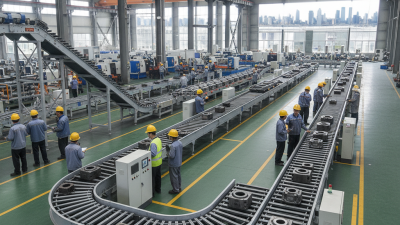
It also improves labor allocation. Workers spend less time pushing, lifting, or waiting beside transfer points. Instead, they can focus on inspection, packing, or machine supervision. A powered chain system can connect storage, processing, and dispatch areas with repeatable timing. This may reduce manual handling risks and improve throughput visibility. Practical results depend on correct sizing, controls, guarding, and maintenance. Small details matter.
Not every line needs one.
A poorly specified conveyor can waste energy, create noise, or damage sensitive loads. That is an uncomfortable reality. Engineers should review load weight, accumulation pressure, speed, cleaning conditions, and future capacity before installation. The U.S. Bureau of Labor Statistics continues to identify overexertion and bodily reaction among leading categories of nonfatal workplace injuries. Reducing unnecessary manual movement is therefore a sensible operational goal, not merely an automation trend. MHI’s report also shows sustained investment in supply chain technology, but technology alone does not fix weak processes. A Driven Conveyor delivers the strongest business value when its design matches real working conditions.
Selecting the right conveyor starts with the product, not the motor. Record load weight, dimensions, surface, temperature, speed, and required accumulation. A chain driven conveyor suits rigid loads, pallets, and heavy containers. Its positive drive handles demanding starts and frequent stopping. It also tolerates rougher industrial environments. However, exposed chains can create pinch points, noise, and more cleaning work. Safety guarding and planned lubrication remain essential.
A Belt Driven Conveyor may be better for cartons, bags, and products needing a continuous, gentler surface. It often runs more quietly and supports cleaner transfers. Do not select it only because it appears simpler. Belt tracking, oil exposure, sharp edges, and incline angle can change the decision. Dust changes everything. In a real facility, a five-minute product test can reveal slipping, tipping, or unstable accumulation.
Use a selection table with capacity, footprint, maintenance hours, sanitation needs, and total ownership cost. The MHI 2024 Annual Industry Report found that 83% of respondents considered supply-chain innovation important or very important. That pressure should encourage measurable testing, not fashionable equipment choices. Grand View Research projects the global conveyor systems market to grow at about 5.6% annually from 2024 to 2030, increasing the value of careful planning. Ask suppliers for load calculations, guarding details, noise expectations, and service intervals. Measure twice. A perfect choice is rare, and early assumptions sometimes fail beside the production line.
Comparative suitability for a pallet-transfer application
Chain-driven conveyors are often a strong option for heavy pallets, controlled product positioning, accumulation, and demanding working environments. The scores use a 1–5 engineering suitability scale: 5 means a strong fit for the stated requirement, while 1 means a limited fit. Final selection should also consider load dimensions, conveyor length, speed, incline, noise, maintenance access, and safety requirements.
A chain-driven conveyor can move heavy loads steadily through demanding production areas. Its strength becomes practical only when maintenance and safety receive daily attention. A Driven Roller Conveyor, for example, may carry loaded pallets, cartons, or metal parts. Each load changes the stress placed on the chain and rollers.
Inspect the chain before starting a shift. Look for dry links, unusual slack, bent guides, and metal dust near sprockets. Lubricate according to the equipment manual, not by guesswork. Excess lubricant can attract grit and create abrasive paste. Check roller bearings for heat, noise, or rough rotation. A simple temperature check can reveal trouble before a sudden stoppage. Guard sprockets and pinch points securely. Workers should never reach across moving sections. Emergency stops must remain visible, accessible, and tested at planned intervals.
Small details matter. Keep the conveyor frame level and remove loose debris from transfer points. Confirm that the load stays within the rated capacity and does not overhang dangerously. Lockout procedures should control unexpected movement during cleaning or repairs. Training should include realistic practice, not only a signed form. In busy facilities, inspections sometimes become rushed. That weakness deserves attention. A missed cracked weld or loose fastener can grow into expensive damage. Maintenance records should note the date, observed condition, corrective action, and responsible technician. Clear records support reliable decisions and help identify repeated failures.
China’s double-layer belt conveyor market is gaining attention as manufacturers, warehouses, logistics centers, and processing facilities seek higher throughput without expanding their floor space. Market research reports indicate growing interest in automated material-handling equipment that supports flexible layouts, continuous operation, and improved workflow coordination. A double-layer design responds to these demands by using parallel conveying levels for organized, space-efficient transport between storage, sorting, assembly, and dispatch areas.
Our advanced double-layer belt conveyor is engineered for electronics manufacturing, warehousing, logistics, food processing, and pharmaceutical applications. Its dual-layer structure enables materials to move in the same or opposite directions, helping reduce congestion and improve production efficiency. The system supports both horizontal and inclined conveying, making it suitable for connecting different workstations and floor levels. Adjustable configurations, stable belt movement, and tailored dimensions allow the equipment to match specific handling requirements while maintaining smooth operation.
As an experienced China-based factory, we provide practical conveyor solutions for suppliers, integrators, and end users seeking dependable equipment and responsive customization. The conveyor can be adapted to production lines, storage systems, sorting stations, and assembly workflows, offering a coordinated approach to modern material handling. Through efficient space utilization and continuous transportation, it helps businesses build more streamlined and scalable operations.
It can move cartons, plastic totes, wooden pallets, metal bins, drums, and packaged components.
Its positive drive reduces slipping under heavy loads.
Loose powders, fragile small pieces, and wet food products may need enclosed or sanitary equipment.
Measure the heaviest load, smallest product, transfer gaps, and required speed.
It can transport hot components when the chain, guides, and frame match the temperature.
Inspect the chain for dry links, unusual slack, bent guides, and metal dust.
Guard sprockets and pinch points securely.
Use lockout procedures to control unexpected movement.
A Chain Driven Conveyor is a powered material-handling system that uses interconnected chains, sprockets, and a motor to move products along a fixed path. Its durable structure and positive drive make it suitable for transporting heavy, rigid, or uneven loads that may be difficult for other conveyor types. Depending on its design, it can handle pallets, containers, boxes, metal components, packaged goods, and other industrial materials.
For businesses, a Chain Driven Conveyor can improve workflow efficiency, reduce manual handling, support consistent product movement, and perform reliably in demanding environments. Selecting the right system requires evaluating load weight, product dimensions, conveyor length, speed, layout, operating conditions, and available space. Maintenance should include regular chain lubrication, tension checks, sprocket inspections, cleaning, and timely replacement of worn parts. Proper guarding, emergency stops, operator training, and safe loading practices are also essential to promote reliable performance and workplace safety.