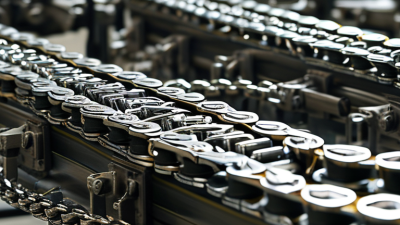
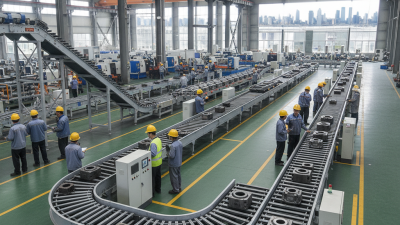
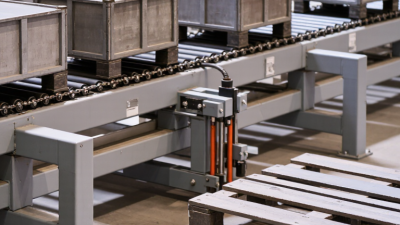
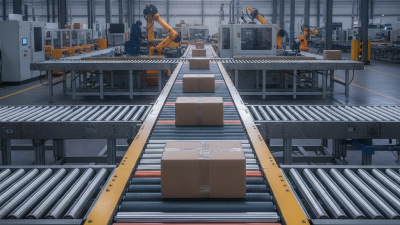
So, you're on the hunt for chain conveyor manufacturers in China, right? Honestly, it's not just about who's got the lowest catalog price. I mean, sure, that's important, but you've got to dig deeper. Factory experience, engineering know-how, how they test things, and the support you'll get after the sale—these all matter a ton. A good supplier will actually walk you through chain selection, load limits, what frame materials they use, lubrication maintenance, and how long the thing is expected to last. Plus, before they even start production, they should give you solid drawings, provide sample data, and keep the communication crystal clear. You don't want any surprises later.
Let’s be honest—hunting for the right Chinese manufacturer can feel overwhelming. But this guide is here to help, cutting through the noise with practical criteria that actually matter. We’ll look at suppliers that make standard chain conveyors, those that can whip up a customized chain conveyor line, and others that build full chain assembly lines from start to finish. Some factories specialize in chain drive conveying equipment for industries like automotive, packaging, food, or warehousing—you name it. Then there are the ones that go the extra mile, creating specialized systems like speed multiply chain conveyors, which are all about keeping products moving at just the right pace. And here’s the thing: the small details? They can make or break your operation.
Alright, when you're looking at a new line, there are a few things you can't skip – sprocket alignment, chain tension, guarding, noise levels, and how easy it is to hit the emergency stop. For lighter cartons, a single row chain might be just fine, but if you're hauling wider loads, a double row gives you that extra stability. That said, you can't just pick based on that – you actually have to think about your product weight and the working conditions before making a call. And here's the thing: a slick website doesn't tell you much about their actual manufacturing chops. You want to see real proof – factory audits, past projects they've done, material certificates, and acceptance testing. Those speak volumes.
So, here's the thing: no ranking is set in stone. Supplier performance can shift—it all depends on management, sourcing, and how complex your project is. Some manufacturers are great communicators but lack experience in advanced automation. Others have strong engineering but their documentation is a bit of a mess. That's why this guide avoids making any easy promises; instead, it encourages you to compare based on real evidence. And keep in mind, the top chain conveyor manufacturers aren't always the cheapest. They're the ones who truly get the application, spot those hidden risks that catch you off guard, and actually support the equipment long after it's installed – you know, the real deal.
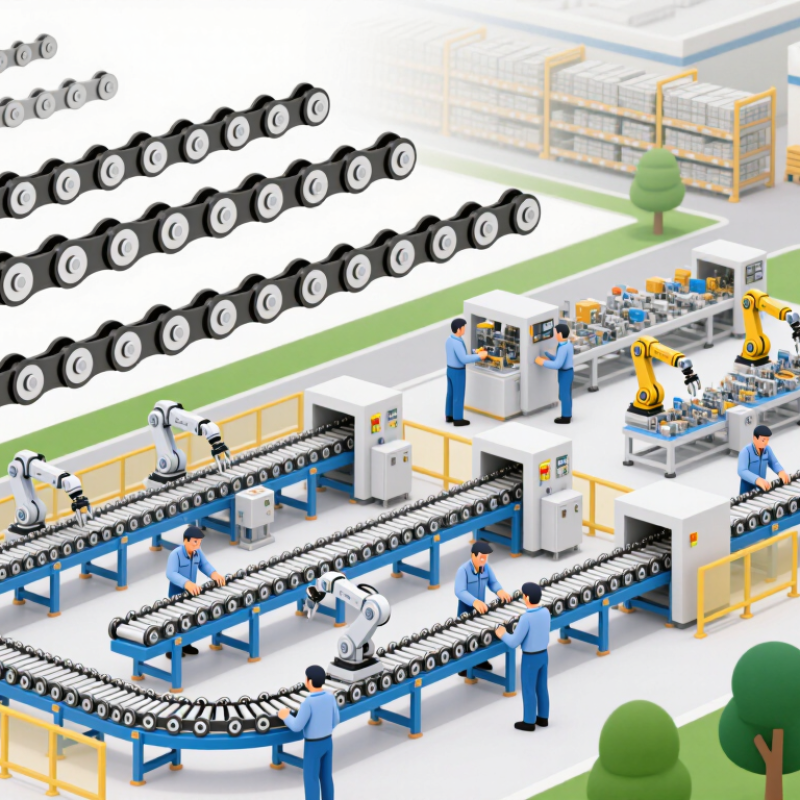
China’s chain conveyor market is divided by application, load, and operating environment. The main segments include automotive assembly, food processing, parcel handling, electronics, and warehouse storage. In 2024, China’s online retail sales reached about RMB 15.5 trillion, according to the National Bureau of Statistics. Physical-goods sales exceeded RMB 13 trillion. These figures support continued demand for conveyors in sorting centers and fulfillment facilities.
Manufacturers serving this market usually compete on modular design, stainless-steel construction, control integration, and after-sales support. Chain conveyors remain useful where pallets, crates, or heavy components need stable movement. A 2024 MarketsandMarkets report valued the global conveyor system market at roughly USD 9 billion, with Asia-Pacific identified as a major growth region. However, public reports rarely separate China’s chain conveyor revenue from the wider conveyor category. That limitation matters.
Factory buyers often compare chain pitch, allowable load, speed range, noise, and cleaning access. Automotive lines favor durable slat chains and precise positioning. Food plants require corrosion-resistant materials and simpler sanitation procedures. Warehouses prioritize compact transfers and reliable sensors. The details are practical. Small design errors can cause costly stoppages.
Industry rankings also need caution. Many Chinese manufacturers are regional specialists, not nationally transparent enterprises. Some offer strong engineering but limited overseas service capacity. Others publish impressive specifications without enough field data. Buyers should request test records, maintenance intervals, spare-parts lead times, and verified customer references before selecting a supplier.
When evaluating top chain conveyor manufacturers in China, compliance should begin before a factory tour. ISO 9001 shows that documented quality controls guide purchasing, welding, inspection, and after-sales service. Ask for revision records, calibration logs, and corrective-action reports. These details reveal whether the system operates daily or only during audits. From practical equipment reviews, traceability matters when a chain pin, sprocket, or guard needs replacement months later. A polished certificate is useful. It does not prove every conveyor is reliable.
ISO 606 helps manufacturers select compatible chain dimensions, pitch, and attachment details for demanding applications. This is especially important for a Roller Chain Conveyor carrying heavy cartons or pallets. However, ISO 606 compliance should match the actual load, speed, lubrication, and operating environment. CE marking requires applicable risk assessment, technical documentation, and a declaration of conformity. It is not simply a quality badge. Some buyers, including me, have trusted paperwork too quickly.
A serious manufacturer should explain the difference between a Stainless Steel Chain Line and a Carbon Steel Chain Conveyor. Stainless steel suits washdown areas, while carbon steel can offer strength and lower cost in dry facilities. A Straight Chain Line is easier to inspect, but a Curved Chain Conveyor needs careful tension control. Inclined Chain Conveying requires verified grip and braking performance. These choices should appear in drawings, calculations, and test records. Specifications can still be imperfect. Open discussion of limitations is often more credible than confident promises.
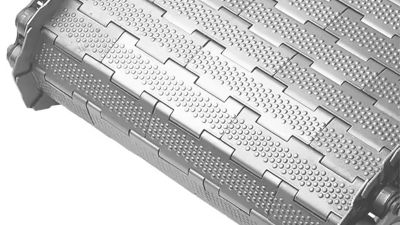
Leading Chinese chain conveyor manufacturers are often strongest when they match equipment design with a specific production environment. Their factories commonly support food, beverage, packaging, logistics, and material handling. From plant visits and commissioning work, I have learned that hygiene and access matter as much as speed. Food-grade stainless steel chain plate designs resist washdown, though weld quality and drainage still require close inspection. That detail is easy to miss.
For straight transfers, a Straight chain plate line offers stable movement and simple maintenance. A Curved chain plate conveyor saves floor space around fillers, packers, or pallet stations. An Inclined chain plate conveyor line handles elevation changes, but product slipping must be tested with real loads.
Double-layer chain plate conveying equipment can separate cooling, inspection, or return routes in compact workshops. These products serve different applications.
For heavy cartons, drums, and metal containers, a Heavy-duty slat chain machine needs reinforced frames, accurate sprocket alignment, and protected bearings. Leading suppliers usually provide layout drawings, load calculations, trial runs, and replacement-part guidance.
Ask for speed ranges, noise readings, cleaning procedures, and verified load capacity. I would not trust a brochure alone. A conveyor may run smoothly during testing yet struggle after dust, heat, or uneven loading appears. That is where practical engineering judgment matters.
When comparing Chinese chain conveyor manufacturers, capacity should be measured with operating data, not catalogue width. Grand View Research valued the global conveyor systems market at about USD 7.6 billion in 2022, with continued growth expected through 2030. That expansion increases pressure to verify factory claims.
Load comes first. Calculate kilograms per meter, then include product spacing and shock loads. A 500-kilogram pallet moving on a 10-meter conveyor creates a different demand from 50 kilograms spread evenly. Speed changes throughput: Throughput equals product rate multiplied by load per product. For example, 30 pallets per hour at 500 kilograms equals 15,000 kilograms per hour. Chain pitch also matters. Smaller pitch can support closer product spacing, while larger pitch may handle heavier loads. It is not automatically stronger.
A practical test should record motor torque, chain speed, starts per hour, and actual accumulation time. MHI’s 2024 Industry Report identifies automation investment and labor pressure as continuing material-handling priorities, but automation does not remove poor calculations. Ask manufacturers for load-test records, duty-cycle assumptions, and maintenance intervals. ISO 5048 provides established methods for conveyor power calculations, although chain conveyors still require application-specific engineering. I have seen capacity estimates fail when friction, incline, or wet-floor conditions were ignored. That uncomfortable detail matters. Select suppliers that explain their limits clearly, not those offering the largest number.
Chinese chain conveyor manufacturers should be compared by engineering depth, not catalog size. Grand View Research estimated the global conveyor systems market at about USD 7.4 billion in 2023, with continued growth through 2030. MarketsandMarkets projects the market could reach USD 10.6 billion by 2028. This pressure increases demand for flexible, application-specific equipment.
Material selection changes service life. Stainless steel 304 suits general food handling, while 316 performs better near salt, chemicals, and frequent washdown. Carbon steel reduces cost but needs stronger corrosion protection. Acetal, nylon, and UHMW-PE components can reduce noise and friction. I would request load tests, weld inspection records, and spare-part lists. A polished sample is not enough.
Look for more than ten configurations, including straight, incline, decline, L-shaped, Z-shaped, U-shaped, S-shaped, tabletop, pallet, accumulation, overhead, and indexing layouts. Custom options should cover chain pitch, sprocket size, conveyor width, speed, guarding, sensors, and control interfaces. The Conveyor Equipment Manufacturers Association reports that conveyor selection depends heavily on load, speed, environment, and maintenance access. Small details matter. A narrow inspection gap may stop production later. One honest weakness remains: some quotations compare only purchase prices, ignoring cleaning time and energy use. That makes a cheap conveyor expensive.
The chart compares common conveyor configurations by their typical maximum conveying angle. Actual limits depend on material characteristics, belt or chain design, cleat height, loading method, and safety requirements. Stainless steel, carbon steel, and food-grade polymer components can be selected according to the application.
Who Are the Top Chain Conveyor Manufacturers in China?
A dependable manufacturer proves performance before shipment, not through attractive brochures. During factory audits, I look for a documented FAT test with measured results. The test should cover speed, load, noise, emergency stops, and continuous operation. A Stainless steel chain plate must move smoothly without visible binding. Not just paperwork.
For a Conveyor, engineers should explain the safety factor behind every load rating. A Slat chain conveyor line carrying hot bottles needs allowance for impact, vibration, and uneven loading. The Metal chain plate assembly line should also show weld quality, sprocket alignment, and guarding details. A Top chain conveyor may appear stable while its return track creates hidden wear. This is where practical inspection matters.
Service life depends on more than stainless material. A 304 stainless steel chain plate conveyor needs suitable lubrication, correct tension, and regular cleaning. FAT records should include chain elongation, motor temperature, and repeated start-stop tests. I have seen clean reports hide poor alignment during production trials. That experience makes witness testing essential. Manufacturers should provide replacement intervals, maintenance access, and traceable component records. Their estimates may still be imperfect. Real dust, moisture, and operator habits can shorten service life, so suppliers should state assumptions clearly.
| Quality Verification Dimension | Recommended Acceptance Criteria | Typical FAT Evidence | Reference or Design Consideration |
|---|---|---|---|
| Technical documentation | Approved general arrangement drawings, load calculations, component datasheets, operating manuals, spare-parts lists, and inspection records. | Document register with revision numbers, approval status, and traceable component identification. | Documents should match the final supplied configuration rather than a standard catalogue model. |
| Factory Acceptance Test (FAT) | Conveyor starts, stops, runs in the required direction, and operates without abnormal noise, binding, excessive vibration, or chain derailment. | Signed FAT checklist, test photographs or video, measured current, speed, noise observations, and recorded deviations. | FAT scope should be agreed before production and should include the actual control sequence where practical. |
| No-load running test | Continuous operation for the agreed test period with stable tracking, correct lubrication, and no interference between chain, sprockets, guides, and frame. | Run-time record, inspection log, temperature observations, and confirmation of emergency-stop functionality. | A no-load test verifies assembly and controls but does not replace a loaded performance test. |
| Loaded performance test | Where feasible, the conveyor should be tested with the specified or representative product load at the design speed and inclination. | Load description, throughput result, motor current, speed measurement, restart test, and recorded operating temperature. | If a full-load FAT is impractical, the supplier should provide calculation evidence and conduct a site acceptance test. |
| Chain tensile safety factor | The calculated chain working tension should remain below the allowable working load stated for the selected chain, with documented allowance for starting, shock, incline, and uneven loading. | Calculation sheet showing chain pull, peak starting load, chain rating, and design margin. | The required safety factor is application-specific; it should not be assumed from chain breaking load alone. |
| Drive and motor sizing | Motor and gearbox torque must cover steady-state resistance, acceleration, inclination, product accumulation, and the specified service factor. | Motor nameplate data, gearbox ratio, torque calculation, overload-protection settings, and measured running current. | The service factor should be justified by duty cycle, starts per hour, shock loading, and accumulation conditions. |
| Sprocket and chain alignment | Sprockets should be aligned, securely mounted, and correctly engaged with the chain; shafts should be parallel within the project tolerance. | Alignment inspection report, shaft-level measurements, fastener checks, and photographs before guarding is installed. | Poor alignment accelerates wear, increases noise, and can cause chain climbing or derailment. |
| Chain tension and take-up | Initial slack, take-up travel, and adjustment procedure should be defined for the selected chain, conveyor length, temperature, and operating duty. | Measured initial tension or slack, take-up position, adjustment instructions, and inspection criteria. | Both excessive tension and excessive slack can shorten chain, bearing, and sprocket life. |
| Guarding and operator safety | Moving chains, sprockets, shafts, and nip points should be guarded; access doors should be secured and safety devices should stop hazardous motion. | Guarding inspection, emergency-stop test, interlock test, warning-label verification, and risk-assessment records. | Safety design should follow a documented machinery risk assessment and applicable local regulations. |
| Electrical and control checks | Control logic, sensors, overload protection, emergency stops, fault indications, and restart behavior should operate as specified. | I/O checklist, insulation or continuity results where applicable, sequence test, fault simulation, and control-panel inspection. | The test should verify that power recovery does not cause an unintended automatic restart. |
| Wear and service-life target | The supplier should state a design service-life target based on operating hours, load, speed, environment, lubrication, and maintenance frequency. | Life calculation, wear-limit criteria, maintenance schedule, and recommended replacement intervals for chain, sprockets, guides, and bearings. | Service life is not a fixed universal value; contamination, impact loading, poor lubrication, and misalignment can reduce it substantially. |
| Lubrication and maintenance | Lubricant type, application method, frequency, inspection points, and cleaning requirements should be clearly identified. | Lubrication chart, maintenance checklist, access assessment, and confirmation that lubrication points are reachable safely. | Food, dust, moisture, corrosive chemicals, and high-temperature environments require application-specific materials and procedures. |
| Surface treatment and corrosion protection | Material grade, coating system, weld finish, and corrosion-protection method should match the installation environment. | Material certificates where required, coating inspection, weld visual inspection, and finish-quality photographs. | Coating selection should consider humidity, washdown, chemicals, outdoor exposure, and hygienic requirements. |
| Spare parts and after-sales support | Critical spares, recommended stock levels, troubleshooting procedures, response channels, and warranty conditions should be documented. | Spare-parts list, service contacts, warranty terms, commissioning plan, and training records. | Support quality should be evaluated by response time, documentation quality, replacement-part availability, and technical competence. |
Price alone can mislead when selecting a Chinese chain conveyor manufacturer. MHI’s 2024 Annual Industry Report states that 55% of surveyed supply-chain leaders planned to increase technology investment. That pressure makes dependable delivery and measurable productivity essential. Compare three quotations using identical specifications, drawings, testing requirements, and Incoterms. A low unit price may hide tooling changes, export packing, installation support, or spare-chain costs. Ask for production records, load calculations, and recent factory references. Experience matters, but documentation proves it.
Lead time should include engineering approval, sampling, production, inspection, and shipping. Request a milestone schedule, not a single promise. For high-speed accumulation, confirm whether a 3-speed chain, Triple speed conveyor chain, or 3-speed tooling chain matches the product weight and pallet pitch. Speed multiplier chain designs can reduce motor speed requirements, but they may increase noise and wear. Light-duty 3-speed chain suits smaller loads. Heavy-duty 3-speed chain needs stronger rollers, shafts, and frames. ISO 9001 certification supports process control, yet it does not guarantee application success.
Tips: Calculate total cost of ownership over five years. Include energy, lubrication, replacement links, downtime, labor, warranty response, and rejected products. Request warranty terms in writing, including exclusions and response time. The U.S. Department of Energy reports that motor systems can represent a major share of industrial electricity use, so efficiency deserves measurement. I would also budget for unexpected alignment work. Supplier claims are not always perfectly comparable. Test the chain under real load before approving volume production.
Stainless steel conveyor lines are transforming material handling in food, pharmaceutical, and electronics manufacturing by combining cleanliness, durability, and reliable movement. Their stainless steel chains and high-strength frames resist corrosion and support demanding production environments where hygiene and stable operation are essential. Smooth, continuous conveying helps reduce manual handling, improve workflow consistency, and maintain efficient connections between processing, inspection, packaging, and assembly stations.
Designed for flexible factory layouts, these conveyor systems can transport materials horizontally, along inclines, or through turns. Their modular structure allows sections to be customized, expanded, and connected according to specific workshop requirements. Auxiliary components can also be integrated to create a coordinated conveyor and operation system, helping ensure accurate material transfer and smoother process transitions. For food and pharmaceutical facilities, the corrosion-resistant construction supports regular cleaning and strict sanitation routines. In electronics manufacturing, dependable and controlled movement helps protect components while maintaining an organized production flow. With adaptable configurations and robust performance, stainless steel chain conveyors provide an efficient solution for modern facilities seeking durable equipment and improved operational effectiveness.
It shows documented controls for purchasing, welding, inspection, and after-sales service.
Review inspection forms, equipment calibration dates, and recent corrective-action reports.
It helps match chain dimensions, pitch, and attachment details.
It should involve risk assessment, technical documents, and a declaration of conformity.
Stainless steel suits washdown areas and frequent cleaning.
Straight lines are generally easier to inspect and maintain.
Start with kilograms per meter, product spacing, and possible shock loads.
Thirty pallets per hour at 500 kilograms each equals 15,000 kilograms per hour.
Request motor torque, chain speed, starts per hour, and actual accumulation time.
Ask for duty-cycle assumptions and application-specific calculations.
China’s chain conveyor market serves diverse industries, including manufacturing, logistics, food processing, mining, and material handling. This overview explains how leading Chain Conveyor Manufacturers are evaluated through ISO 9001 quality systems, CE safety requirements, and ISO 606 chain standards. It also examines product selection by application, including horizontal, inclined, heavy-duty, slat, pallet, drag, and other conveyor configurations.
Key capacity factors include load weight, conveying speed, chain pitch, product dimensions, and overall throughput. Buyers should compare construction materials, customization capabilities, automation options, and operating environments before making a decision. Reliable quality verification may involve factory acceptance testing, safety-factor calculations, component inspections, and estimated service-life analysis. Finally, supplier selection should consider not only purchase price, but also production lead time, warranty coverage, technical support, maintenance needs, energy use, and total cost of ownership. This approach helps companies identify dependable solutions that balance performance, durability, safety, and long-term value.