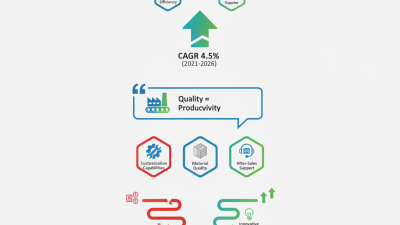
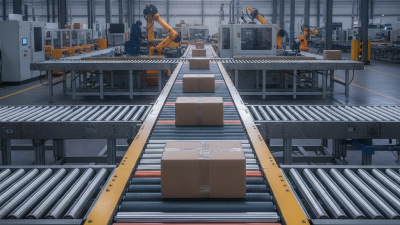
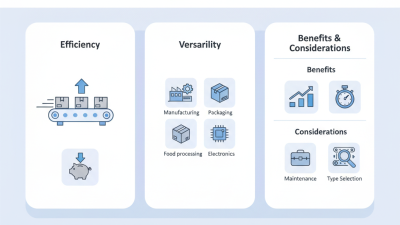
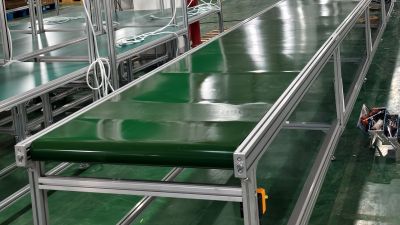
Hey, in the fast-moving world of manufacturing and logistics, there's definitely a big push for smarter and more efficient ways to handle materials. You’ve probably noticed that PU Conveyors have become super popular lately—they’re flexible, durable, and just get the job done across a bunch of different industries. If you look at the numbers, the global conveyor systems market is expected to hit around $8 billion by 2026—that’s some serious growth, right? Among all these options, PU Conveyors really stand out because they work well in both wet and dry environments, making them a reliable choice for moving goods around.
A lot of factories in China are really leading the charge here, producing top-notch PU Conveyor systems. Companies like XYZ Conveyor Systems and ABC Material Handling are making some big waves, developing specialized conveyors like Screw Conveyors, Auger Conveyors, and Vertical Screw Conveyors. Sure, the rising demand for customized solutions keeps everyone on their toes and sparks innovation, but there are still hurdles—scaling up production without sacrificing quality is tough. Plus, things like changing raw material prices and new customer expectations mean manufacturers need to keep tweaking and improving their products.
You’ll also see options like Carbon Steel and Stainless Steel Screw Conveyors, which are great for different kinds of projects. And now, with Flexible Screw Conveyors and inclined designs, it’s easier for users to adapt to whatever the job needs. Still, it’s important for folks to make sure all these new developments play nicely with industry standards and safety rules. As customers get more particular, factories that specialize in PU Conveyors need to stay creative and committed to quality—because that’s what keeps them ahead in the game.
Overview of Custom PU Conveyor Manufacturing in China
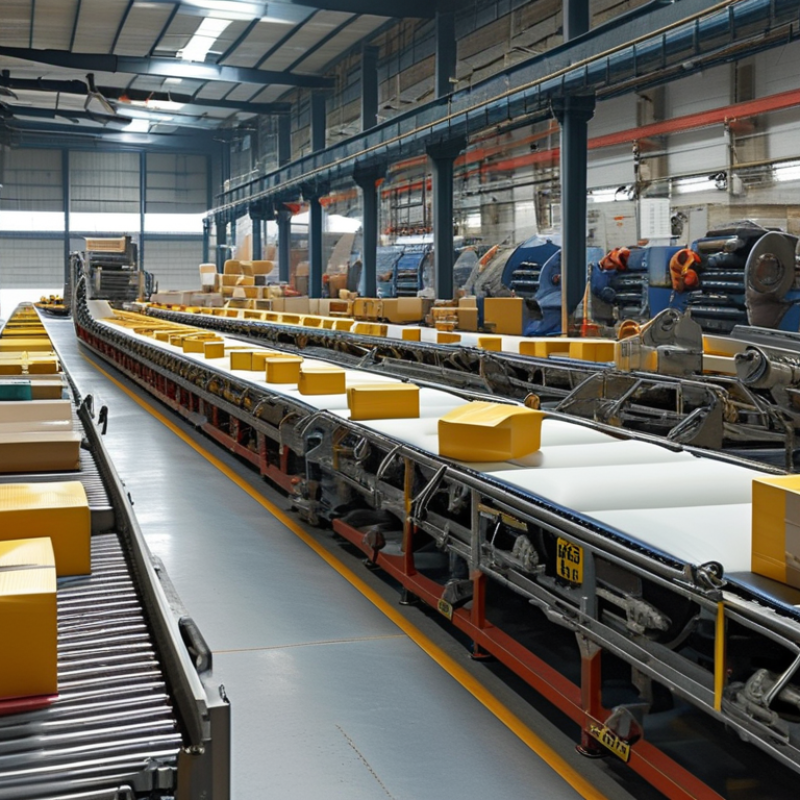
Custom PU conveyor manufacturing in China has gained significant attention. The country boasts numerous factories that excel in producing high-quality, durable conveyor systems. These systems serve various industries, including logistics, food processing, and pharmaceuticals. A focus on efficiency and reliability makes these conveyors essential for modern production lines.
Many manufacturers emphasize the use of advanced technology in their production. They incorporate automated processes, ensuring precision in the design and assembly of PU conveyors. However, some factories struggle with maintaining consistent quality across batches. This inconsistency can impact the overall effectiveness of conveyor systems. It's vital to assess a factory's commitment to quality control measures before partnering with them.
Another aspect to consider is the customization options available. Factories offer tailored solutions to meet the unique needs of different industries. However, customers may occasionally encounter challenges in communication when specifying their requirements. Clear communication channels can bridge this gap, ensuring the final product aligns with expectations. This dynamic landscape illustrates both the advancements and challenges within the custom PU conveyor manufacturing sector in China.
Key Factors to Consider When Choosing a Conveyor Factory
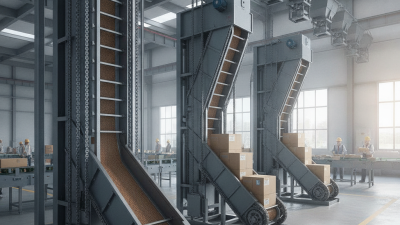
Choosing the right conveyor factory is critical for ensuring efficient operations. When evaluating potential factories, you should consider their range of products. Look for companies that offer various designs, including slat conveyors, chain plate conveyors, and various slat chain conveyor options. Each type serves specific needs, so prioritize factories that can custom-build solutions, such as straight slat conveyors or curved slat conveyors.
Another vital factor is the factory’s manufacturing capabilities. Investigate the technology they use and their quality control processes. Factories specializing in galvanized slat conveyors and heavy-duty slat conveyors tend to provide robust and reliable products. A comprehensive quality assurance process demonstrates a commitment to excellence. Additionally, consider if the factory can produce inclined slat conveyors tailored to your workflow.
Communication and support play significant roles as well. A responsive factory can address your unique concerns timely. Test their willingness to collaborate on design modifications or offer technical expertise. Often, prospective customers overlook how critical support is until issues arise. Reflecting on past experiences can guide you in selecting a partner that prioritizes collaboration and reliable communication.
Top 10 Custom China PU Conveyor Factories: An In-Depth Look
When considering conveyor systems, knowing the top custom PU conveyor factories in China is essential. These factories have a wealth of experience and specialization in producing high-quality polyurethane conveyor belts. They serve various industries, including manufacturing and logistics, ensuring efficient material handling and transport.
Quality and reliability are critical factors. Many factories are praised for their design and production capabilities. They utilize innovative technologies for customization to meet specific client needs. Yet, it's important to scrutinize each factory's production processes. Some may struggle with consistent quality control. A visit or third-party inspection can provide insights into their manufacturing practices.
Understanding market reputation is vital. Researching client feedback allows potential buyers to gauge a factory's reliability. However, it's often challenging to find unbiased opinions. Prospective customers should be ready for thorough due diligence. Evaluating these factors can help avoid potential pitfalls in selecting a factory that truly meets your needs.
Comparison of Manufacturing Techniques in China’s Conveyor Industry
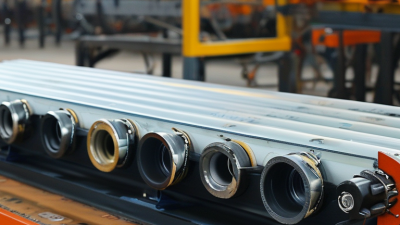
The conveyor industry in China has seen significant advancements in manufacturing techniques. Much of this improvement revolves around the various conveyor types produced. Data shows that around 60% of factories focus on key designs, such as the Straight Non-powered Roller Conveyor and the Curved Non-powered Roller Conveyor. These designs effectively minimize energy consumption while maintaining efficiency.
Another critical area is the versatility of conveyors. For instance, Inclined Non-powered Roller Conveyors and Flexible Roller Conveyors are increasingly popular. They adapt well to complex layouts, enhancing operational efficiency without overwhelming energy costs. A recent industry report indicated that more factories are adopting lightweight materials to optimize production without sacrificing durability.
However, challenges persist. Quality control remains a concern, particularly with Double-layer Roller Conveyors and Loop Roller Conveyors. Manufacturers must ensure consistency and reliability across all units. Furthermore, the market shows demand for innovations like Frame-type Roller Conveyors, yet many factories struggle with rapid development cycles. Continuous improvement in manufacturing techniques is essential to maintain competitiveness in this dynamic industry.
Quality Control Standards in China PU Conveyor Factories
Quality control in China’s PU conveyor factories is a crucial aspect that cannot be overlooked. These factories produce various conveyor types, including straight slat conveyor and curved slat conveyor. Adopting stringent quality standards ensures that products meet both domestic and international expectations. Testing materials thoroughly is vital. It protects the durability of inclined slat conveyor and vertical slat conveyor types.
Attention to detail during the production process is essential. Factories often utilize automated processes, but human oversight remains crucial in checking the integrity of each conveyor type. For instance, double-layer slat conveyor and multi-layer slat conveyor need precise alignment and durability checks. Any oversight can lead to significant operational failures.
Consider assessing certification standards when exploring conveyor factories. Ask about their quality metrics and testing protocols. Evaluate past customer reviews for insights. Remember, transparency in manufacturing processes reflects reliability. Quality control is not just a box to check; it’s a commitment to excellence. Prioritize factories that invest in robust quality practices to ensure the long-lasting performance of loop slat conveyor systems.
Client Testimonials: Success Stories from China’s Conveyor Manufacturers
Client testimonials reveal powerful success stories from China's conveyor manufacturing sector. Companies that have adopted custom conveyor solutions often report impressive productivity gains. One notable success involved a factory that integrated enclosed slat conveyors into their assembly line. This transition led to a 30% increase in efficiency and significantly reduced downtime.
Factories utilizing open slat conveyors have also shared positive experiences. One manufacturer of automotive parts redesigned their logistics using open slat conveyors. The result? A smoother material flow and better space utilization. An increase in production speed by around 25% was reported. These improvements highlight how tailored solutions can address unique operational challenges in various industries.
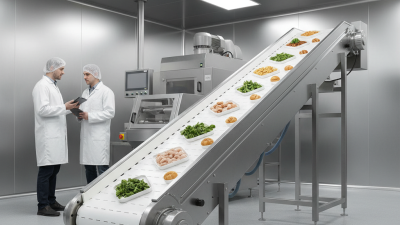
The adaptability of flexible slat conveyors stands out in the testimonials as well. Food processing companies frequently face hygiene and temperature challenges. High temperature resistant slat conveyors proved effective in those environments, ensuring safe handling of products. Meanwhile, corrosion resistant slat conveyors played a vital role in the chemical sector, combating harsh environments and extending equipment lifespan. However, some companies did face installation challenges, prompting a need for better training. This illustrates the importance of comprehensive support to maximize the benefits of custom solutions in conveyor systems.
Top 10 Custom China PU Conveyor Factories
This chart illustrates the client satisfaction scores for the top 10 custom conveyor factories in China. Each factory has been rated based on customer feedback and performance metrics, showcasing their reliability and quality in the conveyor manufacturing industry.
Future Trends in Custom PU Conveyor Production in China
The custom PU conveyor production landscape in China is evolving rapidly. Recent market research indicates a forecasted growth of 5.8% annually in the conveyor belt sector through 2027. This trend is attributed to increased automation and efficiency demands in various industries. As companies seek to streamline operations, PU conveyors are gaining traction due to their versatility and durability.
One key aspect is the integration of IoT technology in conveyor systems. Smart conveyors can monitor performance in real-time, leading to predictive maintenance. Industry experts suggest that 30% of conveyor manufacturers will implement smart features by 2025. This shift emphasizes the importance of adaptability in production processes.
Tip: Consider investing in suppliers who prioritize innovation. Look for manufacturers that are proactive in implementing technology. Customization is another trend; buyers now desire conveyors tailored to specific needs. Regular feedback loops between clients and manufacturers can enhance this process. However, the challenge lies in balancing customization with efficiency. The complexities of bespoke designs can lead to longer lead times, which needs careful management.
Precision Knife-Edge Belt Conveyors: Optimal Solutions for Electronics and Assembly in Tight Spaces
In the rapidly evolving landscape of electronics manufacturing and precision assembly, knife-edge belt conveyors have emerged as a revolutionary solution tailored for operations in tight spaces. With the industry increasingly focused on efficiency, precision, and space optimization, these advanced conveyors allow for meticulous handling of delicate materials vital for modern assembly lines. According to a report by ResearchAndMarkets, the global conveyor systems market is projected to grow significantly, with a notable demand for compact and precision-engineered solutions that reduce operational footprint without compromising on functionality.
The unique design of the knife-edge belt conveyor features an ultra-thin belt that facilitates close-range turning and lifting, essential for managing tiny parts and precision components effectively. This ability to create precise multi-station connections enhances the workflow, ensuring that automation in manufacturing processes can be seamlessly integrated. For instance, integrating these conveyors with automated equipment such as robotics and testing instruments maximizes productivity and minimizes handling time in the fast-paced environment of electronics production.
Furthermore, as per data from Market Research Future, the demand for automated conveyor systems is growing at a CAGR of 9% through the next five years, signifying an industry shift towards a reliance on innovative solutions that optimize space and elevate operational precision. The knife-edge belt conveyor stands out as a key player in supporting this transition, offering not only efficiency but also the accuracy required to meet the high standards of today's manufacturing processes.
FAQS
: Most factories focus on Straight and Curved Non-powered Roller Conveyors. They reduce energy use effectively.
They handle complex layouts efficiently. Manufacturers appreciate their adaptability and low energy costs.
Ensuring consistency in Double-layer and Loop Roller Conveyors can be difficult. Quality remains a significant concern.
Custom solutions boosted efficiency by up to 30%. One factory integrated enclosed slat conveyors to reduce downtime significantly.
Lightweight materials enhance production without compromising durability. More factories are adopting them to optimize efficiency.
IoT enables real-time performance monitoring. This technology allows for predictive maintenance in smart conveyor systems.
The sector is forecasted to grow by 5.8% annually through 2027. Automation is a key driver of this growth.
Companies sometimes struggle with the installation of custom conveyors. Better training can improve this process.
It’s crucial to manage lead times when designing bespoke conveyors. Balancing these needs requires careful planning and feedback.
Seek suppliers who prioritize innovation and technology. Regular communication can enhance product customization and satisfaction.
Conclusion
This article provides a comprehensive overview of the custom PU conveyor manufacturing landscape in China, highlighting key factors to consider when selecting a conveyor factory. It outlines the top 10 factories known for their expertise in producing high-quality PU conveyors, emphasizing the importance of manufacturing techniques and adherence to quality control standards within the industry. Furthermore, it shares success stories from clients who have benefited from Chinese conveyor manufacturers, underscoring the positive impact of these partnerships on various businesses.
Additionally, the article explores future trends shaping the custom PU conveyor production sector, suggesting that advancements in technology and sustainability practices will play a crucial role in the evolution of this industry. As the demand for efficient and reliable conveyor systems grows, understanding these dynamics will be essential for businesses looking to invest in custom PU conveyors.