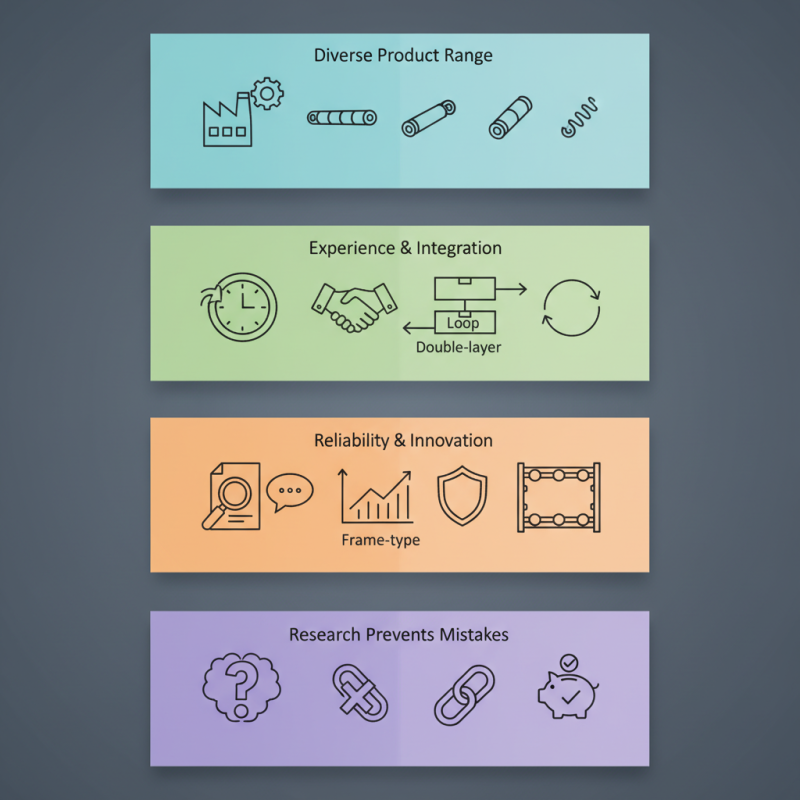
Picking the right Conveyor Roller Manufacturer is super important when you’re looking to keep your business running smoothly and efficiently. In today’s competitive market, there are quite a few options out there, from straight non-powered roller conveyors to curved ones. Each kind of conveyor has its own place and purpose—helping you handle materials better. But honestly, not all manufacturers are created equal. Some deliver top-notch quality and reliability, while others might leave you hanging.
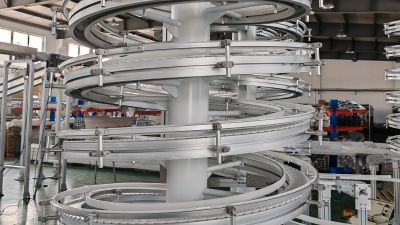
Experience really counts here. A manufacturer with years under their belt knows the ins and outs of different applications—so they can recommend the right solutions for your specific needs. They should offer a wide range of products, like Inclined Non-powered Roller Conveyors and Flexible Roller Conveyors, so you’re covered no matter what. Also, it’s worth thinking about how their solutions play nice with other systems—things like Double-layer Roller Conveyors and Loop Roller Conveyors. Compatibility matters.
Don’t forget to check out client testimonials and case studies—they’ll give you a good sense of their reliability. Sadly, a lot of businesses skip this step and end up stuck with equipment that just doesn’t cut it. The best Conveyor Roller Manufacturers are all about innovation and durability—offering options like Frame-type Roller Conveyors that boost system performance. It’s worth putting in the time to do your research—trust me, it can save you from some costly mistakes down the line.
Understanding the Importance of Quality in Conveyor Roller Manufacturing
When selecting a conveyor roller manufacturer, understanding quality's significance is crucial.
Quality assurance speaks to the reliability and lifespan of products. Roller types, such as powered roller conveyors and heavy-duty roller conveyors, require rigorous testing and standards. It’s not enough for a manufacturer to claim expertise. They must demonstrate it through consistent performance and feedback from industries.
Investing in a telescopic roller conveyor or a curved roller conveyor means relying on manufacturing processes that prioritize precision. Poor quality can lead to breakdowns and increased costs. Don’t overlook the small details in design and material choice. A manufacturer should provide transparent information and documentation about their processes. This builds trust and ensures accountability.
Look for reviews and case studies showcasing the manufacturer’s impact. A double-layer roller conveyor can offer enhanced functionality, but only if manufactured correctly. Ask about their warranty policies and support services. Little things can signify larger issues in manufacturing quality. Always aim for a manufacturer who prioritizes quality over quantity, reflecting a commitment to excellence.
Evaluating Manufacturer Experience in Conveyor Roller Production
When evaluating manufacturer experience in conveyor roller production, it’s essential to consider their history and expertise. An experienced manufacturer will have a proven track record of producing various types of rollers. This can include non-powered roller conveyors, gravity roller conveyors, manual roller lines, flexible roller conveyors, and curved gravity roller conveyors.
Tip: Look for manufacturers that have been in the industry for several years. Longevity often indicates reliability and consistency in quality. Examine their portfolio to see relevant projects and the types of materials they have used. Ask for references from past clients to gauge satisfaction levels and performance.
Another key aspect is their capacity to innovate. Experienced manufacturers tend to adapt to new technologies and trends in conveyor systems. This not only improves product quality but also enhances efficiency in operations. Be cautious of companies that lack a clear vision for future advancements. Their reluctance to evolve may reflect on the quality of their products, like manual roller lines or flexible roller conveyors.
In addition, consider the manufacturer's understanding of specific industry needs. Different sectors may require unique adaptations of standard conveyor systems. If a manufacturer can customize solutions, it reflects their competence and business acumen. Keep an eye out for their approach to customer service and support, as this is crucial for a lasting partnership.
Key Materials Used in High-Quality Conveyor Rollers
Choosing the right materials for conveyor rollers is crucial for longevity and safety. High-quality rollers often use materials like steel, nylon, and polyurethane. Steel is durable and supports heavy loads, while nylon is lightweight and resistant to abrasion. Polyurethane provides excellent grip and cushioning, making it ideal for various applications.
In addition to material selection, consider the roller design. Different operations require different roller features. For instance, tapered rollers can handle unexpected changes in load direction, while crowned rollers help align products on the conveyor. It's important to assess environmental factors too. Chemicals or extreme temperatures can affect material performance.
Never overlook the manufacturing process. Quality control measures and testing procedures should be evident. It's beneficial to seek manufacturers who provide detailed specifications for their rollers. Transparency in production practices can build trust. Ultimately, knowledge of materials and design can lead to better decision-making.
Top Tips for Choosing the Best Conveyor Roller Manufacturer - Key Materials Used in High-Quality Conveyor Rollers
| Material Type |
Advantages |
Industries Commonly Used In |
Durability Rating |
| Steel |
High strength, durability, and resistance to wear |
Manufacturing, Mining, and Construction |
Excellent |
| Polyurethane |
High abrasion resistance and shock absorption |
Food Processing, Packaging, and Pharmaceuticals |
Very Good |
| Aluminum |
Lightweight, corrosion-resistant, and easy to install |
Electronics, Automotive, and Assembly Lines |
Good |
| Plastic |
Corrosion resistance, lightweight, and low noise |
Textile, Food, and Retail |
Fair |
| Rubber |
Excellent grip and shock absorption |
Agriculture, Recycling, and Cement |
Good |
Assessing the Manufacturer's Production Capabilities and Technologies
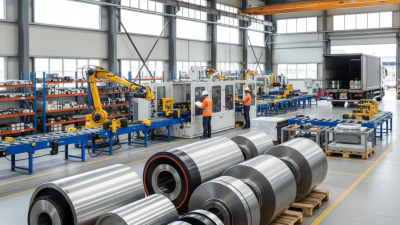
When choosing a conveyor roller manufacturer, it's essential to assess their production capabilities and technologies. A reliable manufacturer should detail their processes to ensure quality. Look for facilities that utilize
modern techniques in producing a Flexible Roller Line. This showcases their commitment to efficiency and innovation.
Consider the technologies used in creating a Flexible Roller Conveyor. Advanced manufacturing methods, such as automation and precision engineering, can significantly enhance product durability. Does the manufacturer invest in R&D for improved designs? Taking note of this can be telling of their dedication to progress and product reliability.
Ensure that the manufacturer offers a variety of options, including Expandable Roller Lines and Bendable Roller Assembly Lines. These options should meet diverse operational needs. Many facilities might claim to have cutting-edge technology, but few will provide adequate examples of successful projects. Asking for case studies can reveal their real-world effectiveness, leading to more informed decisions.
Reviewing Customer Feedback and Industry Reputation
When selecting a conveyor roller manufacturer, customer feedback is crucial. Reviews provide insight into product quality and service reliability. Look for trends in the comments. Are customers generally satisfied? Often, feedback can highlight both strengths and weaknesses of a manufacturer. It’s valuable to note patterns in recurring issues. If many users report similar problems, consider those red flags.
Industry reputation also plays a significant role. A manufacturer with a solid standing in the marketplace often has proven experience. Check professional networks and trade shows for recommendations. Speak to industry colleagues. Their insights can be invaluable. You may find hidden gems that don't have extensive marketing but excel in quality and service.
Tip: Always ask for references. Speaking directly to other clients can unveil the manufacturer's dependability. Tip: Seek detailed specifications about the rollers you need. Manufacturers should be willing to provide this information. A lack of transparency could indicate potential problems. Trust your instincts; if something feels off, explore other options.
Top Tips for Choosing the Best Conveyor Roller Manufacturer
Analyzing Pricing Models and Cost-Effectiveness in Conveyor Rollers
When choosing a conveyor roller manufacturer, understanding pricing models is crucial. Various materials impact costs significantly. For instance, a Stainless Steel Flexible Roller Line tends to be pricier but offers longevity and corrosion resistance. In contrast, a Carbon Steel Flexible Roller Conveyor may be more budget-friendly but requires careful consideration of its lifespan in specific environments.
Cost-effectiveness isn’t just about the initial price. Long-term maintenance and performance must also be evaluated. A Rubber-coated Flexible Roller Line could prove more cost-effective over time due to reduced noise and wear on your systems. An analysis of the Powered Flexible Roller Line can reveal hidden costs in energy consumption, which may affect overall pricing.
Understanding these details can help in making an informed decision. It’s essential to ask manufacturers about their cost structures and warranties. Sometimes, a lower price might mean compromising on materials or service quality. Being aware of these factors leads to a more thoughtful selection of a conveyor roller manufacturer, ensuring that both cost and quality meet business needs.
Exploring Customization Options and Manufacturer Flexibility
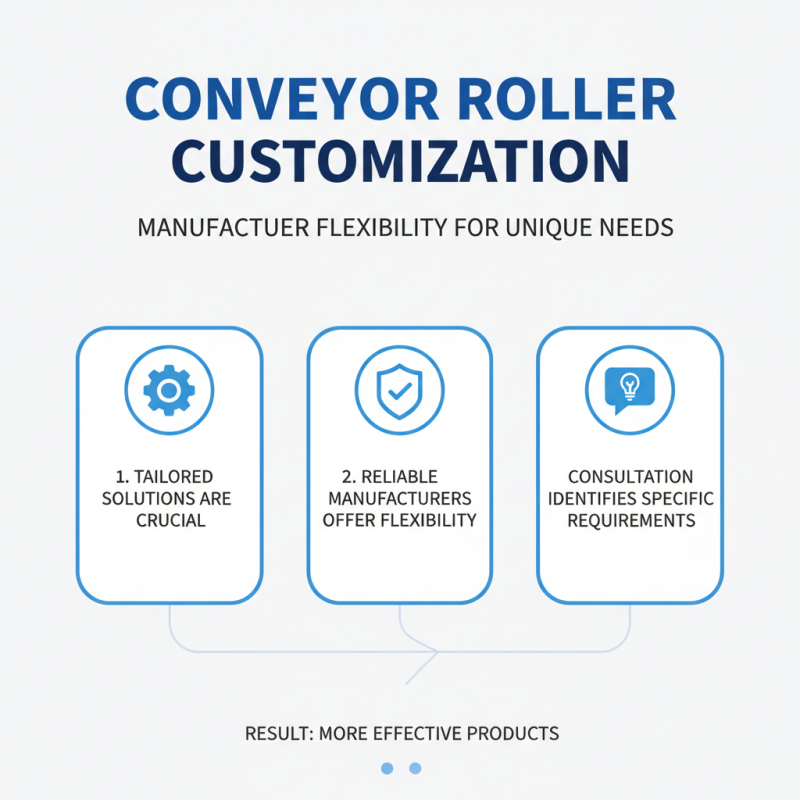
When selecting a conveyor roller manufacturer, customization options are crucial. Reliable manufacturers offer tailored solutions. They understand that different industries have unique needs. A detailed consultation process can help identify these specific requirements. This flexibility allows for a more effective product.
Assessing the manufacturer's ability to adapt is vital. Their approach to customization reflects their commitment to quality. A responsive manufacturer will discuss material choices and dimensions. This direct communication fosters trust. It’s important to consider if they provide samples for testing. This can reveal their willingness to meet specific demands.
Don't overlook the importance of flexibility in orders. Many manufacturers may have rigid policies. A reliable partner should accommodate varying order sizes. This can make a significant difference in operational efficiency. Remember, a good manufacturer will prioritize your needs. They should balance standard solutions with those tailored just for you. Being open to feedback can improve long-term collaboration.
Innovative Solutions for Efficient Material Handling: A Guide to China’s Vertical Screw Conveyor Suppliers
Vertical screw conveyors offer a highly efficient solution for the vertical transportation of various materials, including powdery, granular, and small block substances. The engineering of these conveyors is specifically designed to facilitate the continuous lifting process through the rotation of specialized screw blades. This unique operation not only enhances productivity but also ensures that materials are moved smoothly and efficiently, making vertical screw conveyors an ideal choice for diverse applications such as grain processing, chemical handling, building materials transport, and logistics.
Manufactured predominantly in China, these conveyors are celebrated for their compact design, strong sealing capabilities, and consistent performance. The versatility of vertical screw conveyors enables them to integrate seamlessly with existing upstream and downstream systems, providing a cohesive approach to material handling. This adaptability is crucial for suppliers and factories aiming to optimize their operational efficiency, as it allows for precise connections to various types of conveying equipment. As industries continue to seek innovative solutions for material handling challenges, the demand for high-quality vertical screw conveyors remains robust, highlighting their importance in modern industrial operations.
FAQS
: Check their history and expertise. A proven track record indicates reliability in producing various types of rollers.
High-quality rollers often use steel, nylon, and polyurethane for durability and performance in different applications.
Experienced manufacturers adapt to new technologies, improving product quality and operational efficiency. Lack of innovation may indicate quality issues.
Ask about customization options. The ability to adapt standard systems shows competence and an understanding of industry-specific requirements.
Look for transparency in production practices, testing procedures, and clear specifications. This builds trust in the manufacturer's capabilities.
Different materials impact costs. Analyze long-term maintenance, as initial price does not always reflect total ownership costs.
Inquire about warranty details. A warranty can reflect the manufacturer's confidence in their product quality and longevity.
Not necessarily. Lower prices might mean compromises in materials or service quality. Careful evaluation is needed.
Chemicals and extreme temperatures can affect material performance. Select materials that can withstand specific environmental conditions.
Good customer service is crucial for a lasting partnership. Assess their responsiveness and willingness to assist in your needs.
Conclusion
Choosing the right Conveyor Roller Manufacturer can significantly impact the efficiency and reliability of your material handling processes. It is essential to prioritize quality in conveyor roller manufacturing, as high-quality rollers can enhance the operational lifespan and performance of your conveyor systems. Evaluating the manufacturer's experience in production is crucial, as seasoned manufacturers are likely to have refined their techniques and have a better understanding of industry standards.
Additionally, the materials used in constructing conveyor rollers directly influence their durability and efficacy. Potential buyers should assess the manufacturer's production capabilities and technologies to ensure they can meet specific needs, including customization options. Customer feedback and industry reputation can provide insights into the reliability of the manufacturer. Lastly, analyzing pricing models and cost-effectiveness will help in making an informed decision that balances quality with budget considerations.