Leave Your Message
0%

A Speed Chain Conveyor is basically a powered system that moves pallets, trays, or workpieces way faster than the actual speed of its driving chain. In many designs, the carriers roll along a track mounted on a chain, which can create this neat effect called a speed multiplier. This setup helps you control accumulation, make transfers smoother, and keep the layout compact—pretty clever, right? The idea sounds simple enough, but trust me, the engineering behind it is a whole different story.

According to MHI's 2024 Industry Report, companies are still pouring a lot of investment into automation—it's become a top priority for supply chains—while labor shortages and workforce issues are still a pretty big headache. That’s part of why manufacturers are so interested in faster, more consistent conveyor systems. For example, a 3-speed chain can move carriers at roughly three times the chain’s actual speed. Of course, that depends on stuff like sprocket shape, the design of the carriers, how much weight they’re carrying, and friction. Sometimes you'll see terms like Triple Speed Conveyor Chain, 3-Speed Tooling Chain, or Speed Multiplier Chain—they’re often used to describe similar high-speed setups, but watch out—different suppliers might toss around these terms a bit differently, so it’s always a good idea to check the specs closely.

This article aims to explain how a Speed Chain Conveyor transfers motion from the drive sprocket to the carrier, and it’ll also compare lighter-duty and heavy-duty 3-speed chain setups. A lighter system might be perfect for small totes, inspection stations, or assembly fixtures—things that don’t require heavy lifting. On the other hand, a heavy-duty model can handle loaded pallets and more repetitive cycles. But here’s a thing—maintenance really counts. Keeping guides clean, making sure the chain is well-lubricated, sprockets are aligned, and tension is right—all of that impacts how smooth and quiet the system runs. Miss one little detail, and you might end up with vibrations, noise, or uneven movement. So, while these systems are pretty efficient, they’re not exactly automatic magic. The real world conditions matter a lot more than those shiny catalog specs.
What Is a Speed Chain Conveyor and How Does It Work?

What Is a Speed Chain Conveyor?

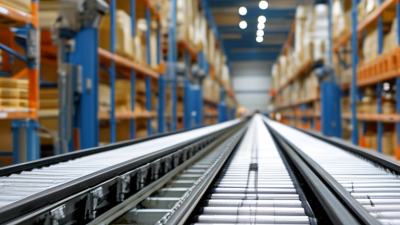
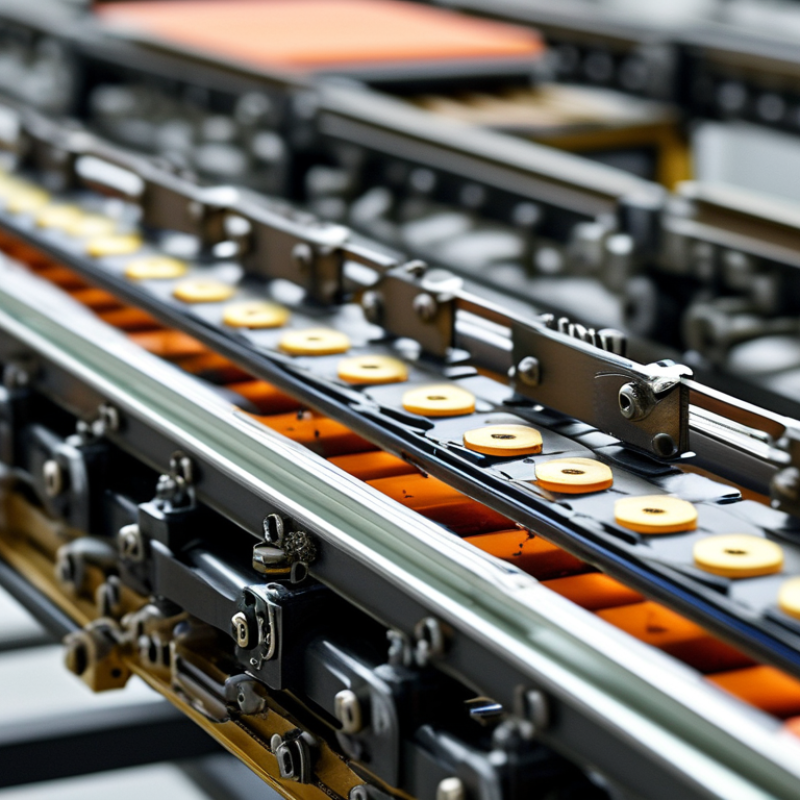
A speed chain conveyor is a powered transport system that moves pallets, fixtures, or products through a production area. Unlike a standard chain conveyor, its carrier can travel faster than the main chain. This speed difference creates controlled movement between stations. The familiar term “2.5×” means the product may move about two and a half times faster than the chain drive.

The system usually uses a base chain, carrier rollers, guide tracks, and a drive unit. As the chain moves, the rollers contact a fixed rail and rotate beneath the load. A pallet then advances smoothly, often with less motor speed than a conventional conveyor. In maintenance work, I check roller wear, chain tension, rail alignment, and pallet loading. Small misalignment can cause noise, vibration, or uneven stopping. It is not magic.

Different applications require different chain designs. A Heavy-duty 2.5× Speed Multiplier Chain suits heavier fixtures, while a Light-duty 2.5× Speed Multiplier Chain fits smaller assemblies. A Speed Multiplier Chain Special for Tooling Pallet can support repeatable fixture positioning. Engineers may specify an Assembly Line Speed Multiplier Chain or a Production Line 2.5× Speed Multiplier Chain for steady material flow. A Workshop Assembly Line Speed Multiplier Chain may use shorter sections and simpler controls. Actual speed depends on load, rail condition, lubrication, and spacing. The “2.5×” figure is useful, but it should not replace site testing.arsuarmi

Key Components of a Speed Chain Conveyor

A speed chain conveyor moves products through a powered chain loop, often at higher speeds than standard belt systems. Its core components are the drive motor, gearbox, sprockets, chain strands, support frame, guides, and control sensors. The motor turns the drive sprocket. The sprocket pulls the chain forward. Product carriers or rollers then transfer each load along the line.

Chain selection controls much of the conveyor’s performance. Engineers check pitch, tensile strength, wear resistance, and allowable load. A tensioning unit keeps the chain engaged with the sprockets. Side guides prevent cartons from drifting during acceleration. Sensors detect product gaps and signal the controller to start, stop, or change speed. The 2024 Annual Industry Report from Material Handling Industry reported that 55% of supply chain professionals planned to increase technology investment. This supports wider adoption of automated conveying equipment.

Installation details matter more than many specifications suggest. Poor sprocket alignment creates noise, vibration, and uneven chain wear. Lubrication also requires judgment. Too little increases friction, while excess lubricant can attract dust near open products. A practical inspection should check chain elongation, guide clearance, motor temperature, and emergency stops. The design may look simple. It is not always forgiving. The same report identified workforce capability as a continuing operational challenge, so clear maintenance procedures remain essential. A speed chain conveyor works best when its mechanical parts and control logic are treated as one system.

What Is a Speed Chain Conveyor and How Does It Work? — Key Components of a Speed Chain Conveyor
Component or Dimension Primary Function How It Works in the Conveyor Common Materials or Specifications Operational Considerations
Conveyor Chain Supports and transports products along the conveying path. Interconnected chain links travel continuously around the conveyor frame and transfer motion from the drive sprocket to the carrying surface. Carbon steel, stainless steel, or engineered plastic; selected according to load, temperature, moisture, and sanitation requirements. Proper lubrication, alignment, and tension help reduce wear, noise, and chain elongation.
Drive Sprocket Transmits motor torque to the conveyor chain. Teeth engage with the chain links and pull the chain forward at a controlled speed. Hardened steel, stainless steel, or polymer; tooth profile must match the chain pitch. Tooth wear can cause chain skipping, vibration, and inconsistent product movement.
Motor and Gear Reducer Provides the rotational power and output speed required for conveying. The motor produces rotation, while the reducer lowers speed and increases usable torque at the drive shaft. Electric motor with a geared drive; variable-frequency control may be used for adjustable speed. Motor sizing should account for product weight, conveyor length, incline, friction, and required acceleration.
Idler Sprocket Guides the chain around the return end of the conveyor. It rotates freely as the chain changes direction, maintaining the chain path without directly supplying drive power. Steel, stainless steel, or polymer construction with compatible bearings. Worn bearings or incorrect alignment can increase drag and place additional load on the drive system.
Wear Strips and Chain Guides Support the chain and limit friction between moving parts and the frame. Low-friction strips create a stable sliding surface while guides keep the chain centered during operation. UHMW-PE, nylon, or other wear-resistant engineering plastics are commonly used. Wear strips should be inspected for grooves, thinning, heat damage, and loose fasteners.
Conveyor Frame Supports the chain, drive assembly, products, and guarding. The frame maintains the conveyor geometry and provides mounting points for the drive, guides, sensors, and safety equipment. Painted carbon steel, stainless steel, or aluminum profiles; frame width depends on the product and chain arrangement. A rigid, level frame is essential for consistent tracking and even load distribution.
Chain Tensioning System Maintains the correct amount of chain slack. Adjustable take-up assemblies move an idler shaft or guide component to compensate for normal chain elongation. Threaded adjustment screws, sliding take-up units, or spring-assisted tensioners. Over-tensioning increases bearing and chain loads; under-tensioning may cause jumping or poor tracking.
Product Guides and Side Rails Keep products positioned and prevent them from falling or shifting. Adjustable rails constrain the product laterally while the chain provides forward movement. Stainless steel, aluminum, UHMW-PE, or low-friction polymer surfaces. Guide clearance should accommodate product variation without creating excessive rubbing or jams.
Transfer Plates or Nose Bars Bridge gaps between conveyor sections and improve product transfer. A narrow, smooth transition surface allows products to pass from one conveyor to another with reduced tipping or snagging. Stainless steel or wear-resistant polymer; dimensions depend on product size and chain geometry. Small products require minimized transfer gaps and carefully matched conveyor elevations.
Sensors and Controls Detect products, control flow, and coordinate conveyor operation. Photoelectric or proximity sensors send signals to a controller, which can start, stop, index, or regulate the conveyor. Photoelectric sensors, emergency-stop devices, programmable controllers, and variable-speed drives. Sensor placement must account for product reflectivity, spacing, ambient light, and required response time.
Safety Guarding Protects personnel from moving chains, sprockets, shafts, and pinch points. Fixed guards, interlocked access panels, and emergency-stop devices restrict access and allow rapid shutdown. Perforated metal, sheet metal, polycarbonate panels, guarding switches, and emergency-stop controls. Guarding should be designed and maintained in accordance with applicable workplace safety requirements.
Speed-Control Arrangement Sets the required conveying rate for the process. Motor speed is adjusted mechanically or electronically to match production, accumulation, indexing, or transfer needs. Fixed-speed drives for simple applications; variable-frequency drives for adjustable-speed operation. Actual conveying speed depends on the drive ratio, sprocket size, chain pitch, and motor frequency.
Typical Conveyor Layout Defines how products move through the application. Common arrangements include straight conveyors, transfers, accumulation zones, inclines, declines, and closed-loop paths. Layout is selected according to floor space, product geometry, elevation change, and process sequence. Inclined layouts may require cleats, higher-friction surfaces, side rails, or additional product restraint.
Load and Product Requirements Establishes the mechanical and control requirements of the conveyor. Product weight, dimensions, bottom surface, spacing, and center of gravity determine the chain type, drive capacity, and guide design. Light-duty systems may handle packaged goods, while heavy-duty designs use stronger chains, frames, and drives. Loads should be distributed as evenly as possible to prevent localized chain, sprocket, and bearing stress.
Maintenance Points Preserves reliable operation and extends service life. Routine inspections focus on chain tension, lubrication, sprocket wear, guide condition, fasteners, sensors, and guarding. Inspection frequency depends on operating hours, load, environment, speed, and manufacturer recommendations. Lockout and isolation procedures should be followed before cleaning, adjustment, or repair.

How a Speed Chain Conveyor Moves Products

A speed chain conveyor moves products by creating a controlled difference between chain speed and pallet speed. In a typical Double Speed Chain Conveyor, two parallel strands carry pallets beneath the load. Each strand has rollers that contact a fixed wear strip or support rail. As the chain advances, these rollers rotate and push the pallet forward. The pallet can travel faster than the chain itself. That is the central idea.

A Double Speed Conveyor Chain usually transfers motion through small carrier rollers mounted along the chain. When a pallet rests on them, friction turns the rollers and reduces sliding resistance. The result is smoother movement, less drag, and useful spacing between workstations. A Pallet Double Speed Chain system can also accumulate loads when a downstream station stops. The chain keeps moving underneath while pallets pause on low-friction rails. This needs careful adjustment. Poor alignment can cause skewed pallets, noise, or uneven acceleration.

In practice, engineers select a Differential Speed Chain according to pallet weight, product shape, travel distance, and required speed. A Double Speed Chain may look simple, but roller wear, lubrication, and contamination change its behavior. I have seen a clean conveyor run quietly, then lose accuracy after neglected maintenance. That reminder matters: speed is not the same as control. Operators should inspect chain tension, roller contact, guards, and emergency stops during routine checks. Measurements should confirm actual pallet speed, not rely on appearance.

How a Speed Chain Conveyor Moves Products

Estimated conveying rate at different chain speeds, assuming products are spaced 500 mm apart and the conveyor operates continuously without accumulation or slip. The product rate is calculated as: chain speed ÷ product pitch.

The Step-by-Step Operating Process

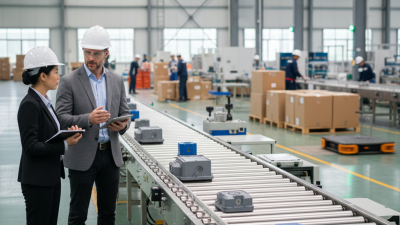
A speed chain conveyor moves loads faster than its chain travels. Its rollers rotate against a fixed wear surface, creating forward motion beneath pallets or trays. The operating process begins with a pre-start inspection. An operator checks chain tension, roller condition, guides, sensors, and emergency stops. This small check prevents many avoidable interruptions.

After the motor starts, the drive sprocket pulls the chain through the conveyor frame. The chain engages each carrier roller, and the rollers contact the load’s underside. A 2.5x Speed Chain or 3x Speed Chain can increase product movement while keeping the chain speed controlled. The exact ratio depends on roller design and load weight. Light Duty Double Speed Chain suits smaller packages, while Heavy Duty Double Speed Chain handles stronger pallet loads. Single Row Double Speed Chain is useful where the conveyor width and load path remain narrow.

As each load enters, sensors confirm its position and control spacing. A downstream section may stop while the chain continues moving underneath. The load then accumulates with reduced sliding between products. When the receiving zone becomes available, the sensor releases one load forward. Operators should watch for skewed pallets, unusual noise, and uneven roller contact. Real installations are rarely perfect. Dust, poor alignment, or an underestimated load can change performance. Adjustments should follow measured speed, load weight, and actual transfer behavior rather than assumptions.

Common Speed Chain Conveyor Configurations

What Is a Speed Chain Conveyor and How Does It Work?

Common Speed Chain Conveyor Configurations

A speed chain conveyor uses linked carriers to move products at controlled speeds. Its configuration depends on product shape, floor space, and handling goals. A single-lane layout suits cartons moving between processing stations. Parallel lanes increase throughput without requiring a longer conveyor. This arrangement also supports product sorting and controlled merging.

Accumulation configurations allow items to wait without stopping the entire line. They often use zones, sensors, and adjustable spacing. This works well for filled trays, containers, and packaged goods. Transfer sections can move products sideways between lanes. Inclined versions connect different floor levels, but they need careful attention to load stability. Loop layouts provide continuous circulation around work areas. They may reduce walking distance, although they can complicate cleaning and maintenance.

Tips: Match the chain pitch and carrier surface to the product base. Check speed changes near transfers, where products can shift or rotate. Leave access space around drives, sensors, and guarding. Test the heaviest expected load, not only an average package. In field reviews, poor spacing often causes more trouble than low motor power. The neatest layout is not always the most reliable. Recheck noise, vibration, and product contact after installation. Small alignment errors can grow over time.

Advantages and Limitations of Speed Chain Conveyors

A speed chain conveyor moves products through linked roller chains that run faster than the supporting line speed. Its nested roller design lets cartons, pallets, and containers travel smoothly with limited sliding. A motor drives the chain through sprockets, while guides maintain product direction and spacing. That spacing matters.

Its main advantage is controlled, continuous movement. It performs well in packaging, assembly, and material-handling areas where products need steady positioning. Carbon steel 3-speed chain offers practical strength for dry indoor environments. Stainless steel 3-speed chain resists moisture and frequent cleaning better.

A Single row triple speed chain suits lighter loads and narrower frames. The Double row triple speed chai option can support wider or heavier products, but specifications should be checked carefully. Wear-resistant speed chain versions may extend service intervals under abrasive conditions. Noise can still increase.

The limitations deserve equal attention. Chains need correct tension, alignment, and lubrication. Poor adjustment creates vibration, uneven speed, and premature wear. Stainless steel is not automatically the best choice; it may cost more and still require careful maintenance. Heavy products can overload sprockets or frame supports. In practical installations, small debris around the chain often causes surprising problems. I have seen a conveyor run well during testing, then slow after dust entered the guides. That weakness is easy to overlook. Designers should confirm load weight, product shape, cleaning methods, speed range, and available maintenance access before selecting a configuration.

China Flexible Curved Belt Conveyors for Automation: Insights from Grand View Research and Mordor Intelligence Reports

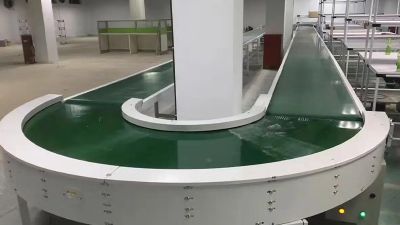
China-made flexible curved belt conveyors are gaining attention in automation as manufacturers seek compact, reliable, and adaptable material-handling solutions. Recent market research coverage highlights the growing use of conveyor systems in logistics, warehousing, manufacturing, packaging, and distribution, where smooth directional changes can improve space utilization and process continuity. Designed for automated production lines, this conveyor combines a strong curved frame, durable belt, efficient drive unit, guiding and alignment components, and essential safety protection features.

Its performance is centered on a specially engineered curved structure and an anti-deflection roller system. By carefully adjusting the height difference between the inner and outer roller sides, the conveyor maintains balanced belt tension while turning products steadily. A dedicated guide belt further supports accurate tracking, helping reduce material slipping, belt deviation, and interruptions during continuous operation. The system can be configured for different layouts, speeds, and load requirements, making it suitable for applications that demand dependable transfers around corners. As an experienced China-based manufacturer and supplier, we focus on consistent fabrication quality, practical customization, and stable performance for modern automated material-handling environments.

FAQS

: What is a speed chain conveyor?

: It moves products using a powered chain loop, carriers, and rollers. The rollers can move loads faster than the chain itself. It is not foolproof.

Which components are essential?

Key parts include the motor, gearbox, sprockets, chain strands, frame, guides, sensors, and tensioning unit. Each part affects movement, safety, or control. Small parts matter.

How does the conveyor operate?

The motor turns the drive sprocket and pulls the chain through the frame. Carriers engage the rollers, which contact the underside of each load. Sensors control spacing and release products when downstream space opens.

How should the chain be selected?

Check chain pitch, tensile strength, wear resistance, and allowable load. Match the chain and carrier surface to the product base. An average load is not enough.

What should operators inspect before starting?

Check chain tension, roller condition, guide clearance, sensors, and emergency stops. Also watch motor temperature and unusual contact points. A short inspection prevents avoidable downtime.

How can the conveyor reduce product sliding?

Accumulation zones let products wait while the chain continues moving underneath. Sensors stop or release individual loads as space becomes available. Poor spacing can still create jams.

What problems can poor installation cause?

Misaligned sprockets may create noise, vibration, and uneven chain wear. Improper guide settings can make cartons drift during acceleration. Small errors can grow.

Which layouts are commonly used?

Single-lane layouts suit simple movement between stations. Parallel lanes increase throughput, while loops reduce walking distances around work areas. Inclined sections need careful load-stability checks.

How should lubrication and maintenance be managed?

Use enough lubrication to limit friction, but avoid excess near exposed products. Excess lubricant can attract dust and complicate cleaning. Maintenance procedures may need revision after real operating feedback.

Conclusion

A Speed Chain Conveyor is a powered material-handling system designed to move products smoothly and efficiently through manufacturing, packaging, storage, and distribution areas. It uses a continuous chain, drive sprockets, guide rails, a motor, a frame, and product supports to transport items along a fixed route. Depending on the application, the conveyor may use one or more chains, parallel strands, flights, rollers, or specialized carriers to accommodate different product sizes and shapes.

During operation, the motor turns the drive sprocket, which engages the chain and creates a continuous forward motion. Products are placed on the chain or attached to carriers, guided through each section, and transferred to the next process or discharge point. Common configurations include straight, incline, decline, loop, and multi-lane systems. A Speed Chain Conveyor offers reliable movement, high load capacity, precise product positioning, and flexible layout options. However, it may require regular lubrication, tension adjustment, guarding, and maintenance, while producing more noise and friction than some belt-based alternatives.
Sophie

Sophie

Sophie is a dedicated marketing professional at a leading enterprise specializing in industrial automation equipment. With a passion for technology and a keen eye for detail, she excels in communicating the company's core competencies, including professional design, precision manufacturing, and......
Previous How to Choose the Right Conveyor Chain Types for Your Needs?
https://ecdn6-nc.globalso.com/upload/p/6059/image_other/2026-05/foot_whatsapp.png