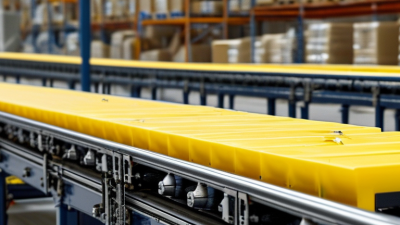
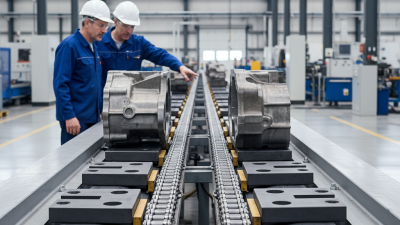
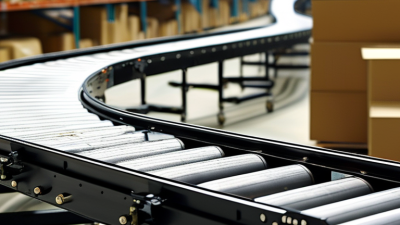
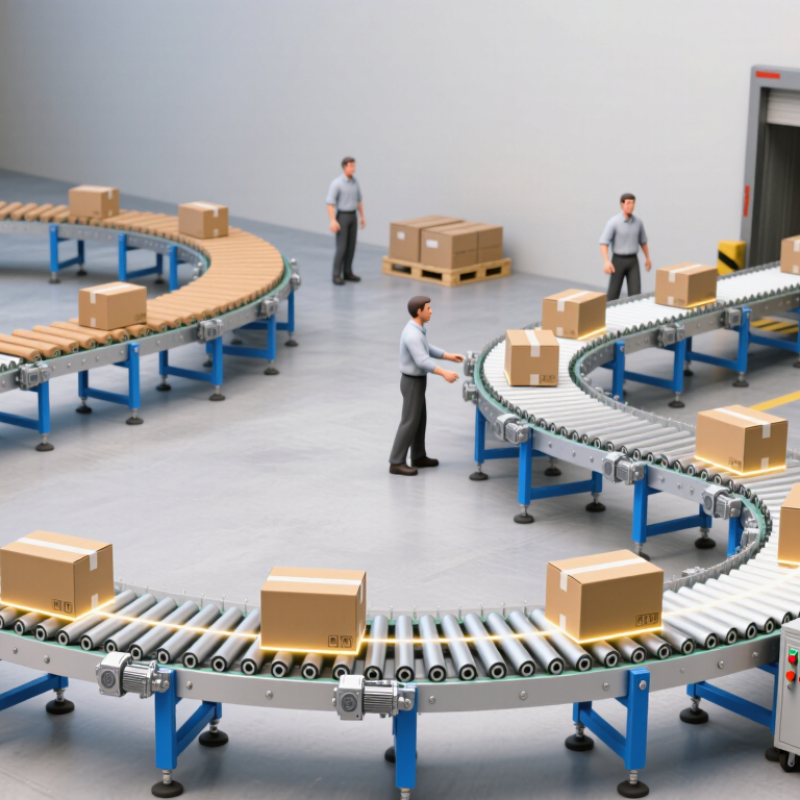
A Powered Flexible Conveyor is basically a movable system designed to adapt to changing warehouse and production needs. It relies on powered rollers, belts, or chains to move cartons, so you’re not constantly pushing things around manually. The cool part? Its frame is super flexible—it can extend, shorten, bend, and even roll on caster wheels. That makes it perfect for loading docks, packing stations, or temporary setups where things don’t stay still for long.
Here’s a bit of advice from material-handling expert David J. Pierson: “Move the load, not the problem.” And honestly, that’s right on the money for these conveyors. They’re driven by a motor that powers the conveying surface, and there’s typically a control panel to adjust speed and direction. Usually, operators will guide the frame towards a truck, a pallet, or a workbench—whatever’s needed. Small rollers help transfer cartons across different sections. But even a tiny gap of just a few centimeters can mess with package stability, and let’s be real—real-life sites are rarely perfect.
Choosing the right system isn't just about the conveyor itself. You’ve gotta think about the weight of your cartons, the floor conditions, how fast your line needs to move, and what power sources are available. Plus, it’s super important to leave enough space for safe walking paths and easy cleaning. If the layout’s off, you might end up with jams, noisy operations, or unnecessary strain on your equipment. That’s something to really pay attention to.
A Powered Flexible Conveyor can work smoothly alongside a straight non-powered roller conveyor or a curved one. When you need to change elevation, it can connect with an inclined roller conveyor. Other options out there include flexible roller conveyors, double-layer setups, loop conveyors, and frame-type designs—each one built to solve a specific flow challenge. The key is to choose based on actual demand, not just what looks cool on paper. Sometimes, testing with real cartons reveals issues no brochure can show. That’s where experience really makes a difference.
What Is a Powered Flexible Conveyor? Definition and Core Components
A powered flexible conveyor is a mobile conveyor that moves cartons without manual pushing. It combines powered rollers or a powered belt with a frame that expands, contracts, and bends. Unlike a gravity conveyor, it does not depend on floor slope. Its core components include a collapsible steel frame, motorized rollers, drive belts, swivel casters, flexible joints, and control switches. Some models also use side guides, emergency stops, and photoelectric sensors. These parts support controlled movement in packing areas, loading zones, and temporary transfer lines.
In operation, an operator positions the conveyor beside a workstation or vehicle. The motor transfers torque through belts, chains, or roller shafts. Each powered section then carries cartons at a set speed. Controls can start, stop, or adjust movement. Sensors may pause the line when packages accumulate. Small details matter. Uneven floors can change conveyor height and stability. Heavy cartons may slow the drive or overload a flexible joint. Poorly aligned sections can create gaps where packages stop moving. Operators should check caster locks, belt tension, roller wear, and emergency controls before use. The system is practical, but not perfect. It needs correct loading and regular inspection. Wider cartons may also require adjustable guides to prevent shifting during movement.
How 24 V DC Motors Drive Roller Movement at 50–150 ft/min
A powered flexible conveyor uses motor-driven rollers to move cartons without manual pushing. Its frame can bend or expand around loading areas, making it useful where layouts change. The main movement comes from compact 24 V DC motors installed inside selected rollers. These motors transmit torque through internal gearing, turning the roller surface beneath each carton.
A controller adjusts motor speed to maintain roughly 50–150 ft/min. Lower speeds help workers scan labels or load mixed cartons safely. Higher speeds support longer transfers when package spacing remains stable. Sensors can detect cartons and start or stop motorized zones only when needed. This reduces unnecessary movement and limits energy use. The 24 V system also simplifies low-voltage control wiring, but motor selection still matters. Heavy cartons need more torque, not merely a faster setting.
The simple picture is incomplete. Roller diameter, gearbox ratio, friction, incline, and carton weight all affect real performance. A conveyor rated at 150 ft/min may slow noticeably under uneven loads. Speed estimates are not promises. During commissioning, technicians should measure actual belt or roller speed, observe package tracking, and listen for abnormal noise. A small gap between cartons can become a serious flow problem. Flexible sections also need careful alignment, because a slight bend can increase resistance. Reliable operation comes from matching motor torque, zone length, controls, and load conditions—not from speed alone.
Powered Flexible Conveyor: Typical Roller Speed Range
A 24 V DC motor can drive conveyor rollers across a practical operating range of 50–150 ft/min. The chart shows representative speed settings commonly used for flexible conveyor movement.
Increasing motor speed increases roller surface speed. Actual performance depends on roller diameter, conveyed load, friction, incline, and motor-controller settings.
How Telescoping Frames Extend Conveyor Reach from 5 to 40 ft
A powered flexible conveyor uses motor-driven rollers to move cartons, totes, and parcels with less manual pushing. Its telescoping frame changes the working distance from about 5 to 40 ft. Sections slide outward on locking supports, while flexible power and control cables follow the extension. This design helps one conveyor reach several loading positions. It also reduces the need for temporary conveyor sections.
The frame should extend smoothly, not simply reach farther. Operators should check floor level, wheel locks, roller spacing, and rated load before use. A Powered Flexible Roller Line suits frequent dock changes. A Stainless Steel Flexible Roller Line handles washdown areas better. A Carbon Steel Flexible Roller Conveyor often fits dry warehouses and controlled budgets. For delicate packages, a Rubber-coated Flexible Roller Line can reduce surface marks and sliding.
MHI’s 2024 Annual Industry Report found that 55% of respondents planned to increase supply-chain innovation spending within two years. That figure supports practical automation, but it does not guarantee a good installation. CEMA guidance stresses proper conveyor guarding, load limits, and safe operating clearances. In field use, a 40-ft extension may improve reach while reducing stability if the frame is poorly positioned. That detail is easy to miss. Reported capacity also varies with carton weight, roller pitch, incline, and motor condition. More reach is not always more productivity.
How 50–150 lb/ft Load Ratings Guide Conveyor Selection
What Is a Powered Flexible Conveyor and How Does It Work?
A powered flexible conveyor uses motor-driven rollers to move cartons through changing warehouse layouts. Its expandable frame can stretch, contract, and bend around work areas. A Flexible Roller Conveyor may operate straight, curved, or slightly inclined. Operators control speed through a drive system, while closely spaced rollers support package bottoms. In practice, floor conditions and package shape matter more than many product sheets suggest.
The 50–150 lb/ft load rating describes supported weight along each conveyor foot. A 50 lb/ft rating suits lighter cartons and moderate accumulation. A 150 lb/ft rating supports heavier loads, but only when weight is distributed evenly. One dense machine part can create a local overload. Check roller spacing, frame strength, wheel condition, and drive torque together. This detail is often missed.
A Flexible Roller Line works well for temporary loading zones. An Expandable Roller Line can reach into trailers and reduce manual carrying. A Bendable Roller Assembly Line helps route packages around columns or dock equipment. For light parcels without powered movement, a Non-powered Flexible Roller Line may be enough. However, powered models need careful selection when cartons stop frequently, surfaces vary, or operators add side pressure. Leave a safety margin above the expected load. Real facilities rarely match clean test conditions.
How Sensors and Zone Controls Regulate Material Flow
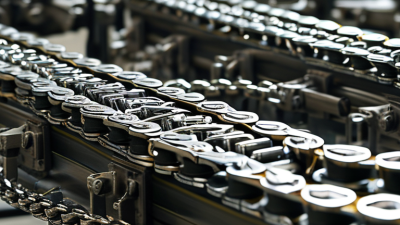
A powered flexible conveyor moves cartons, trays, or totes with motor-driven chain plates. Unlike a passive roller track, it maintains controlled movement across changing layouts. In daily operation, an operator may extend the conveyor beside a packing table, then reposition it near a loading point. The frame adapts quickly. The control logic must adapt too.
Photoelectric sensors detect incoming items and confirm when each zone is occupied. A sensor near the discharge point can stop the upstream zone before cartons touch. This creates spacing without constant manual adjustment. Zone controls divide the conveyor into short sections, each with its own motor response. When one section fills, the previous section slows or waits. Empty zones then restart automatically. Small delays matter.
A Flexible Chain Plate Line may combine a Straight Flexible Chain Plate Line with a Curved Flexible Chain Plate Conveyor. A Flexible Chain Plate Conveyor supports directional changes while preserving steady product contact. In larger systems, a Flexible Slat Chain Assembly Line can connect inspection, filling, and packing areas.
Sensor placement should match real product behavior, not only the drawing. Dust, reflective packaging, or tilted cartons can cause unreliable readings. We have seen operators correct this by changing sensor angles and adding brief timing delays. It is not perfect. A faster setting can increase throughput, but it may also create jams when carton sizes vary. Regular checks of chains, sensors, and zone timing keep the material flow more predictable.
How Powered Flexible Conveyors Handle Up to 2,000 Cartons per Hour
Powered flexible conveyors combine expandable frames with powered rollers to move cartons through temporary or changing work areas.
They can extend into trailers, warehouse aisles, and packing stations. A motor drives the rollers, while adjustable sections guide cartons forward without continuous manual pushing.
A well-configured system can handle up to 2,000 cartons per hour. That rate depends on carton size, weight, spacing, and operator speed.
For example, evenly spaced cartons travel smoothly across the conveyor. Crowded cartons may slow the line and create pressure at the discharge end. Controls can adjust speed, direction, and stopping points. Simple sensors may also reduce collisions between packages.
Real floors are rarely perfect.
Flexible conveyors must remain stable while extending over uneven surfaces. Operators should check wheel locks, roller movement, frame alignment, and emergency stops before each shift.
Maintenance experience shows that small problems matter. A worn roller can increase drag, while a weak connection can interrupt the whole flow. The 2,000-carton figure is useful, but not automatic.
Actual performance should be measured during normal loading conditions, not only during a short test. That practical check often reveals delays caused by scanning, labeling, or manual handling.
Where Powered Flexible Conveyors Fit in Loading, Shipping, and Sortation
A powered flexible conveyor uses a motorized chain to move cartons, totes, or trays through changing warehouse paths. Its linked surface bends, expands, and contracts, helping teams connect loading docks with shipping lanes. Unlike gravity equipment, it maintains movement across small height changes and busy floor areas. That control matters when containers arrive unevenly. Timing rarely stays perfect.
At loading points, operators extend the conveyor into a trailer and reduce walking between pallets and door positions. During shipping, it carries cartons toward weighing, labeling, staging, or carrier handoff areas. A scanning station can read each parcel before a powered merge sends it toward the correct sortation lane. Circular Chain Plate Conveying works well where products need repeated directional movement. However, tight bends can create pressure between cartons. Operators must test spacing.
Different applications call for different chain surfaces. A Spiral Flexible Chain Plate Line supports vertical routing when floor space is limited. An Inclined Flexible Chain Plate Equipment setup bridges dock levels, though slippery cartons need restraint. Food-grade Flexible Chain Plate surfaces suit controlled sanitation environments when materials and cleaning procedures match requirements. Plastic Flexible Chain Plate designs offer corrosion resistance and quieter contact for light or moderate loads. Actual performance depends on load weight, carton condition, speed, and maintenance. Small alignment errors can cause repeated jams. That detail is easy to underestimate. Inspect chain tension, guards, emergency stops, and transfer points regularly.
Modular Plastic Chain Conveyor Lines: Food, Pharma & Electronics Insights from PMMI and MarketsandMarkets Reports
Packaging automation is moving toward flexible, data-driven material flow. PMMI’s *2024 State of the Industry* report indicates that U.S. packaging machinery shipments exceeded $10 billion in 2023, while labor availability, sanitation, and rapid changeovers remain key investment drivers. These trends support the adoption of modular plastic chain conveyor lines in food and beverage, pharmaceutical, and electronics facilities. Built with high-strength engineering plastic chain plates, the systems provide stable continuous conveying while supporting horizontal transport, turning, elevation, sorting, and process-to-process transfer.
MarketsandMarkets projects continued growth in the global conveyor system market through 2028, driven by e-commerce fulfillment, manufacturing automation, and demand for space-efficient layouts. China-manufactured plastic chain conveyor lines are designed for this environment, offering configurable widths, speeds, curves, and multi-path combinations. Their modular construction enables integration with filling, packaging, inspection, labeling, and warehousing equipment, while smooth, cleanable surfaces suit hygiene-focused production areas. For narrow workshops or irregular sites, custom layouts can connect workstations without major structural changes, improving material flow and supporting flexible production requirements from component handling to finished-product transfer.
FAQS
It is a mobile conveyor with motorized rollers or a powered belt. The frame expands, contracts, and bends. It moves cartons without manual pushing.
A motor transfers torque through belts, chains, or roller shafts. Powered sections carry cartons at a controlled speed. Switches can start, stop, or adjust movement.
It fits loading docks, packing areas, shipping lanes, and temporary transfer lines. Operators can extend it into trailers. Walking distance becomes shorter.
It describes the supported weight along each conveyor foot. A 50 lb/ft rating suits lighter cartons. A 150 lb/ft rating supports heavier, evenly distributed loads.
Yes. One dense machine part can create a local overload. Check frame strength, roller spacing, wheel condition, and drive torque together. This detail is easy to miss.
A powered conveyor does not rely on floor slope. It maintains movement across small height changes. Gravity equipment may stop when surfaces become uneven.
Many models can route around columns, dock equipment, and workstations. Tight bends may press cartons together. Test carton spacing before regular use.
Check caster locks, belt tension, roller wear, chain tension, guards, and emergency stops. Inspect transfer points too. Small alignment errors can cause repeated jams.
No. Wide, slippery, heavy, or damaged cartons may shift or slow the drive. Adjustable side guides can improve control. The system is useful, but not perfect.
Load weight, carton shape, floor condition, speed, alignment, and maintenance all matter. Clean test conditions are uncommon. Leave a safety margin above the expected load.
Conclusion
A Powered Flexible Conveyor is a mobile material-handling system designed to move cartons efficiently through loading, shipping, receiving, and sortation areas. It combines flexible roller sections, a telescoping frame, 24 V DC drive motors, sensors, and zone controls. The motors rotate the rollers at approximately 50–150 ft/min, while the expandable frame adjusts the conveyor’s working length from about 5 to 40 ft, helping operators reach deep into trailers or adapt to changing layouts.
When selecting a Powered Flexible Conveyor, users should consider its rated capacity, typically ranging from 50 to 150 lb per foot, as well as carton size, weight, and required throughput. Sensors and control zones regulate spacing, start and stop movement, and reduce unnecessary accumulation. With suitable configuration and operating conditions, these conveyors can handle up to 2,000 cartons per hour, improving workflow efficiency while reducing manual pushing and carrying.