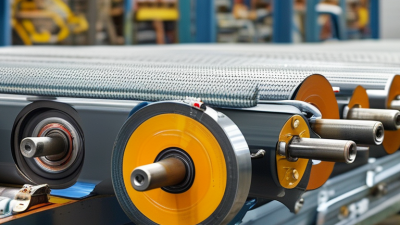
Picking out an incline conveyor isn’t just about grabbing a belt and a motor. You’ve got to find the right fit for your product, the amount of elevation you need, the space you've got to work with, and the conditions on site. Sometimes, just a few centimeters of clearance can make a big difference in how easily you can load things. And if your conveyor needs to handle a steep incline, that can really impact how reliably loose items make it up the line. It’s those small details that really matter.
In this guide, Alex Morgan, who knows a thing or two about material handling, reminds us: “Choose the conveyor based on the actual path your product needs to take, not just what's shown in the catalog picture.” Now, just to be clear, that’s an illustrative quote—not a formal statement from an industry expert. The point is, when you're buying, it’s really important to differentiate between what the specs say and what’s just an assumption. Always double-check capacity, belt type, incline angle, frame size, controls, and access for maintenance with your supplier.
The tips that follow are meant to help buyers from around the world compare different proposals and ask smarter questions. We’ll go over how to assess your application needs, test the equipment, consider customization options, safety features, maintenance requirements, how to evaluate your supplier, and what the total cost of ownership looks like. For example, a Baffle Belt Conveyor or a Mobile Incline Conveyor might be perfect for your flow, but don’t just go by the name — ask for drawings and real-world data. Pay close attention to how the belt handles your actual product, especially at loading and unloading points. There’s no one-size-fits-all checklist here. Sometimes, your needs might change after installation, and that’s okay, but it’s important to honestly consider these factors beforehand. Taking the time to review everything before placing an order can save you from costly mismatches and make operation smoother down the line.
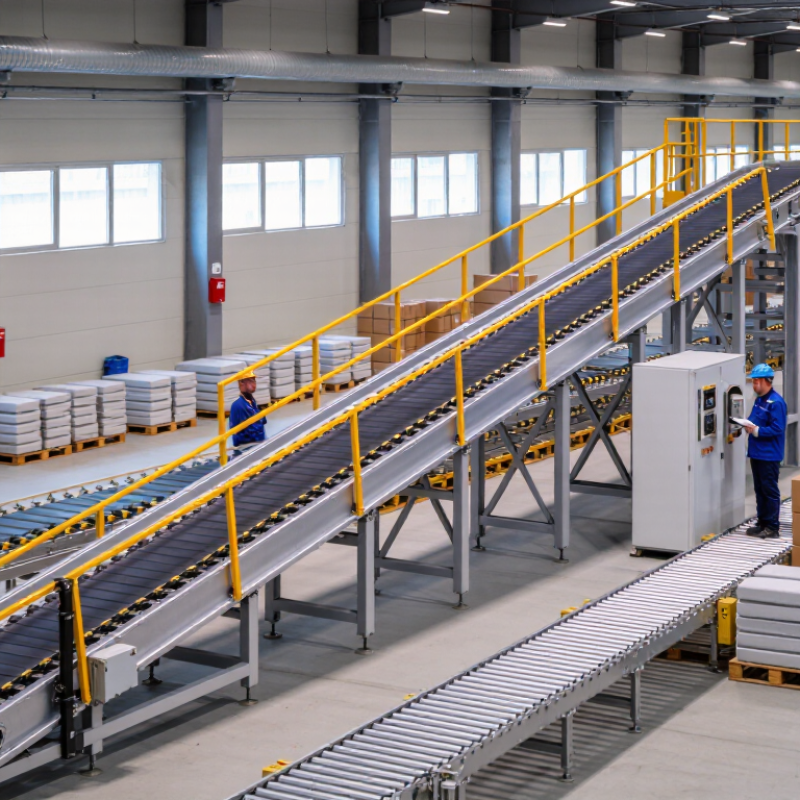
Before comparing incline conveyors, describe the material in practical terms. Is it dry grain, damp produce, boxed goods, or irregular parts? Note its size, surface, temperature, and tendency to stick or roll. A few sample pieces can reveal problems that a product description misses.
Define the load at the conveyor, not just the average item weight. Include the heaviest unit, spacing, and whether products arrive in a steady stream or batches. Then state required throughput in units or kilograms per hour.
Peak demand matters. A line that handles the daily average may still fall behind during busy periods. This is easy to overlook.
Measure the rise and horizontal distance, since incline angle affects belt grip and product stability. Ask suppliers to check the proposed setup against your real material and peak rate. For food handling, specify a Food Grade Incline Conveyor Rubber Belt Conveyor and confirm belt suitability, cleanability, and relevant documentation for your process. Requirements vary. One planning estimate may be imperfect, so keep room to revise it after testing a representative load.
Before selecting an incline conveyor, measure the full route from the loading point to the discharge point. Record the floor-to-floor height, available horizontal distance, and clearance beneath beams, pipes, and lights. A tape measure and a simple site sketch can prevent costly layout changes. Check access for cleaning and maintenance, too.
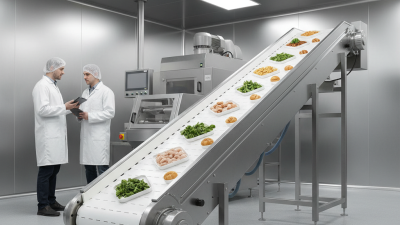
The incline depends on what the belt carries, not just the space available. Smooth cartons may travel differently from loose produce or damp packages. A steeper angle can cause products to slide or bunch, while a gentler slope may require more floor space. For a Warehouse Belt Conveyor Food Industry Incline Conveyor, confirm the product’s size, weight, surface, and expected loading pattern with the equipment supplier. Test with representative items when possible. Small details matter.
Leave room at both ends for operators, guards, and transfer points. Measure the height of connected equipment, since even a modest mismatch can create awkward handoffs. On paper, the shortest route often looks best. On site, it may block a walkway or complicate cleaning. Recheck measurements after nearby equipment is positioned; plans can be imperfect, and real floors are not always level.
A reliable incline conveyor starts with matching the belt surface to the material, not choosing the most aggressive cleat. Smooth, dry cartons may need modest ribs, while damp produce or loose pieces often require deeper, closely spaced cleats. Too much cleat can trap residue and make cleaning harder. Small details matter.
Check the actual incline angle, load size, and product condition together. A belt that grips well in a dry workshop may slip when condensation forms near a washdown area. For food-contact applications, a Steep Angle Belt Conveyor Food Grade PU Incline Conveyor may suit the job, but confirm the belt’s grade, temperature range, and cleaning compatibility with the supplier. PU alone does not guarantee suitability. Ask for material documentation and a sample test with the real product.
Cleat height and spacing should prevent rollback without catching or bruising items. Watch the transfer points, too: tall cleats can disturb product as it enters or leaves the incline. I would not rely on a brochure angle limit alone; actual performance depends on loading and surface conditions. Test a representative batch at the intended speed, then inspect for slippage, wear, and product damage. One overlooked issue is belt tracking: an effective cleat pattern cannot compensate for a belt that drifts under load.
A reliable incline conveyor starts with the load, not a guessed motor size. Record the heaviest item, hourly throughput, belt speed, incline angle, and start-stop frequency. A motor that is too small may stall under a full belt; an oversized one can waste energy. DOE’s 2014 Improving Motor and Drive System Performance sourcebook estimates that motor-driven systems use 54% of electricity consumed by U.S. manufacturing. That figure covers many systems, not conveyors alone, but it shows why efficient motor and drive selection matters.
Ask suppliers to explain the motor’s rated power, starting torque, duty rating, and overload protection for your actual operating conditions. Variable-speed controls can help match belt speed to changing product flow. Check whether operators can stop the belt quickly from accessible locations, and whether restart requires a deliberate action after a power interruption. Simple controls help. Confusing controls do not.
Inspect guards around rollers, pulleys, and pinch points, plus emergency-stop access along the conveyor. OSHA’s machine-guarding guidance treats nip points and moving parts as hazards requiring protection; confirm the proposed design addresses them. For an inclined belt, also check backstop or brake performance when loaded. Ask for test records, wiring diagrams, and maintenance intervals. A polished specification sheet is useful, but it can still leave gaps. Verify the details against your site layout and real loads.
| Buying Tip | What to Specify or Check | Practical Guidance | Why It Matters |
|---|---|---|---|
| 1. Define the load and throughput | Product type, maximum unit weight, dimensions, total load on the belt, required throughput, and loading pattern. | State throughput in units per hour or mass per hour, and provide the heaviest expected operating load—not just the average. Include whether products are loose, boxed, bagged, or carried in containers. | Capacity depends on belt speed, usable belt width, product spacing, loading conditions, and incline. A conveyor sized only from average load may not meet peak demand. |
| 2. Check the incline and belt surface | Vertical lift, conveyor length, slope angle, product stability, belt material, and whether cleats or sidewalls are needed. | Incline suitability depends on the product and belt design. Angles around 15°–30° are common in many applications, but this is not a universal limit. Request a product-specific assessment or trial for steep angles, loose materials, or slippery packaging. | Excessive slope can cause products to slide, roll, or spill. Cleats and sidewalls can improve retention but must suit the product and be compatible with cleaning and maintenance needs. |
| 3. Verify motor and drive sizing | Motor power, gearbox ratio, belt speed, starting method, duty cycle, load at startup, and expected operating hours. | Ask for the supplier’s calculation based on total moving load, lift height, conveyor length, belt resistance, and starting conditions. Motor power cannot be selected reliably from belt width or incline angle alone. | Correct sizing supports reliable starting and continuous operation. An undersized drive can overheat or stall; an unnecessarily large drive can increase purchase and energy costs. |
| 4. Match controls to the process | Local and remote operation, variable-speed control, start/stop stations, interlocks, alarms, and connection to upstream or downstream equipment. | Specify the required speed range and confirm that any variable-frequency drive is compatible with the motor and local electrical supply. Agree on the control interface, wiring documentation, and control-panel language before ordering. | Controls affect line coordination, product spacing, and safe operation. Clear interface and documentation requirements help simplify installation and commissioning in the destination country. |
| 5. Review safety features | Emergency stops, guarding, access points, restart behavior, warning labels, and protection against access to moving or nip-point hazards. | Confirm the risk assessment, emergency-stop locations, and guarding arrangement for the complete installation. Safety design should follow applicable local regulations and relevant standards, such as ISO 13850 for emergency-stop principles and ISO 14120 for guards, where applicable. | Safety needs depend on the installation and jurisdiction. A conveyor’s safety features should be assessed as part of the full production line, including interfaces with adjacent equipment. |
| 6. Confirm electrical and environmental compatibility | Supply voltage, frequency, phase, enclosure rating, ambient temperature, dust or moisture exposure, and cleaning method. | Provide the destination site’s electrical supply details rather than assuming one standard worldwide. For example, industrial supplies commonly differ by region in voltage and frequency. Select enclosure and materials according to the actual environment and cleaning requirements. | Correct electrical configuration helps prevent commissioning delays. Suitable enclosures, belt materials, and frame finishes can improve reliability in dusty, humid, washdown, or temperature-controlled areas. |
| 7. Agree on acceptance tests and service access | Inspection records, load testing, operating documentation, spare parts, maintenance access, warranty terms, and service arrangements. | Define acceptance criteria in the purchase specification, including operating speed, required throughput, load condition, and test duration. Request maintenance instructions, electrical drawings, a recommended spare-parts list, and clear delivery and warranty terms. | Documented testing and service planning make performance easier to verify and can reduce downtime after installation, especially when equipment is shipped or operated across borders. |
Note: Figures and examples are general purchasing guidance, not a substitute for application-specific engineering, a site risk assessment, or local regulatory requirements.
An incline conveyor may run smoothly in a dry warehouse but struggle outdoors. Check the full operating environment, not just average temperature. Dust can collect around rollers and drive parts. Rain, washdown water, or high humidity may affect electrical components and belt grip. Salt, fertilizer, and cleaning chemicals can speed corrosion. Small details matter.
Maintenance access deserves equal attention. Confirm that technicians can reach bearings, belt tracking points, guards, and the motor without awkward lifting or unsafe workarounds. Ask how often tension, wear, and buildup should be checked. A maintenance schedule is useful, but actual intervals depend on duty cycles and material handled. A specification sheet can miss that reality.
Tip: Record temperature ranges, dust levels, moisture exposure, and cleaning methods before comparing designs. Ask suppliers which parts need routine replacement and whether spares are practical to obtain at your site. If a conveyor is hard to clean, it may stay dirty. That is worth considering. A site visit or layout review can reveal access problems early, though it may not catch every operating issue.
A supplier’s quality claims matter less than measurable evidence. Request inspection records for frame alignment, belt tracking, weld finish, and load testing at your expected capacity. For an Incline Knife Edge Conveyor Straight Knife Edge Conveyor comparison, ask for drawings showing transfer gaps, knife-edge dimensions, incline angle, and product contact points. Test with your actual cartons or parts; a smooth empty-belt demo proves little. Small details matter.
Customization should fit the product and the plant, not just the quotation. Confirm belt material, side guides, washdown needs, controls, and access for cleaning. Ask what changes affect delivery time and which spare parts are stocked locally. Deloitte’s 2017 predictive-maintenance analysis reported potential equipment-uptime gains of 10–20% and maintenance-cost reductions of 5–10%. These are reported potential outcomes, not guarantees, but they show why serviceability deserves attention. Request a written maintenance schedule, response-time commitment, and clear warranty exclusions. A fast quote is not support. I would still verify who answers after installation; that detail is easy to overlook.
Compare supplier quality, customization, and support using this example 1–5 evaluation scale. The scores are illustrative checklist priorities, not market-survey results.
Use the same criteria to score each supplier: 1 = low priority or weak evidence; 5 = high priority or strong evidence. Verify ratings against specifications, references, and written service terms.
For an incline conveyor, confirm that the offered machine matches the destination market’s requirements. Request the risk assessment, guarding drawings, electrical schematics, and relevant conformity documents before placing an order. Check that emergency stops remain reachable along the full conveyor, including near transfer points. Paperwork is not proof by itself. Review the actual belt angle, load, and product surface; a sample run can reveal rollback or spillage that a specification sheet may miss. Ask who will handle installation and commissioning, and whether manuals and labels are available in the languages your team needs.
Shipping and ownership costs deserve equal attention. UNCTAD’s Review of Maritime Transport 2024 reports that maritime trade volume grew 2.4% in 2023 and forecasts 2% growth in 2024. Build some schedule flexibility into the purchase: a late conveyor can delay a whole line. Compare quotes that include crating, freight, insurance, import charges, unloading, and commissioning, rather than comparing equipment prices alone. Then estimate energy use, belt replacement, bearings, cleaning time, and spare-part lead times over the expected service life. Ask for duty-cycle and maintenance assumptions in writing. These estimates will not be perfect; operating conditions change, and buyers often underestimate downtime. A clear cost model still makes supplier offers easier to compare.
Start with the heaviest item, hourly throughput, belt speed, incline angle, and start-stop frequency. Ask about rated power, starting torque, duty rating, and overload protection. Guessing can be costly.
Look for accessible emergency stops, guards around rollers and pinch points, and a brake or backstop for loaded belts. Confirm that power interruptions require deliberate restarting. Simple controls matter.
Record temperature ranges, dust, moisture, and cleaning methods. Dust may collect near rollers, while washdown water can affect electrical parts and belt grip. Small details matter.
Check whether technicians can reach bearings, belt-tracking points, guards, and the motor safely. Ask how often to inspect tension, wear, and buildup. Awkward access becomes a real problem.
Request inspection records for frame alignment, belt tracking, weld finish, and load testing. Drawings should show transfer gaps, incline angle, and product contact points. Paperwork can still miss things.
A smooth empty-belt demonstration reveals little about real performance. Test with your cartons or parts at expected capacity. Watch transfers closely. That is where trouble may appear.
Check belt material, side guides, controls, cleaning access, and washdown requirements. Ask which changes affect delivery time and whether spare parts are practical to obtain locally.
Request a written maintenance schedule, response-time commitment, and clear warranty exclusions. Verify who handles questions after installation. I would not assume that part is covered.
Choosing the right Incline Conveyor starts with understanding what it must move: the material, maximum load, and required throughput. Then compare the conveyor’s length and incline with your available space, allowing for smooth loading and discharge. Belt material and cleat design should provide dependable grip for the product and angle, while motor capacity, controls, and safety features should suit the operating demands.
Also consider the working environment, cleaning needs, and routine maintenance so the system remains practical over time. Evaluate suppliers by their product quality, customization options, technical support, and ability to meet your specifications. Before making a decision, confirm applicable requirements, shipping arrangements, installation needs, and the total cost of ownership—not just the initial purchase price. Together, these checks help global buyers select a conveyor that fits their site, operation, and long-term budget.