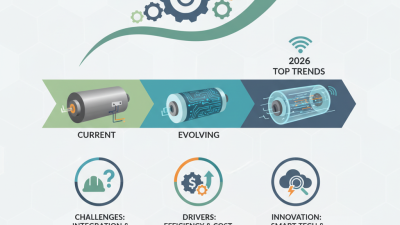
Picking a top chain conveyor in 2026 isn’t just about speed, price, or glossy catalog photos. The real question is whether the system fits your product, your layout, your cleaning routine, and the way your production line actually runs. If you’re handling wet food, you’ll probably want corrosion-resistant materials and easy, open access for sanitation. For boxed goods, higher load capacity and controlled transfers might matter more. And yes, the small stuff counts—chain pitch, guide-rail adjustment, motor protection, spare-part availability. Those details can make or break uptime.
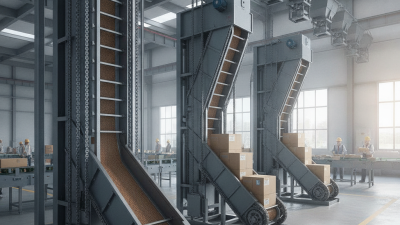
Most experienced engineers don’t start with a brand. They start with the product path. Measure package width, weight, temperature, and transfer height. Then ask: will the conveyor run nonstop, or will it start and stop all day? A motor-driven elevator can be great for steady vertical movement. A servo reciprocating elevator gives you precise positioning when timing gets complicated. And if you need fast, repeated lifting, a pneumatic reciprocating elevator can be a practical choice. Depending on floor space and material flow, your layout might call for top-in bottom-out lifting or bottom-in top-out lifting.
A reliable supplier should hand over drawings, load calculations, test records, maintenance guidance, and warranty terms that are actually clear. Ask for proof from similar installations—not just big claims. Before you approve anything, look at noise, chain wear, cleaning access, and how the emergency-stop integrates. Even good teams can miss operator reach and future expansion. That’s worth pushing back on. A conveyor can look perfect on paper and still slow everything down if the workstation beside it is badly planned. In this guide, we’ll look at how to compare designs, check whether a supplier really knows their stuff, and choose a top chain conveyor that keeps working long after installation day.

Define Duty from Load, Speed, and CEMA Conveyor Capacity Calculations
How to Choose a Top Chain Conveyor in 2026?
Define duty before selecting a Top chain conveyor. Record product mass, pitch, width, accumulation length, operating hours, and required speed. A 20-kilogram tote moving at 12 meters per minute creates a different duty from 2-kilogram cartons moving at 30 meters per minute. Calculate live load per meter, then include starting loads and transfer impacts. CEMA capacity calculations use material density, cross-sectional loading, and conveying speed. For a Stainless steel chain plate system, these values help estimate throughput, but chain pitch and allowable tension still require separate verification.
CEMA’s Conveyor Equipment Manufacturers Association standards remain a useful engineering reference, not a substitute for application testing. MHI’s 2024 Annual Industry Report surveyed more than 1,100 supply-chain professionals and reported strong investment in automation and data visibility. That matters because sensors can expose overloads, uneven loading, and speed changes before failures occur. A Slat chain conveyor line handling wet food containers may need a 304 stainless steel chain plate conveyor, washdown-rated bearings, and controlled acceleration. Keep the calculation visible.
Small details matter.
For a Metal chain plate assembly line, confirm sprocket engagement, return-rail friction, and thermal expansion. Operators often specify peak capacity, while the conveyor runs continuously near that limit. That assumption deserves criticism. A 25% design margin may be reasonable, but it should follow measured duty, not habit. Match the Stainless steel chain plate, motor torque, and guide geometry to the actual load profile. Then test a loaded section before approving the full Conveyor.
Size Chain Pitch and Strength with ANSI/ASME B29.1 Tables
How to Choose a Top Chain Conveyor in 2026?
Choosing a top chain conveyor starts with pitch, load, and speed. ANSI/ASME B29.1 tables provide tested roller-chain dimensions, pitch standards, and tensile-strength references. They do not fully define plastic slat-chain performance. Always compare the table with the chain supplier’s engineering sheet. I have seen projects fail after teams selected pitch by appearance alone. A spreadsheet can still mislead.
Measure product weight, contact area, conveyor length, incline, and starting torque. Then calculate working tension, not only breaking strength. Add friction, wear, and shock factors. MHI’s 2024 Annual Industry Report found that 85% of respondents viewed supply-chain technology as a competitive advantage. That pressure encourages faster lines, but higher speed increases wear and noise. Engineering plastic slat chain suits general conveying. PP plastic slat chain offers chemical resistance and low weight. POM plastic slat chain provides better stiffness and dimensional stability. Non-slip plastic slat chain helps control wet containers. Flat top plastic slat chain supports stable product transfer.
Check sprocket tooth engagement and the chain’s allowable working load. A 100 mm pitch choice may look economical, yet it can create unstable product spacing. Keep the safety factor visible in the design file. ANSI/ASME B29.1 data should guide compatible drive selection, while actual slat-chain ratings require application testing. I would recheck temperature, cleaning chemicals, and guide-rail pressure before approving the final size.
How to Choose a Top Chain Conveyor in 2026? - Size Chain Pitch and Strength with ANSI/ASME B29.1 Tables
ANSI/ASME B29.1 Reference Dimensions for Single-Strand Roller Chains
| ANSI Chain Size |
Pitch |
Roller Diameter |
Width Between Inner Plates |
Pin Diameter |
Inner Plate Thickness |
Minimum Ultimate Tensile Strength
lbf
|
Typical Conveyor Selection Guidance |
| in |
mm |
in |
mm |
in |
mm |
in |
mm |
in |
mm |
| 40 |
0.500 |
12.70 |
0.312 |
7.92 |
0.312 |
7.92 |
0.156 |
3.96 |
0.060 |
1.52 |
2,100 |
Light-duty conveying, compact layouts, and low product loads. |
| 50 |
0.625 |
15.88 |
0.400 |
10.16 |
0.375 |
9.53 |
0.200 |
5.08 |
0.080 |
2.03 |
3,700 |
Light-to-medium loads where a compact chain pitch is preferred. |
| 60 |
0.750 |
19.05 |
0.469 |
11.91 |
0.500 |
12.70 |
0.234 |
5.94 |
0.094 |
2.39 |
6,600 |
General-purpose conveyor applications with moderate loading. |
| 80 |
1.000 |
25.40 |
0.625 |
15.88 |
0.625 |
15.88 |
0.312 |
7.92 |
0.125 |
3.18 |
14,100 |
Common medium-duty conveyor size with a balanced pitch-to-strength ratio. |
| 100 |
1.250 |
31.75 |
0.750 |
19.05 |
0.750 |
19.05 |
0.375 |
9.53 |
0.156 |
3.96 |
22,400 |
Medium-to-heavy loads and longer conveyor center distances. |
| 120 |
1.500 |
38.10 |
0.875 |
22.23 |
0.875 |
22.23 |
0.437 |
11.11 |
0.187 |
4.75 |
31,700 |
Heavy-duty conveying, high shock loads, and robust drive systems. |
| 140 |
1.750 |
44.45 |
1.000 |
25.40 |
1.000 |
25.40 |
0.500 |
12.70 |
0.219 |
5.56 |
44,100 |
Heavy conveyors requiring increased chain cross-section and strength. |
| 160 |
2.000 |
50.80 |
1.125 |
28.58 |
1.125 |
28.58 |
0.562 |
14.29 |
0.250 |
6.35 |
56,500 |
Very heavy-duty conveying and high-load, low-speed applications. |
Select 304 or 316 Stainless Steel: 18% Cr and 2–3% Mo Benchmarks
When selecting a top chain conveyor in 2026, stainless chemistry deserves more attention than polished appearance.
In practical installations, 304 stainless steel is a strong baseline for dry rooms, light washdown, and general food-handling environments.
It commonly contains about 18% chromium and usually has little molybdenum. Chromium forms the passive surface film.
That film needs oxygen and reasonable maintenance.
Choose 316 when salt, brine, acidic cleaners, or coastal humidity may reach the conveyor.
Its typical 16–18% chromium range is supported by roughly 2–3% molybdenum.
Molybdenum improves resistance to localized pitting, especially around chain pins, joints, and stagnant droplets.
Nickel content also supports a stable austenitic structure. It does not make the conveyor immune to corrosion.
Field inspections often find corrosion near weld discoloration, trapped product, or poorly drained frames.
Request heat-number traceability and a mill certificate, not only a material label.
Check chain articulation under the actual load, because 316 does not automatically mean stronger wear performance.
Compare surface finish, cleanability, sprocket compatibility, and replacement intervals.
A simple rule can mislead.
A humid line may still corrode when drainage design is poor. Review wash chemistry and cleaning frequency before approving the final specification.
Set Width, Radius, and Transfer Geometry for the Required Product Flow
How to Choose a Top Chain Conveyor in 2026?
Set conveyor width from the product, not from available floor space. Measure the widest product, then add clearance for guides, thermal expansion, and operator adjustments. A bottle may need only a small margin, while an unstable carton needs more room. Small gaps matter. The chain should support the product without creating side pressure. Check the actual contact area, especially when products have ribs, labels, or uneven bases.
Radius selection depends on product stiffness, chain articulation, speed, and turning direction. A tight radius saves space, but it can twist flexible packages or disturb open containers. Use the manufacturer’s minimum radius only as a starting point. Run a trial with the heaviest and lightest products. Do not guess. Measure slipping, tipping, noise, and product spacing at operating speed.
Transfer geometry often decides whether the line performs reliably. Keep transfers short, level, and aligned with the product’s travel path. Use dead plates carefully, because a small exposed gap can catch thin packages. Side transfers may need controlled speed differences and precise guide-rail placement. In field reviews, calculations sometimes looked correct, yet the transfer failed during accumulation. That is why I recommend testing real products, real loads, and realistic stops. A design can be technically sound and still need revision.
How to Choose a Top Chain Conveyor in 2026?
Set width, radius, and transfer geometry according to the product envelope and required flow. The reference values below reflect common unit-load conveyor design ranges for cartons, totes, and trays.
Select a conveyor width that provides clearance on both sides of the product. A larger inside radius supports smoother turns, while a longer transfer overlap helps reduce product instability at transfers.
Specify IE3 Motors under IEC 60034-30-1 and VFD Speed Control
How to Choose a Top Chain Conveyor in 2026?
A reliable Conveyor Top Chain begins with the motor specification, not the frame size. In recent conveyor projects, I have seen undersized motors overheat during repeated starts. Specify an IE3 motor under IEC 60034-30-1 for suitable energy performance. Check the motor’s rated power, duty cycle, voltage, and operating environment. IE3 alone does not guarantee low system consumption. Chain friction, product weight, and poor alignment still matter.
Use VFD speed control when production rates change throughout the shift. A VFD can reduce mechanical shock during starting and stopping. It also helps match chain speed to filling, cooling, or packing operations. Set acceleration carefully. A fast ramp may pull products out of position. A slow ramp may reduce output more than expected. Confirm that the motor and VFD are compatible, especially under low-speed loads. Cooling can become weaker at reduced speed.
Measure before final selection. Record load weight, conveyor length, incline, starts per hour, and ambient temperature. Ask for efficiency data at the expected operating point, not only at full load. Include overload capacity and braking requirements in the specification. I once treated a short conveyor as a simple application, then found frequent jams caused by product accumulation. The motor was adequate, but the control logic needed improvement. Leave access for chain inspection and tension adjustment. Small details often decide reliability.
Verify Food Hygiene with FDA 21 CFR 177.1520 and ISO 14159
Choosing a top chain conveyor in 2026 requires more than checking speed, load, and price. Food hygiene begins with material verification. FDA 21 CFR 177.1520 applies to specific olefin polymers used in food-contact components. Request a current compliance declaration for plastic chains, guides, sprockets, and wear strips. Confirm the intended food type, temperature, contact time, and cleaning conditions.
A declaration alone is not enough. Ask for traceability, test reports, and clear conditions of use. During equipment reviews, small details often create the greatest risks. Trapped crumbs can hide beneath chain supports. Poorly finished welds can retain moisture. Choose open, drainable frames with smooth surfaces and accessible cleaning zones. Avoid unnecessary cavities and sharp internal corners.
ISO 14159 supports hygienic machinery design. It encourages cleanable surfaces, suitable materials, and layouts that limit contamination. Check whether the conveyor can withstand foaming, rinsing, and approved sanitation chemicals. Confirm that lubricants cannot contact food, directly or indirectly. I would also inspect the conveyor after a trial wash, not only during factory acceptance. Real cleaning exposes weaknesses. Documentation may look complete, yet one inaccessible guide can undermine the design. Ask for maintenance instructions, replacement-part specifications, and recorded verification for every food-contact component.
Audit Safety and Ownership Cost with ISO 12100, IP65, and Wear Data
Choosing a Top Chain Conveyor in 2026 requires more than checking load capacity. Start with an ISO 12100 risk assessment. Record pinch points, entanglement hazards, emergency stops, and cleaning access. Walk the conveyor slowly. A guard that looks secure may still leave a dangerous gap.
IP65 helps protect enclosed electrical parts from dust and water jets, but it does not prove hygienic design. Check cable glands, drain paths, washdown temperature, and corrosion-prone fasteners. In a wet production area, inspect the motor housing after cleaning. Moisture often hides beneath mounting plates. The rating is useful, not magical.
Ownership cost depends heavily on wear evidence. Track chain elongation, roller diameter, sprocket tooth profile, lubrication intervals, and unplanned stoppages. McKinsey estimates predictive maintenance can reduce machine downtime by 30–50% and maintenance costs by 20–30%. Those figures are broad benchmarks, not promises. Your conveyor may perform worse because dust, overloads, or poor alignment were ignored. MHI’s 2024 industry research also highlights continuing pressure to improve automation and operational resilience. Ask suppliers for measured wear curves, replacement intervals, and service-hour assumptions. A spreadsheet showing five years of energy, parts, labor, cleaning, and downtime costs is more valuable than a polished brochure. I would also challenge my own inspection routine. Monthly checks may sound reasonable, yet a heavily loaded conveyor can change noticeably within days.
FAQS
Record product mass, chain pitch, conveyor width, accumulation length, speed, and operating hours. A 20-kilogram tote at 12 meters per minute creates substantial duty. Include starting loads and transfer impacts. Do not calculate only the moving load.
Estimate live load per meter, material density, cross-sectional loading, and conveying speed. These values help predict throughput. Chain pitch and allowable tension need separate verification. A capacity figure is not a complete design.
Not automatically. A 25 percent margin may suit some applications, but measured duty should guide it. Peak capacity can mislead when the conveyor runs continuously near its limit. That assumption deserves criticism.
304 stainless steel suits dry rooms, light washdown, and general food-handling areas. It commonly contains about 18 percent chromium. Chromium supports a passive surface film. The film still needs oxygen and reasonable maintenance.
Consider 316 where salt, brine, acidic cleaners, or coastal humidity may reach the conveyor. It typically contains roughly 2–3 percent molybdenum. Molybdenum improves resistance to localized pitting. It does not make the system corrosion-proof.
Inspect weld discoloration, trapped product, stagnant droplets, and poorly drained frames. Corrosion may appear around chain pins and joints. A humid line can still corrode with poor drainage. Material grade alone is not enough.
Assess pinch points, entanglement hazards, emergency stops, guards, and cleaning access. Walk the conveyor slowly during inspection. A guard may look secure. A dangerous gap can remain.
No. It helps protect enclosed electrical parts from dust and water jets. It does not prove cleanability or hygienic construction. Check cable glands, drain paths, washdown temperature, and fasteners.
Track chain elongation, roller diameter, sprocket wear, lubrication, downtime, labor, cleaning, and replacement parts. Request measured wear data and service-hour assumptions. A five-year cost spreadsheet is useful. Predictions can still be wrong.
Inspection frequency should match loading, moisture, dust, and operating hours. Monthly checks may be adequate for light duty. Heavy loads can change conditions within days. I would challenge a fixed schedule.
Conclusion
Choosing a Top Chain Conveyor in 2026 requires a balanced review of performance, materials, hygiene, safety, and long-term cost. Begin by defining the duty from product load, conveying speed, and capacity calculations based on CEMA methods. Then determine the appropriate chain pitch, tensile strength, and operating margin using ANSI/ASME B29.1 tables. For demanding environments, compare 304 and 316 stainless steel, considering corrosion resistance associated with approximately 18% chromium and 2–3% molybdenum in 316 grades.
The conveyor should also be sized for product width, turning radius, transfer points, and the required flow rate. Specify efficient IE3 motors under IEC 60034-30-1, together with variable-frequency drive control for smoother speed adjustment. Food applications require suitable materials and hygienic design aligned with FDA 21 CFR 177.1520 and ISO 14159. Finally, assess guarding and risk reduction under ISO 12100, select appropriate IP65 protection where needed, and compare wear data, maintenance intervals, energy use, and total ownership cost before making a final decision.