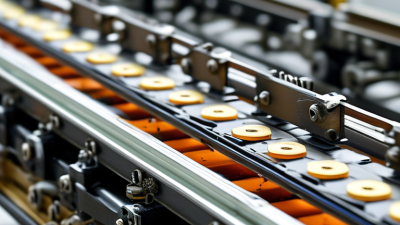
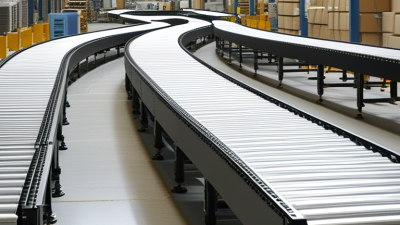
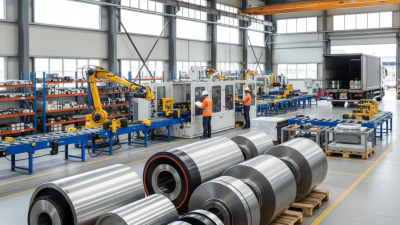
A Heavy Duty Chain Conveyor is built to move heavy, irregular, or palletized loads through tough industrial settings. Its design blends steel chains, sprockets, wear strips, a drive motor, and a sturdy frame. Basically, the chain pulls the load forward, the sprocket handles the torque transfer, and the frame helps absorb vibrations and impacts. Think of it like a well-oiled machine that keeps things moving smoothly.
Interest in these systems is on the rise. According to MHI’s 2024 Annual Industry Report, we’re seeing more investments in automation, resilience, and material handling tech. Meanwhile, Grand View Research points out that conveyor systems are a big part of the growth in industrial automation. Now, that doesn’t mean every facility absolutely needs a chain conveyor, but it definitely shows there’s more demand for reliable load movement and measurable throughput—simple as that.
When engineers are choosing a Heavy Duty Chain Conveyor, they consider stuff like load weight, pallet size, speed, duty cycle, incline, and operating temperature. Sometimes, a steel pallet might scrape against the chain, or dust sneaks into the drive housing—small details that can make a big difference.
The way these conveyors work is pretty straightforward, but designing them isn’t always simple. Basically, a motor turns the drive shaft, which kicks the sprockets into action. The sprockets grip the chain, and friction does the rest, moving the load along the conveyor bed. But if everything’s not lined up just right, you could end up with noise, uneven wear, or even unexpected downtime—that’s a detail worth paying attention to.
There's often a lot of confusion around terminology. You might hear terms like 3-speed chain, triple-speed conveyor chain, 3-speed tooling chain, speed multiplier chain, light-duty 3-speed chain, or heavy-duty 3-speed chain. They all sound similar, but they usually refer to different applications, not interchangeable parts. Sometimes product catalogs throw these terms around loosely, so it’s worth double-checking specs like pitch, roller diameter, load capacity, and manufacturer test data before making a decision.
This guide aims to explain how these conveyors work, where they perform best, and what design limitations you should consider before specifying equipment. The truth? No conveyor is maintenance-free—that’s just reality. But understanding these key points can go a long way in making smarter choices.
Definition and Core Purpose of a Heavy Duty Chain Conveyor
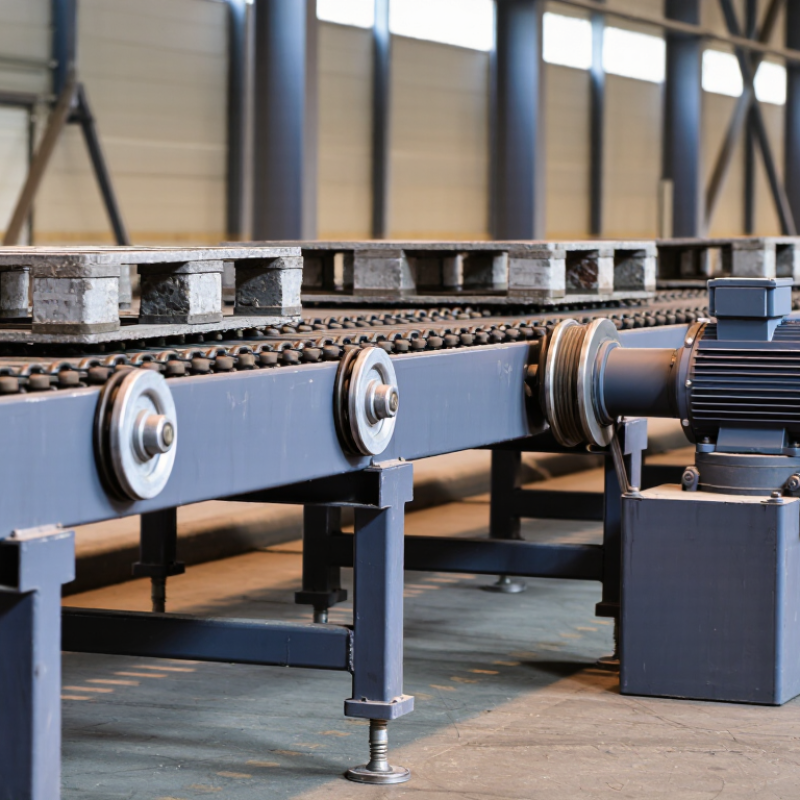
A heavy duty chain conveyor is a powered material-handling machine designed to move heavy, rigid loads across a controlled path. It relies on chains, sprockets, shafts, and a drive motor rather than a continuous belt. The chains support pallets, bins, steel fixtures, or assembled products while they travel between workstations. Built for weight. Its core purpose is dependable transfer, not simply faster movement.
During operation, a motor turns the drive sprocket. The sprocket engages chain links and pulls the load forward. Wear strips or rollers guide the chain and reduce friction beneath the load. A frame carries impact from loading, stopping, and repeated starts. Load weight, center of gravity, speed, and spacing must match the conveyor design. Poor alignment causes noise, vibration, and uneven chain wear. Guarding also protects workers from moving sprockets and pinch points. These details sound basic. They decide reliability.
In factories, chain selection depends on load and duty cycle. A Heavy-duty 2.5× Speed Multiplier Chain may suit applications requiring controlled speed changes and robust transmission. A Light-duty 2.5× Speed Multiplier Chain fits smaller tooling loads when impact remains limited. Names such as Speed Multiplier Chain Special for Tooling Pallet describe intended use, not universal performance. An Assembly Line Speed Multiplier Chain or Production Line 2.5× Speed Multiplier Chain may support synchronized pallet movement. A Workshop Assembly Line Speed Multiplier Chain can serve compact stations with frequent starts and stops. These labels still need verification. Engineers should check pitch, tensile strength, lubrication, temperature, and replacement access before approval. I have seen an apparently strong conveyor fail because its load was placed off-center. That mistake is easy to overlook.
Main Components and Their Functions
Main Components and Their Functions
A heavy-duty chain conveyor moves bulky loads through a fixed path using linked chains pulled by a powered drive. The frame supports the load and keeps the chain aligned. It is often built from steel, with reinforced crossmembers beneath impact points. Small alignment errors matter. They can accelerate wear.
The drive assembly typically includes an electric motor, gearbox, drive sprockets, and a tensioning device. The motor supplies power; the gearbox reduces speed and increases torque. Sprocket teeth engage the chain links, while the take-up keeps chain slack within a workable range. A 2014 U.S. Department of Energy bandwidth study estimated that motor-driven systems used about 69% of U.S. manufacturing electricity. That figure covers many industrial systems, not conveyors alone, but it makes drive efficiency worth checking.
Chains carry the load, while flights, slats, or attachments help support and control it. Bearings support rotating shafts, and guards protect workers from moving parts. Sensors can detect overloads or motion faults and stop the conveyor. In practice, dust, uneven loading, and poor lubrication can undermine an otherwise robust system. Maintenance intervals should reflect actual operating conditions; a neat schedule alone is not enough.
How a Heavy Duty Chain Conveyor Operates Step by Step
A heavy duty chain conveyor moves loads through a linked chain system supported by a rigid frame. Its operation begins when an electric motor turns a gearbox. The gearbox reduces speed and increases torque at the drive sprocket. The sprocket engages the chain teeth and pulls the conveying surface forward. Quiet but powerful.
At the loading point, workers or machines place cartons, trays, or containers onto the chain. Wear strips support the moving links and reduce friction beneath the load. Side guides keep products aligned, especially around transfers and slight inclines. The chain travels continuously until it reaches the discharge end. There, the drive sprocket changes direction, and the returning chain runs underneath the frame. A correctly adjusted take-up device maintains chain tension without overloading the bearings.
Different materials suit different working conditions. A Food grade plastic slat chain line supports hygienic handling when cleaning procedures are properly controlled. A Corrosion resistant plastic slat chain conveyor High temperature resistant plastic slat chain line may serve wet or warm areas, but temperature limits must be checked carefully. Heavy-duty plastic slat chain line Light-duty plastic slat chain line choices depend on load weight, speed, and product shape. In practice, operators should inspect sprocket wear, unusual noise, loose guides, and chain tracking each shift. Small alignment errors can grow quickly. More tension is not always the answer; sometimes the frame or sprocket is misaligned. Real installations need measurement, adjustment, and honest review.
What Is a Heavy Duty Chain Conveyor and How Does It Work? - How a Heavy Duty Chain Conveyor Operates Step by Step
| Step |
Operating Stage |
Main Component |
How It Works |
Typical Data or Range |
Key Checkpoint |
| 1 |
Loading |
Load bed, pallets, fixtures, or containers |
A product is placed on the conveyor bed or directly supported by the chain strands. The load must be positioned within the conveyor's rated width and capacity. |
Common heavy-duty unit-load capacity: approximately 50–500 kg per meter, depending on design. |
Keep the load centered and distribute weight evenly across the supporting chains. |
| 2 |
Motor Start |
Electric motor and starter or variable-frequency drive |
The motor converts electrical energy into rotary motion. A starter or drive controls acceleration, stopping, and operating speed. |
Typical industrial motor power: about 0.75–15 kW, subject to load, length, incline, and speed. |
Use overload protection and confirm that the motor is correctly sized for starting torque. |
| 3 |
Torque Reduction |
Gear reducer |
The reducer lowers motor speed and increases torque so the conveyor can move heavy loads without excessive motor speed. |
Common reduction ratios: approximately 10:1 to 60:1, depending on required chain speed and torque. |
Check reducer oil level, mounting alignment, and rated output torque. |
| 4 |
Drive Transmission |
Drive shaft and sprocket |
The reducer turns the drive shaft. Sprocket teeth engage with the chain rollers or links and transfer torque to the conveyor chain. |
Typical chain speeds: approximately 0.05–0.5 m/s for heavy-load applications. |
Sprocket teeth must engage smoothly without skipping, binding, or excessive impact. |
| 5 |
Chain Engagement |
Roller chain, drag chain, or engineered conveyor chain |
The rotating sprocket pulls the chain around the drive end. The chain's tensile strength carries the load along the conveyor frame. |
Heavy-duty conveyor chains commonly use steel links, rollers, pins, and bushings selected for high tensile and wear resistance. |
Inspect for elongated links, damaged pins, stiff joints, and abnormal wear. |
| 6 |
Load Support |
Wear strips, rails, rollers, or steel bed |
The chain and load travel over wear-resistant guides or support rails. These surfaces reduce friction and maintain the chain path. |
Common frame materials include painted steel, stainless steel, and structural profiles; material selection depends on environment and load. |
The support surface should be level, securely fixed, and free from debris. |
| 7 |
Continuous Transport |
Conveyor frame and chain circuit |
The powered strand moves the product forward while the return strand travels beneath the frame back toward the drive or tail section. |
Horizontal layouts are common; incline layouts require additional traction, guarding, and load-retention measures. |
Verify that the product does not slip, rotate unexpectedly, or contact the frame. |
| 8 |
Tension Control |
Take-up assembly and tail sprocket |
The take-up mechanism removes excessive slack while allowing the chain to articulate around the tail sprocket and return path. |
Correct slack is design-specific; excessive tension increases bearing and chain wear, while insufficient tension may cause jumping. |
Adjust tension only according to the conveyor design and maintenance procedure. |
| 9 |
Discharge |
End transfer, stop gate, or receiving conveyor |
At the discharge point, the product transfers to another conveyor, a workstation, a palletizer, or a storage position. |
Transfer speed should be synchronized with the receiving equipment to prevent impact or product accumulation. |
Maintain adequate clearance at transfer points and protect operators from pinch hazards. |
| 10 |
Stopping and Maintenance |
Controls, emergency stop, guards, and lubrication points |
The conveyor stops through normal controls or an emergency-stop circuit. Maintenance personnel isolate electrical and mechanical energy before inspection or servicing. |
Inspection frequency depends on duty cycle, contamination, speed, load, and operating environment. |
Apply lockout/tagout procedures, inspect guards, lubricate approved points, and remove accumulated debris. |
Note: The listed values are typical design ranges for heavy-duty chain conveyor applications. Actual capacity, speed, motor power, chain size, and tension must be determined from the load characteristics, conveyor length, incline angle, duty cycle, and applicable safety requirements.
Common Chain Conveyor Configurations and Drive Systems
A heavy-duty chain conveyor moves pallets, steel parts, crates, and other dense loads through demanding facilities. Its configuration determines stability, speed, and maintenance access. Single-strand designs suit narrow loads with a defined contact path. Double-strand conveyors support pallets more evenly. Multi-strand layouts handle wider or heavier products, especially when load balance changes.
Slat-chain conveyors use connected plates for containers and irregular packages. Drag-chain designs pull bulk materials through troughs, often in recycling or process areas. According to Grand View Research, the global conveyor system market was valued at about USD 10 billion in 2023. That growth reflects wider automation adoption, but capacity alone should not drive configuration choices. A poorly supported pallet can sway, scrape, or stop production.
Drive systems usually combine an electric motor, gearbox, drive sprocket, and tensioning assembly. Direct geared drives reduce exposed components and simplify alignment. Shaft-mounted drives can save space, although installation errors may increase chain wear. Variable-frequency drives allow gradual starts and controlled speeds. Torque limiters help protect the conveyor during jams. They are not a substitute for proper guarding.
The 2024 MHI Annual Industry Report found that roughly 55% of surveyed supply-chain leaders planned to increase technology investment. This supports demand for automated conveyor lines, yet integration still requires practical judgment. Chain pitch, load weight, friction, and duty cycle must match the drive rating. Small mistakes matter. A conveyor may run quietly during testing, then fail under a full production load. CEMA engineering guidance remains useful for checking loading, safety clearances, and component selection.
Materials and Industries Suited to Heavy Duty Chain Conveyors
A heavy duty chain conveyor moves heavy loads through powered chains, sprockets, and supporting rails. Unlike belt conveyors, it handles pallets, steel bins, wooden crates, and fabricated parts with uneven bottoms. The chain pulls the load steadily, even when dust, heat, or sharp edges damage softer conveying surfaces. Proper loading still matters. A badly balanced pallet can twist the chain and create uneven wear.
Materials with high weight or rough surfaces suit this conveyor best. Foundries may transport castings, while automotive plants move engine components and welded frames. Warehouses commonly use it for full pallets and storage containers. Food processing needs careful material selection, especially stainless steel frames and washable chain components. Wet areas, abrasive dust, and high temperatures require different lubricants, clearances, and protective guarding.
Engineers select the chain from load weight, conveyor length, speed, and duty cycle.
A 2.5x Speed Chain or 3x Speed Chain can move products faster than the chain line, supporting accumulation and controlled spacing. Light Duty Double Speed Chain fits smaller cartons, while Heavy Duty Double Speed Chain suits loaded pallets and metal containers. A Single Row Double Speed Chain works where the product width and load remain moderate. Wider loads may need parallel rows and synchronized shafts. Field conditions are rarely perfect. Misalignment, poor lubrication, or neglected debris can shorten service life faster than expected.
Safety, Maintenance, and Performance Considerations
A heavy duty chain conveyor moves pallets, bins, or metal parts through demanding production areas. Its chain strands pull a series of connected carriers along a guided track. A drive sprocket provides motion, while flights or slats support the load. The design handles heavier impact than ordinary belt equipment, but it still needs controlled loading and accurate alignment.
Safety starts with guarding around sprockets, pinch points, and transfer zones. Emergency stops must remain visible and reachable. Operators should never clear a jam while the chain is moving. Lockout procedures matter, even during a quick inspection. A Slat Chain Elevator may lift containers vertically, while a Light-duty Continuous Elevator suits smaller loads. A Heavy-duty Continuous Elevator requires stronger frames, chains, and braking control.
Maintenance teams should inspect chain elongation, worn pins, loose fasteners, and oil leakage. Listen for clicking, scraping, or uneven movement. Small sounds often appear before major failures. Clean debris from guides and check that loads stay centered. A Multi-layer Continuous Elevator needs careful level alignment between tiers. A High-speed Continuous Elevator demands faster sensor response and stricter guarding. A Fixed Continuous Elevator may seem simple, yet its fixed position can hide access problems. I have seen clean equipment fail because one neglected guide rail forced the chain sideways. The inspection looked complete. It was not. Performance also depends on measured load weight, start-stop frequency, temperature, and realistic speed settings.
Heavy-Duty Chain Conveyor: Typical Preventive Maintenance Schedule
A heavy-duty chain conveyor uses a continuous chain to move pallets, containers, or other heavy loads. Regular inspection and maintenance help reduce unplanned downtime, chain wear, misalignment, and safety risks.
The chart shows typical starting intervals used for preventive maintenance planning: safety devices and guarding should be checked daily, chain and sprocket condition weekly, lubrication monthly, and alignment and fastener condition quarterly. Actual intervals should be adjusted according to load, operating hours, environment, and the conveyor manufacturer's instructions.
China Stainless Steel Conveyor Solutions for Food, Pharma & Electronics: Insights from Grand View Research and PMMI Reports
Stainless steel conveyor solutions are becoming increasingly important for food, pharmaceutical, and electronics manufacturers in China, where hygiene, traceability, production flexibility, and equipment reliability are closely connected. Recent industry research highlights growing demand for automated material handling systems that can support higher throughput while reducing contamination risks, manual intervention, and production interruptions. A stainless steel chain conveyor line addresses these needs with corrosion-resistant materials, smooth surfaces, and a robust structure suitable for demanding workshop environments.
Designed for continuous transport, the system can handle horizontal, inclined, and turning movements, making it adaptable to compact or complex production layouts. Its modular construction allows sections to be easily connected, adjusted, or expanded as production requirements change. For food and pharmaceutical applications, the stainless steel frame and chain support routine cleaning and hygienic operation. In electronics and precision manufacturing, stable movement helps protect components and maintain consistent process flow. Auxiliary devices, such as inspection, positioning, buffering, and operating units, can also be integrated to create a coordinated conveyor-and-operation system. Custom engineering enables the line to match product dimensions, transfer distances, speed requirements, and connections between different processing stages.
FAQS
It moves heavy, rigid loads along a fixed path using powered chains, sprockets, and a motor. Built for weight.
Common loads include pallets, steel bins, wooden crates, and assembled parts. Rough or uneven surfaces are often manageable, but poor balance can twist the chain.
A motor turns a drive sprocket, which pulls the chain forward. Rails or wear strips guide the chain beneath the load.
The system typically includes a frame, chains, sprockets, motor, gearbox, tensioning device, and bearings. Guards and sensors may also be fitted.
They should check load weight, speed, conveyor length, duty cycle, and impact. Pitch, strength, lubrication, temperature, and replacement access matter too.
They can suit dusty, hot, or abrasive environments, but components need to match the conditions. Lubrication and clearances may need adjustment. Not every setup will cope.
It can move products faster than the chain line, helping with spacing or accumulation. The right type depends on load size and operating conditions.
Misalignment, poor lubrication, debris, and uneven loading can cause noise, vibration, and uneven wear. Small errors matter.
Guards can cover moving sprockets and pinch points. Sensors may detect overloads or motion faults and stop the conveyor. A schedule alone is not enough; actual conditions should guide maintenance.
Conclusion
A Heavy Duty Chain Conveyor is a robust material-handling system designed to move heavy, bulky, or irregular loads through demanding industrial environments. It uses a continuous chain loop to carry products along a defined path, making it suitable for items that may be too large, hot, abrasive, or uneven for belt conveyors. Its main components typically include chains, sprockets, a supporting frame, flights or slats, guide rails, bearings, and a motor-driven gearbox. Each part works together to maintain stable movement and controlled load transfer.
During operation, the drive system rotates the sprockets, engaging the chain and pulling the carrying surface forward. Conveyors may be configured as straight, inclined, accumulating, or transfer systems, with drive arrangements selected according to load weight and layout. They are commonly used in manufacturing, warehousing, recycling, construction-material handling, and heavy processing industries. Proper guarding, emergency stops, lubrication, chain alignment, tension checks, and scheduled inspections are essential for safe operation, reliable performance, and longer service life.