Choosing a Roller Conveyor For Sale requires more than comparing prices, photographs, or advertised speed. The right unit must match your product, floor space, load weight, and daily handling rhythm. A carton rolling smoothly at 30 kilograms may behave differently at 80 kilograms. Measure twice. Do not guess.
Material-handling engineer Michael R. Gable explains, “A conveyor is successful when the product moves safely, consistently, and with fewer manual corrections.” This practical view supports E-E-A-T because selection should combine field experience, engineering data, and dependable supplier evidence. Ask for load ratings, roller diameter, frame thickness, bearing details, and maintenance requirements. Request drawings when the conveyor must fit between racks or beside a packing bench.
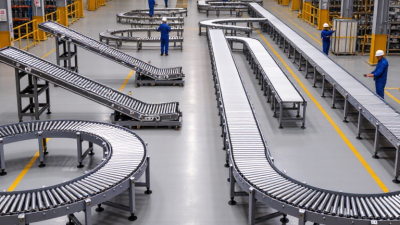
A purchasing review may compare Straight Non-powered Roller Conveyor, Curved Non-powered Roller Conveyor, and Inclined Non-powered Roller Conveyor models. Flexible Roller Conveyor designs can suit temporary layouts, although their movement may feel less rigid. Double-layer Roller Conveyor systems save floor space, but they demand careful access planning. Loop Roller Conveyor arrangements can improve circulation. Frame-type Roller Conveyor models may offer a simpler structure for fixed workstations.
Capacity matters. So does control.
An attractive Roller Conveyor For Sale can still be unsuitable if cartons stop at a curve or shift on an incline. That is an easy mistake to make. Check real product samples, not only catalog specifications. A reliable supplier should explain limitations clearly, provide installation guidance, and support spare-part access. This guide will help buyers question assumptions, compare practical options, and choose equipment that performs beyond the first day.
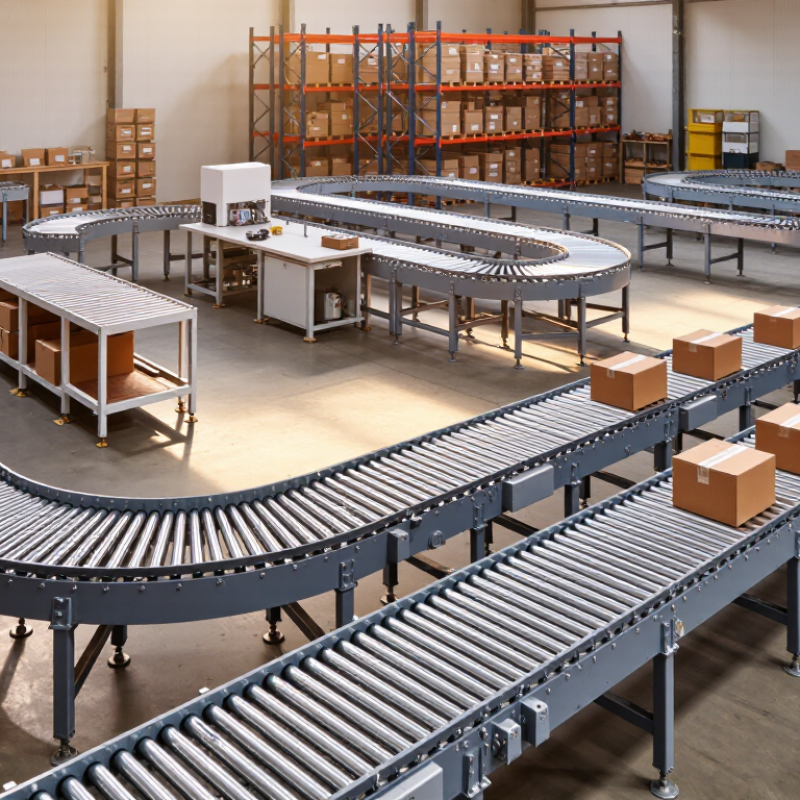
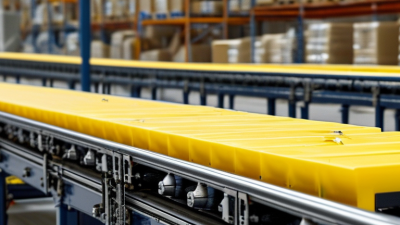
A roller conveyor moves cartons, totes, or pallets on parallel rollers. Gravity models use a slight slope. Powered models use motors, belts, or chain drives. The rollers transfer force beneath the load, creating steady movement with limited lifting. Simple, but not effortless.
MHI’s 2024 Annual Industry Report found that 55% of supply-chain professionals planned to increase technology investment. That trend supports careful conveyor selection, not automatic buying. A Powered roller conveyor suits controlled warehouse flow and frequent starts. A Telescopic roller conveyor extends into trucks, reducing manual carrying at the dock. A Curved roller conveyor changes direction while preserving floor space. A Double-layer roller conveyor uses vertical levels where floor area is restricted.
Load weight and carton size determine the roller diameter, spacing, and frame strength. For dense pallets, a Heavy-duty roller conveyor needs stronger bearings and supports. Measure the smallest package, not the average one. Otherwise, cartons may bridge across rollers and stop unexpectedly. That mistake is easy to make.
The 2023 MHI report also noted that 85% of supply-chain leaders expected technology adoption within five years. Yet automation alone cannot fix poor layout or uneven loading. Check accumulation pressure, noise, cleaning access, and emergency stopping points. I have found that operators often value quiet starts more than impressive speed. That detail is easy to overlook. Choose the conveyor around real products, real shifts, and real handling habits.
Choosing the best roller conveyor starts with the material, not the available floor space. Weight matters. Measure each item’s length, width, base condition, and center of gravity. A rigid carton may travel smoothly, while a soft bag can sag between rollers and stop unexpectedly.
A Non-powered roller conveyor suits stable boxes moved across a fixed route. A Gravity roller conveyor works well when a slight incline or operator push can maintain movement. For frequent hand loading, a Manual roller line offers direct control and simple operation. Not every load rolls. Small cartons may need closely spaced rollers, while heavy pallets require stronger frames and larger roller diameters.
A Flexible roller conveyor is useful beside loading docks or temporary packing stations. It can extend, contract, and follow changing work areas, but its joints need regular inspection. For direction changes, a Curved gravity roller conveyor can guide firm cartons around corners. However, long, narrow, or unstable products may twist on the curve. I would test the actual load before ordering. A short trial often reveals friction, noise, and stopping problems that a specification sheet misses. Keep the conveyor width slightly wider than the load, while avoiding excessive gaps that invite tipping or hand injuries. Surface cleanliness also matters; dust and damaged packaging can change rolling performance quickly.
Choosing the best roller conveyor for sale starts with accurate sizing. Measure the longest and widest product, not the average one. Add clearance for labels, uneven edges, and manual handling. The usable roller width should exceed the product width by at least a small margin. Too little clearance causes jams.
Capacity depends on both weight and flow. Calculate the heaviest unit load, then include pallets, containers, and temporary impacts. Check the rated load per roller, frame capacity, and drive capacity separately. They are not the same figure. Roller pitch matters, too. At least three rollers should support the smallest product at all times. Otherwise, cartons may tilt or stop between rollers.
Speed should match the required throughput, worker pace, and stopping distance. A faster conveyor is not automatically better. Measure units per minute during the busiest period, then allow reasonable spare capacity. Dust, moisture, temperature, and cleaning methods also affect material selection. In practical checks, small gaps around transfer points often create larger problems than expected. I have seen specifications fail because empty packaging was ignored. That is an easy mistake. Recheck the figures with real products before ordering. A short trial with loaded samples can reveal vibration, noise, and unstable movement that calculations miss. Safety guards, emergency stops, and accessible maintenance points must fit the final layout, not an ideal drawing.
| Selection Dimension | Recommended Range or Standard | How to Determine the Requirement | Typical Application | Important Selection Note |
|---|---|---|---|---|
| Conveyor Type | Gravity roller, powered roller, accumulation roller, or flexible roller conveyor | Select the conveyor according to product weight, required movement, accumulation needs, and available floor space. | Cartons, totes, pallets, containers, and packaged goods | Gravity conveyors require a suitable slope or manual pushing force, while powered conveyors provide more consistent movement. |
| Roller Diameter | Approximately 38–76 mm for cartons and totes; 76–127 mm for heavier loads and pallets | Choose a roller diameter that supports the load without excessive deflection or deformation. | Small packages, cartons, cases, and pallet loads | Larger roller diameters generally improve load support and durability for heavy-duty applications. |
| Roller Pitch | Typically 75–150 mm for cartons; 100–200 mm for pallets, depending on the load base | Use enough rollers to keep the product supported continuously. A common design rule is to maintain at least three rollers under the load at all times. | Packages with rigid or stable bottoms | Irregular or flexible products may require closer roller spacing or a different conveyor surface. |
| Conveyor Width | Product width plus approximately 50–100 mm of total side clearance | Measure the widest product dimension and add clearance for smooth loading, unloading, and product variation. | Uniform cartons, mixed-size packages, and totes | For a 600 mm-wide carton, a conveyor width of about 650–700 mm may be suitable, subject to the frame design. |
| Conveyor Length | Determined by the distance between loading and discharge points | Measure the required transfer distance and include space for transitions, guides, drives, and maintenance access. | Warehouse transfer lines, packing areas, and production lines | Long conveyors may require additional supports, drive sections, tension control, or multiple zones. |
| Load Capacity | Light duty: up to approximately 50 kg/m; medium duty: 50–150 kg/m; heavy duty: above 150 kg/m | Calculate the maximum product weight and the weight distributed across each loaded conveyor section. | Parcel handling, manufacturing, storage, and pallet transport | Choose a rated capacity above the maximum operating load to provide a practical safety margin. |
| Maximum Unit Load | Commonly 10–50 kg for carton conveyors and 500–1,500 kg for pallet conveyors | Identify the heaviest individual item, including packaging, and compare it with the conveyor's rated unit-load capacity. | Cartons, drums, bins, crates, and pallets | The capacity must account for load position, roller spacing, frame strength, and any impact during loading. |
| Conveyor Speed | Approximately 0.1–0.5 m/s for controlled handling; up to about 1.0 m/s for suitable high-throughput systems | Base the speed on required throughput, product stability, operator safety, and the time needed for scanning or packing. | Picking, sorting, inspection, packing, and assembly operations | Higher speed can increase throughput but may require better guides, controls, guarding, and product spacing. |
| Throughput | Approximately 300–1,200 cartons per hour for many manual or semi-automated lines | Estimate throughput using product length, spacing, conveyor speed, loading pattern, and operating time. | Distribution centers and packaging lines | A practical calculation should include downtime, loading gaps, accumulation, and operator handling limitations. |
| Product Bottom Condition | Best suited to products with flat, rigid, and stable bottoms | Inspect whether the product can maintain contact with several rollers without tipping, snagging, or falling between rollers. | Cartons, totes, trays, bins, and pallets | Products with uneven bases may need a belt conveyor, skate-wheel conveyor, pallet rollers, or a custom support solution. |
| Frame Material and Finish | Painted or powder-coated steel for general use; stainless steel or corrosion-resistant finishes for demanding environments | Consider load requirements, moisture, cleaning chemicals, temperature, and hygiene standards. | Warehouses, factories, food-related areas, and washdown locations | Material selection should match the operating environment and required service life, not only the initial purchase price. |
| Installation Layout | Straight, curved, incline, decline, transfer, or modular configuration | Map the product flow, available footprint, access points, and connection to existing equipment. | Production cells, storage systems, order fulfillment, and dispatch areas | Allow clearance for maintenance, emergency access, guarding, and safe operator movement. |
| Safety Features | Emergency stops, guards, side rails, pinch-point protection, and suitable controls | Review the conveyor's operating hazards and applicable workplace safety requirements before installation. | Powered conveyors and systems with automated accumulation | Safety equipment should be selected as part of the complete conveyor system rather than added only after installation. |
| Recommended Sizing Approach | Select a conveyor rated for the maximum product size and load, plus an appropriate operating margin | Record product dimensions, unit weight, required speed, daily operating hours, and environmental conditions before requesting a quotation. | New installations, replacements, and system expansions | Final sizing should be confirmed using the supplier's engineering specifications and the actual product samples whenever possible. |
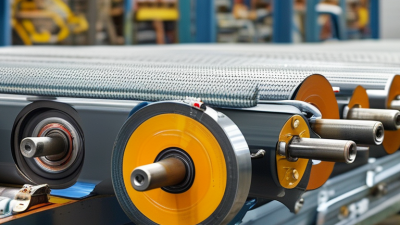
Choosing a roller conveyor begins with the product, not the price. Heavy cartons may need powered rollers, while stable boxes can move through gravity zones. A motorized drive suits continuous flow and controlled speed. Chain-driven rollers handle heavier loads, but they need guarding and regular inspection. Belt-driven systems usually run more quietly.
Consider start-up torque, stopping distance, and emergency access before selecting the drive.
A Flexible Roller Line can support temporary packing areas and uneven layouts. A Flexible Roller Conveyor is often practical for loading docks, especially when space changes frequently. For lighter packages, an Expandable Roller Line may reduce installation work.
A Bendable Roller Assembly Line can follow curved paths, though sharp bends may increase carton resistance. A Non-powered Flexible Roller Line needs no motor, yet operators must control pushing force and slope.
I have found that “no power” does not mean “no planning.” Poor leveling can create jams within minutes.
Tips:
Measure the heaviest carton first. Check roller spacing against the smallest package. Ask for load ratings, speed ranges, and duty-cycle data. Leave room for cleaning and repairs. Test one real carton before ordering a full system. A short trial can expose problems that drawings miss. Also, reconsider powered equipment when workers must frequently reposition the conveyor. Simpler can be safer, but only when the product moves reliably.
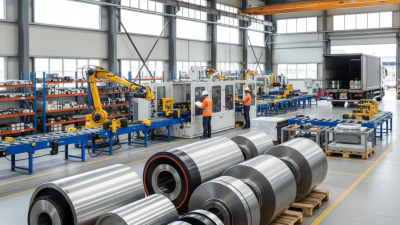
Material selection directly affects conveyor durability. Carbon steel rollers suit dry warehouses and moderate loads. Galvanized steel handles occasional moisture better. Stainless steel is safer for washdown areas, but it costs more. Polymer rollers reduce noise and protect delicate cartons. They may deform under concentrated loads. A heavier frame is not automatically better.
ISO 281:2007 defines L10 bearing life as the point when 90% of identical bearings should survive under stated conditions. This figure helps compare sealed bearings, but real dust, impacts, and poor alignment reduce service life. MHI’s 2024 Annual Industry Report identifies labor pressure as a continuing supply-chain challenge. Therefore, low-maintenance features matter. Choose corrosion-resistant axles, properly sealed bearings, replaceable rollers, and guarded pinch points. Field inspections often find loose fasteners before serious damage occurs.
Tips:
Match roller diameter and spacing to the smallest, heaviest carton. Check the actual load, not the average load. For wet environments, inspect welds and drainage paths. Ask for load ratings, bearing assumptions, and test conditions. A supplier’s chart may look precise, yet your operating cycle can differ. Measure starting frequency, impact points, dust levels, and cleaning methods before choosing. Keep records. They reveal whether the design is truly durable.
Choosing the best roller conveyor for sale requires more than comparing catalog prices. The 2024 MHI Annual Industry Report found that 55% of supply chain professionals planned to increase automation investment. That shift makes supplier capability important. Request motor specifications, load ratings, warranty terms, spare-part availability, and service response times. A low quote may exclude controls, guarding, freight, or commissioning. Ask for a line-item quotation.
Compare installation requirements before signing. A Powered Flexible Roller Line may need electrical drops, controls, and floor anchoring. A Stainless Steel Flexible Roller Line suits washdown areas, but its higher material cost needs operational justification. For heavier cartons, a Carbon Steel Flexible Roller Conveyor can reduce purchase cost.
However, check corrosion exposure and coating quality. A Rubber-coated Flexible Roller Line can improve grip, though rubber may wear faster under abrasive loads. The MarketsandMarkets conveyor systems report projects the market to grow from about 9.8 billion dollars in 2023 to 13.2 billion dollars by 2028. Demand is growing, but specifications still decide value.
Installation labor often becomes the forgotten cost. Confirm aisle width, conveyor height, transfer points, and operator access during a site survey. Maintenance plans should list inspection intervals, bearing replacement methods, belt or roller cleaning, and emergency contacts. OSHA guidance emphasizes guarding moving parts and controlling access near hazardous points. In practice, suppliers sometimes promise easy maintenance without proving it. Request drawings, test videos, and references from similar facilities. I would also budget for early adjustments; even a well-designed conveyor can need alignment after the first production week.
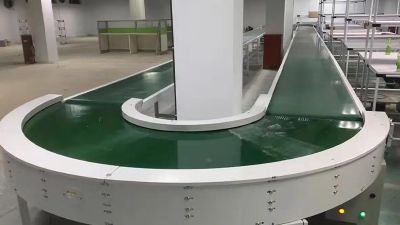
China-made flexible curved belt conveyors are becoming an important solution for factory automation, reflecting industry trends toward faster throughput, compact layouts, modular equipment, and more adaptable material handling. Market research on packaging and automation indicates that manufacturers increasingly need conveyor systems capable of supporting diverse product sizes, frequent line changes, and reliable operation within limited floor space. A curved conveyor can connect different processing stages smoothly while reducing transfer points, manual handling, and unnecessary equipment length.
The recommended conveyor is engineered with a robust curved frame, durable belt, powerful drive unit, guiding and deflection-correction components, and essential safety protection. Its specially designed frame and anti-deflection roller system help maintain stable product movement through turns. By carefully controlling the height difference between the inner and outer roller sides and incorporating a dedicated guide belt, the system balances belt tension, reduces material slipping, and prevents tracking deviation. This design supports consistent performance in automated production, packaging, sorting, and warehouse applications.
As factories pursue higher efficiency and dependable equipment integration, flexible curved conveyors can be customized to match line speed, product characteristics, space requirements, and control systems. As an experienced manufacturer, we provide quality-focused solutions designed for continuous operation, straightforward maintenance, and dependable material handling performance.
A roller conveyor moves cartons, totes, or pallets across parallel rollers. Gravity models use a slight slope. Powered models use motors, belts, or chains. Simple, but not effortless.
Start with the product, not the available floor space. Measure length, width, weight, base condition, and center of gravity. Stable boxes may suit gravity movement. Soft bags can sag between rollers and stop.
Powered rollers suit controlled warehouse flow and frequent starts. They maintain steady movement with less manual pushing. Consider speed, stopping distance, noise, and emergency access. Fast is not always better.
Gravity conveyors work with a slight incline or operator pushing. They suit stable boxes on fixed routes. Poor leveling can create jams within minutes. This is easy to miss.
Measure the smallest package, not the average one. Small cartons need closely spaced rollers. Wide gaps can cause bridging, tipping, or sudden stops. Test the smallest carton directly.
Yes, but heavy pallets need stronger frames, supports, and bearings. Larger roller diameters may improve load stability. Confirm the rated capacity before installation. Do not guess.
Flexible conveyors suit temporary packing areas and changing dock layouts. They can extend, contract, and follow different work zones. Inspect joints regularly. Moving parts still need attention.
Curved conveyors save floor space and change direction smoothly for firm cartons. Long, narrow, or unstable products may twist around bends. Test the actual load before ordering. A short trial helps.
Leave access for cleaning, repairs, and emergency stopping. Guard chain-driven parts where needed. Check dust, damaged packaging, joints, and roller alignment. Quiet starts may matter more than impressive speed.
Yes, test one real carton first. Check friction, noise, stopping, and accumulation pressure. Drawings can miss practical problems. I would not rely on specifications alone.
Choosing the right Roller Conveyor For Sale begins with understanding how roller conveyors move products across a series of rotating rollers, either by gravity or powered drive. The best type depends on your material’s weight, size, shape, surface, and handling requirements. Gravity conveyors may suit lightweight items and simple transfers, while powered models offer controlled movement for heavier loads or continuous operations.
Before purchasing, determine the required conveyor width, length, roller spacing, load capacity, speed, and available floor space. Consider drive options such as motorized rollers, chain-driven systems, or belt-driven designs, along with energy efficiency and control needs. Frame and roller materials, protective finishes, adjustable supports, guards, and safety features can significantly affect durability and performance. Finally, compare total cost rather than purchase price alone, including supplier reliability, customization, delivery, installation, spare parts, warranty, and routine maintenance. A carefully selected conveyor can improve workflow, reduce handling effort, and provide dependable long-term value.