Choosing the right Roller Conveyor Factory is a practical decision, not a branding exercise. The factory must understand your products, working space, loading patterns, and future capacity. A polished website can look convincing. It proves little.
I have seen conveyor projects fail because the rollers were too light, the frame flexed, or the layout ignored manual handling. A reliable supplier should explain load capacity, roller spacing, surface protection, drive options, and maintenance access. It should also provide drawings, test records, material details, and clear installation support. As conveyor systems engineer Mike R. O’Neill says, “A conveyor should fit the process, not force the process to fit the conveyor.” That principle sounds simple. It is often overlooked.
The best Roller Conveyor Factory will match equipment to real operating conditions. Your review may include Straight Non-powered Roller Conveyor for basic transfer lines, Curved Non-powered Roller Conveyor for directional changes, and Inclined Non-powered Roller Conveyor for controlled elevation. Flexible Roller Conveyor can support temporary layouts. Double-layer Roller Conveyor may save floor space, while Loop Roller Conveyor can improve circulation. Frame-type Roller Conveyor suits applications requiring a stronger structural base. These options are not interchangeable.
Ask for evidence from comparable installations. Inspect weld quality, bearing movement, roller alignment, and protective finishes. Discuss noise, cleaning, spare parts, and service response before signing an order. Cost still matters, but the cheapest frame may create expensive downtime. I may be overly cautious here. Even experienced buyers sometimes miss small details, especially discharge height and operator reach. A thoughtful factory will welcome those questions and help refine the design.
Choosing the best roller conveyor factory starts with a clear application brief. Record product weight, dimensions, surface condition, throughput, and operating hours. Note every transfer, accumulation point, incline, and loading method. A carton weighing 40 kilograms needs different rollers than a fragile plastic tray. Small details matter.
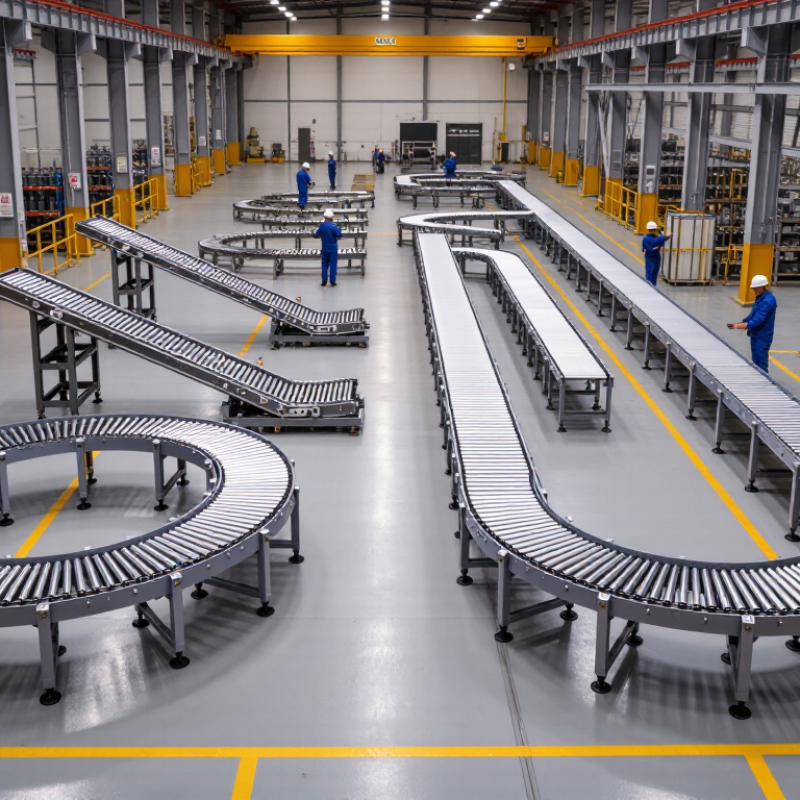
The MHI 2024 Annual Industry Report surveyed more than 2,100 supply-chain professionals. It found that 83% expect significant supply-chain change within five years. Automation decisions therefore need flexibility, not only speed. Choose a Powered roller conveyor for controlled movement and accumulation. Use a Telescopic roller conveyor where loading docks change daily. A Curved roller conveyor can save floor space, but packages must remain stable through the bend. For two-level routing, a Double-layer roller conveyor may reduce building expansion. Heavy loads require a Heavy-duty roller conveyor with verified frame capacity and bearing life.
Ask the factory for calculations, test records, maintenance intervals, and safety documentation. ISO 12100 recommends risk reduction throughout machinery design. Confirm guarding, emergency stops, noise levels, and access for cleaning. Request a sample test using your actual cartons. Do not rely on catalogue speed alone. I have seen fast conveyors fail because the roller pitch was too wide. That mistake was avoidable. Also check ambient temperature, dust, moisture, and washdown exposure. A technically correct design can still be difficult to maintain. Reflect on that before signing.
Define your roller conveyor requirements and application conditions before comparing factories. Conveyor speed, load capacity, roller pitch, and operating environment directly influence the required design and manufacturing capability.
The chart shows practical planning ranges for common conveyor applications. Use the expected load, conveying speed, and operating hours to confirm whether a factory can provide suitable rollers, frames, drive systems, safety protection, and testing support.
Choosing the best roller conveyor factory requires more than comparing prices or viewing attractive product photos. Factory experience should be visible in completed projects, process records, and practical problem-solving. Ask how many years the team has produced Non-powered roller conveyor systems and which industries they have served. Request photos of welds, roller surfaces, frame joints, and installed safety guards. A polished showroom can mislead. Real evidence matters more.
Manufacturing capacity must match your delivery schedule and order volume. Visit the production area if possible. Check whether cutting, welding, coating, assembly, and testing are controlled internally. A reliable factory should explain its monthly output for Gravity roller conveyor and Manual roller line products. It should also identify bottlenecks honestly. Ask about spare rollers, replacement bearings, packaging, and inspection records. Small details often reveal operational discipline.
Technical expertise becomes critical when layouts include Flexible roller conveyor or Curved gravity roller conveyor sections. Engineers should calculate load, roller spacing, frame strength, turning radius, and floor conditions. They should review your carton size and handling method before recommending a structure. Ask for drawings with dimensions, material grades, and tolerance notes. Test samples under realistic loads, not empty cartons. I have seen suitable-looking designs fail when boxes touched the side frames. That experience is easy to overlook, but it should shape every factory evaluation. Reliability grows through transparent communication, documented testing, and a willingness to revise weak assumptions.
| Assessment Dimension | Recommended Benchmark | Evidence to Request | Suggested Weight | Evaluation Result |
|---|---|---|---|---|
| Factory Experience | At least 8 years of continuous roller conveyor manufacturing experience, with documented projects in the target application. | Project references, production records, application photographs, and customer acceptance documents. | 15% | Score 1–5 |
| Manufacturing Capacity | A documented monthly output of approximately 500–2,000 conveyor meters, depending on conveyor type and customization level. | Monthly production plan, equipment list, workforce allocation, and recent delivery records. | 15% | Score 1–5 |
| Load Capacity Design | The supplier should calculate load capacity from product weight, load distribution, roller pitch, frame span, and conveyor length rather than using a generic rating. | Load calculations, roller deflection data, frame drawings, and a written design basis. | 15% | Score 1–5 |
| Technical Engineering | In-house capability for layout design, power calculation, transfer-point design, guarding, controls integration, and safety review. | General arrangement drawings, electrical schematics, calculation sheets, and engineering change records. | 15% | Score 1–5 |
| Material and Component Quality | Material grades, shaft dimensions, bearing specifications, weld quality, and surface treatment should be defined before production. | Material certificates, incoming inspection records, component datasheets, and coating or surface-treatment reports. | 10% | Score 1–5 |
| Testing and Quality Control | Each completed system should undergo dimensional, no-load, loaded, alignment, noise, emergency-stop, and functional testing where applicable. | Inspection and test plans, factory acceptance test forms, calibration records, and nonconformance reports. | 10% | Score 1–5 |
| Safety and Compliance | The design should address pinch points, emergency stops, guarding, access, noise, electrical safety, and the regulations applicable to the installation location. | Risk assessment, safety circuit documentation, guarding drawings, compliance declarations, and installation instructions. | 10% | Score 1–5 |
| Customization Capability | Ability to adapt width, height, roller pitch, speed, frame material, transfers, accumulation zones, controls, and site constraints. | Previous custom drawings, engineering response time, prototype procedure, and change-control process. | 5% | Score 1–5 |
| Delivery and Installation Planning | A clear schedule should separate design approval, material procurement, fabrication, assembly, testing, shipment, installation, and commissioning. | Baseline schedule, capacity reservation, packaging plan, installation method statement, and contingency plan. | 5% | Score 1–5 |
| After-Sales Support | The factory should provide spare-parts identification, maintenance instructions, troubleshooting support, warranty terms, and operator training. | Spare-parts list, preventive-maintenance schedule, response-time commitment, warranty document, and training materials. | 5% | Score 1–5 |
Choosing the best roller conveyor factory requires more than comparing prices. Review the materials used in the frame, rollers, bearings, and protective finishes. Galvanized steel suits dry warehouses and moderate loads. Stainless steel performs better near moisture, frequent cleaning, or corrosive products. Aluminum reduces weight, but it may not suit heavy pallets. Roller surfaces also matter. Rubber, PVC, and polyurethane can improve grip and reduce noise, yet each material behaves differently under heat and abrasion.
Ask the factory to explain its design standards clearly. A reliable supplier should assess load weight, package dimensions, speed, incline, spacing, and emergency access before issuing drawings. Check whether the design follows recognized machinery safety practices, including risk assessment, guarding, safe stopping, and electrical protection.
Request load calculations and test records. Numbers matter. Do not accept vague claims.
Customization should solve a measured problem, not decorate a quotation. Useful options include adjustable legs, side guides, accumulation zones, transfer sections, sensors, washable components, and custom discharge heights. Share real product samples when possible. A box corner may catch on a roller gap that looked acceptable on paper.
One practical lesson is worth noting: even experienced teams can overlook cleaning access beneath the conveyor. Leave room for tools, inspection, and future repairs. Perfect drawings do not guarantee a perfect installation.
Choosing the best roller conveyor factory requires more than comparing prices. Quality control should be visible, documented, and repeatable. Ask to see incoming material records, dimensional inspection sheets, and final assembly checklists. For a Flexible Roller Line, inspect roller spacing, frame alignment, and joint movement. The rollers should turn smoothly without rattling. Small defects matter.
Testing methods reveal how a factory handles real working conditions. Request load tests using weights that match your cartons, not empty demonstrations. A Flexible Roller Conveyor should be tested while extended, folded, and connected to adjoining sections. For an Expandable Roller Line, check repeated expansion cycles and locking points.
A Bendable Roller Assembly Line needs trials around curves, especially with uneven packages. Watch the test yourself. Video evidence helps, but direct observation is stronger. Some factories may avoid difficult samples. That deserves attention.
Product certifications should be verified, not merely printed on a brochure. Request current certificates, testing scopes, certificate numbers, and the issuing laboratory’s contact details. Confirm that the documents cover the actual conveyor model and materials. A Non-powered Flexible Roller Line may require different safety evidence than powered equipment. Ask about traceability from raw steel to finished unit. I have learned that a clean showroom can hide weak records. Factory audits can also miss problems when production is unusually slow. Leave room for doubt, and inspect random units from regular output. Reliable factories welcome uncomfortable questions and provide corrective-action reports when results fall short.
Price is important, but the lowest quotation can hide serious costs. Compare frame materials, roller spacing, motor specifications, controls, packaging, and spare parts. Ask for an itemized quotation. A reliable factory explains every cost clearly. In one warehouse project, a cheaper conveyor required extra supports after installation. The original estimate missed floor conditions. That mistake delayed operations and increased labor costs.
Lead time should include engineering, production, testing, packing, shipping, and installation. Request a written schedule with inspection points. A factory that promises delivery in seven days may be ignoring design approval. Ask whether critical rollers and drive components are available before signing. Short answers are not always good answers. Check production photos, testing records, and references from facilities with similar loads.
Installation support can prevent costly alignment problems. Confirm whether technicians provide on-site guidance, remote instructions, commissioning, and operator training. After-sales service also deserves careful comparison. Review warranty length, response times, replacement-part availability, and troubleshooting procedures. Ask who pays for defective components and how claims are documented. A dependable supplier provides manuals, electrical drawings, maintenance intervals, and practical safety guidance. However, no factory can remove every project risk. Clear communication, accurate site measurements, and realistic expectations still matter.
A reliable roller conveyor factory should prove its reputation, not merely describe it. Ask for references from customers handling similar carton weights, speeds, and working hours. Contact at least two references directly. Ask whether delivery matched the agreed schedule and whether replacement parts arrived quickly.
Read reviews across several platforms, but judge patterns rather than isolated complaints. Repeated comments about damaged frames, poor communication, or unstable rollers deserve attention. During a site audit, inspect welding points, bearing storage, testing records, and packing areas. Look for dust, loose labels, and unfinished units. These details often reveal production discipline. Request performance data for a Powered Flexible Roller Line and check whether the test conditions match your warehouse.
Tips: Bring a checklist and take photographs with permission. Ask workers how rejected parts are recorded. Compare the factory’s answers with customer references. A polished showroom can mislead. I once underestimated after-sales response time because the equipment looked excellent during inspection. That mistake was avoidable. Confirm service contacts, response targets, installation support, and spare-part availability in writing. For specialized applications, examine a Stainless Steel Flexible Roller Line, Carbon Steel Flexible Roller Conveyor, or Rubber-coated Flexible Roller Line under realistic loads. If the factory avoids live demonstrations or gives vague audit answers, pause before signing. Reliability grows from evidence, not confident promises.
Grand View Research estimates that the global conveyor systems market was valued at approximately **USD 9.87 billion in 2023** and is projected to expand steadily through 2030. This growth reflects increasing demand for flexible material handling in food and beverage, pharmaceuticals, electronics, warehousing, and logistics. Modular plastic chain conveyor lines support this trend with durable engineering-plastic chain plates, reliable continuous movement, and layouts that can combine straight, turning, and climbing sections.
PMMI industry analysis highlights automation, labor efficiency, and faster changeovers as major priorities for manufacturers, while the MHI Annual Industry Report indicates that supply-chain companies are increasing investment in robotics, automation, and connected technologies. Plastic chain conveyors can integrate with filling, packaging, inspection, sorting, and palletizing equipment, helping create smooth process connections and finished-product transfer. Their modular construction also allows convenient maintenance, expansion, and reconfiguration as production requirements change.
Supplied by experienced factories in China, these conveyor systems can be tailored for narrow workshops, irregular sites, and multi-path conveying applications. Adjustable speeds, hygienic materials, and compatible control interfaces make them suitable for demanding production environments. For companies seeking dependable and efficient conveying performance, a China-based manufacturing partner can provide customized plastic chain conveyor lines aligned with specific capacity, routing, and automation requirements.
Record product weight, dimensions, surface condition, throughput, and operating hours. Note transfers, accumulation points, inclines, and loading methods. Details matter. A 40-kilogram carton may need stronger rollers than a fragile plastic tray.
Powered conveyors provide controlled movement and accumulation. Telescopic conveyors suit loading docks that change frequently. Curved conveyors save floor space, but packages need stable movement. Two-level conveyors may reduce building expansion.
Request verified frame capacity and bearing-life calculations. Confirm roller spacing, frame strength, and floor conditions. Do not judge capacity from appearance alone. That assumption can fail.
Ask for a sample test using your actual cartons. Test realistic loads, not empty boxes. Check turning areas, side-frame clearance, and transfer points. I would recheck this, even after approval.
Request completed-project evidence and practical problem-solving examples. Inspect welds, roller surfaces, frame joints, and safety guards. Ask about experience with similar loads and operating environments. A polished showroom proves little.
Ask whether cutting, welding, coating, assembly, and testing are controlled internally. Request monthly output figures and known production bottlenecks. Also check spare rollers, replacement bearings, packaging, and inspection records. Small details reveal consistency.
Compare frame materials, roller spacing, motors, controls, packaging, and spare parts. Request every cost in writing. Check whether floor supports or site adjustments are included. Cheap equipment may become expensive later.
The schedule should include engineering, production, testing, packing, shipping, and installation. Ask for inspection points and confirmation of critical component availability. Confirm commissioning, remote guidance, operator training, and alignment support. Seven days sounds attractive. It may be unrealistic.
Confirm warranty duration, response times, replacement-part availability, and claim procedures. Request manuals, electrical drawings, maintenance intervals, and safety guidance. Also clarify responsibility for defective components. Clear records reduce confusion, though they cannot remove every project risk.
Choosing the right Roller Conveyor Factory starts with clearly defining your material-handling requirements, including load type, product dimensions, conveyor speed, layout, operating environment, and expected workload. You should then evaluate the factory’s industry experience, production capacity, engineering expertise, and ability to provide practical, customized solutions. Pay close attention to the materials used, design standards, component quality, and available configuration options to ensure the conveyor will perform reliably in your application.
A dependable factory should also demonstrate well-defined quality control procedures, thorough testing methods, and relevant product certifications. When comparing suppliers, consider the total value rather than price alone, including lead times, installation guidance, maintenance support, spare parts availability, and after-sales service. Finally, verify the factory’s reputation by reviewing customer references, independent feedback, completed projects, and, when possible, conducting a site audit. This careful evaluation will help you select a reliable partner and reduce long-term operational risks.