Leave Your Message
0%

Picking the right custom conveyor belt supplier is super important if you want your operations to run smoothly. Industry pro John Smith from Belt Solutions puts it simply: "The quality of a conveyor belt can really make or break your production line." That kind of hits the point home, right? It just shows how crucial it is to find a supplier you can trust—someone who actually gets your specific needs.

Getting your supplier right can seriously boost your productivity. But if you pick the wrong one? Well, that might mean a lot of unnecessary downtime and headaches. Honestly, figuring out all the details in the conveyor belt world can feel overwhelming at times. Things like material, design, and how much customization you want all matter a lot when you're making a choice.

And let’s be honest—not all suppliers are on the same page. Some might be more focused on saving a few bucks, which could end up hurting your operations in the long run. Thinking back on past experiences or lessons learned about conveyor choices can really help. Do your homework, ask questions, and have clear chats with your potential suppliers—that’s key to making a good call.
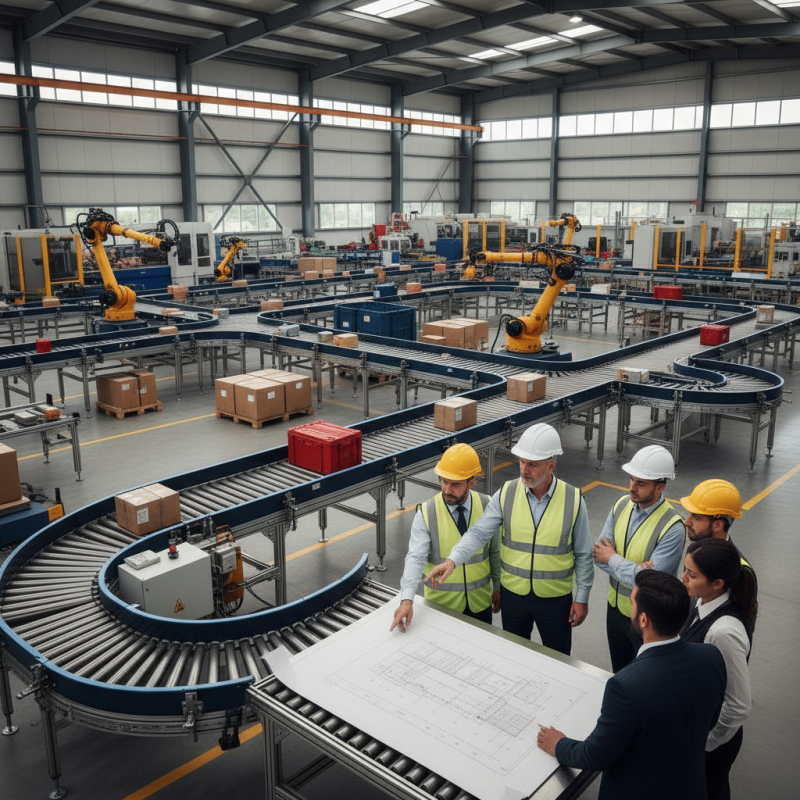
How to Choose the Best Custom China Conveyer Belt Suppliers for Your Needs?

Understanding the Role of Custom China Conveyor Belts in Industrial Processes

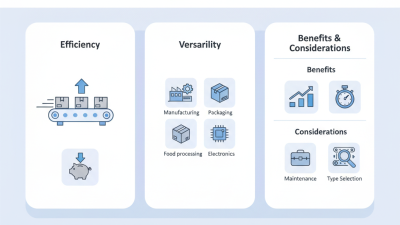
Custom China conveyor belts play a crucial role in modern industrial processes. They improve efficiency and streamline operations in various sectors. A report by the International Conveyor System Association states that conveyor systems can boost productivity by up to 50%. This data indicates how essential these systems are in factories and warehouses.

When selecting a custom China conveyor belt, consider the materials and design. Certain materials offer better durability and resistance to wear. Additionally, an improperly designed system can lead to frequent breakdowns. It’s vital to assess your needs carefully. Many businesses overlook potential compatibility issues with existing machinery.

Moreover, understanding the operating environment is critical. Whether in a humid area or one exposed to chemicals, the right conveyor belt can enhance performance. Some industries report a 30% reduction in maintenance costs with the right choice. Delving into suppliers' expertise is key. Not all suppliers offer the same quality or service. Reliable suppliers often provide insights into the latest innovations in belt conveyor design.

Custom China Conveyor Belt Supplier Comparison

Identifying Your Specific Needs for Conveyor Belts in Your Business

How to Choose the Best Custom China Conveyer Belt Suppliers for Your Needs?

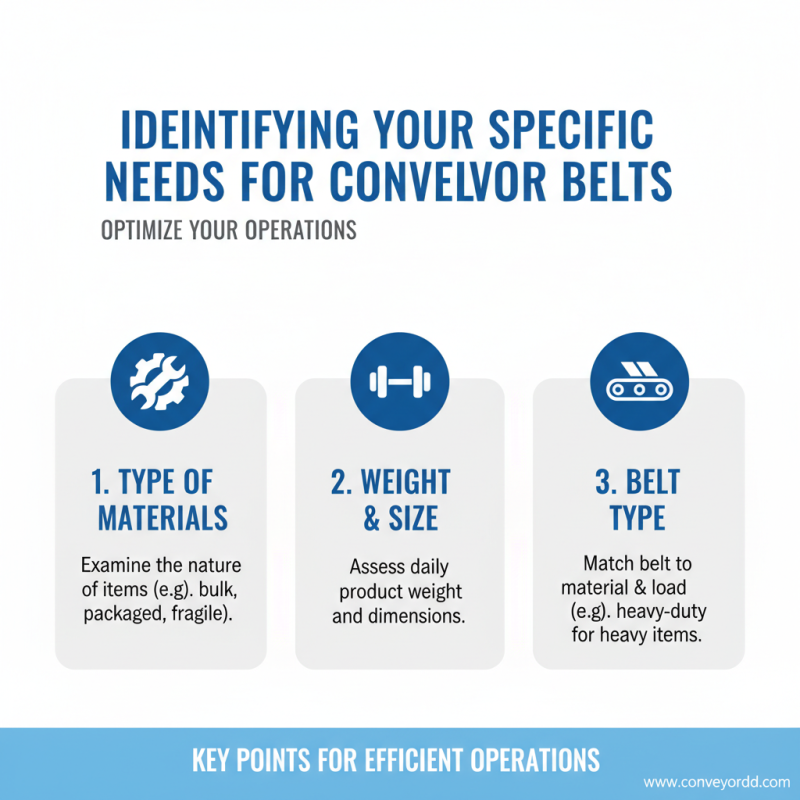
Identifying your specific needs for conveyor belts is crucial in optimizing your operations. Start by examining the type of materials your business handles. Different materials require different types of Belt Conveyors. For example, if you transport heavy items, a heavy-duty belt is essential. Look closely at the weight and size of the products you handle daily.

Next, consider the operational environment. Factors like temperature, humidity, and dust levels play a significant role. If your operations take place in extreme conditions, you may need specialized Belt Conveyors. Additionally, think about how to achieve efficiency. Will you need adjustable speeds? Can your belts accommodate turning corners?

Reflect on your current system’s limitations. Are there frequent breakdowns? Is maintenance often required? Understanding these pain points helps you make better choices. Selecting the right supplier means finding someone who understands these nuances. They can guide you toward a solution tailored to your needs.

Researching Potential Suppliers: Key Factors to Consider

How to Choose the Best Custom China Conveyer Belt Suppliers for Your Needs?

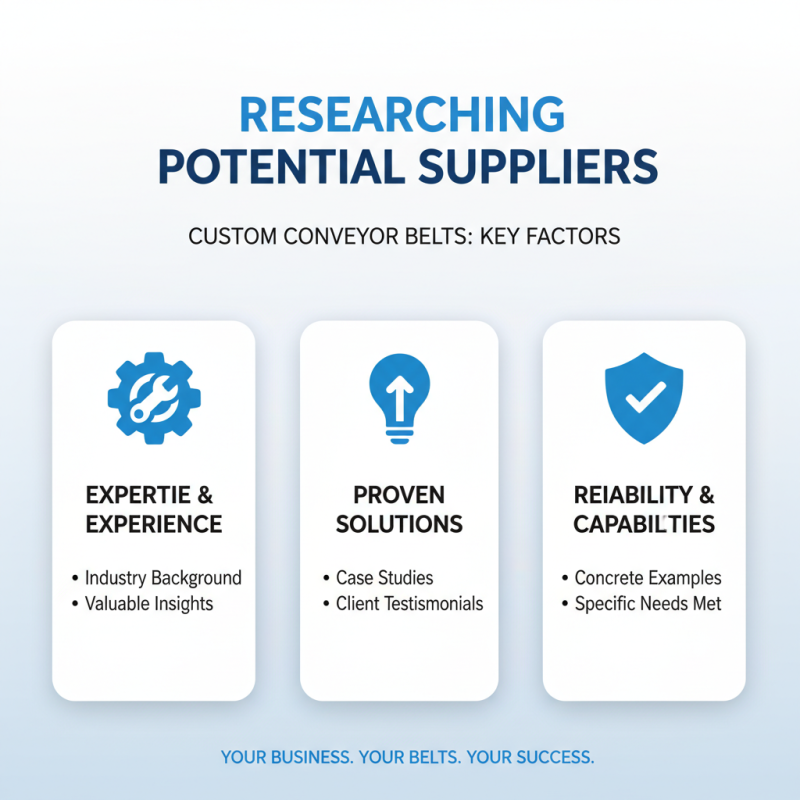
When researching potential suppliers for custom conveyor belts, it is crucial to evaluate their expertise and experience. A supplier with a strong background in the industry can offer valuable insights and solutions that cater to your specific needs. Look for companies that showcase case studies or client testimonials. Concrete examples speak volumes about their reliability and capabilities.

Quality control is another essential factor. Ensure that the supplier adheres to stringent quality standards. Ask about their manufacturing processes and material sourcing. For instance, the use of durable materials in Grip Conveyor Belt production can significantly impact its performance and lifespan. You want a supplier committed to excellence, even if it means facing challenges in meeting those standards.

Communication plays a pivotal role during your selection process. A responsive supplier is often a more reliable one. Pay attention to how quickly they answer your inquiries and provide detailed information. If their communication feels lacking or unclear, it may be a sign to reconsider. Transparency in pricing and processes fosters trust, which is crucial for any long-term partnership.

Evaluating the Quality and Durability of Conveyor Belt Materials

When choosing conveyor belt materials, quality and durability are crucial factors. A high-quality belt can significantly impact efficiency in operations. Look for materials that resist wear and maintain their integrity over time. Common materials include PVC, rubber, and polyurethane. Each offers distinct advantages depending on the application.

Consider the environment where the conveyor belt will operate. For example, belts exposed to severe weather or chemicals must be specifically designed to withstand these conditions. Testing methods can provide insights into the belt's performance under stress. Evaluate the supplier's experience in producing durable belts. A seasoned manufacturer will have a history of meeting diverse industry needs.

Don’t overlook the importance of customer reviews and testimonials. These can provide valuable feedback on a supplier's reliability. It’s essential to remain cautious when interpreting these reviews, as experiences can vary. Engaging with past customers can illuminate issues a supplier might not openly discuss. Ultimately, ensuring the belt's durability and quality is a process that requires careful evaluation and consideration.

Comparing Pricing and Cost Structures Among Different Suppliers

When selecting the right custom conveyor belt supplier, pricing is a fundamental aspect. Various suppliers present different cost structures, impacting overall project budgets. According to recent industry reports, over 40% of companies re-evaluate their conveyor belt suppliers based on pricing alone. Differentiating among these suppliers can uncover both competitive pricing and performance-related value.

One key point to consider is that low pricing may not always equate to quality. An influx of budget suppliers in the market has often led to a compromise on materials, which could result in increased maintenance costs over time. For example, a study indicated that 30% of companies faced additional downtime due to inadequate belt performance, directly correlated to lower-cost purchases. Analyzing long-term costs rather than short-term savings can prevent financial setbacks.

Moreover, it’s essential to evaluate the total costs, including shipping, installation, and potential after-sales support. Some suppliers might present attractive upfront costs but lack critical support services. An estimated 35% of businesses reported dissatisfaction with their supplier's support, highlighting an area that deserves scrutiny. Taking the time to thoroughly compare costs and their implications can lead to a more informed and sustainable choice.

How to Choose the Best Custom China Conveyer Belt Suppliers for Your Needs?

Supplier Type Pricing Structure Minimum Order Quantity Lead Time Payment Terms
OEM Supplier Volume-based pricing, starting at $1.50/unit 500 units 4-6 weeks 30% upfront, 70% before shipment
Wholesale Supplier Fixed pricing, $2.00/unit 1000 units 3-4 weeks Full payment on order
Custom Fabricator Variable pricing, starting at $2.50/unit 300 units 6-8 weeks 50% upfront, remainder on delivery

Assessing Supplier Reputation and Customer Service Excellence

When selecting custom China conveyor belt suppliers, reputation and customer service are crucial. A recent industry report shows that 75% of businesses value a supplier's track record before making a purchase. This indicates that trustworthiness and reliability are key metrics in supplier selection.

Customer service excellence significantly impacts partnerships. Suppliers should be responsive and attentive to clients. According to a survey, 65% of companies cited poor communication as a primary reason for dissatisfaction. This is particularly true in the conveyor belt segment, where timely support can prevent costly production delays. A supplier offering fast response times demonstrates commitment and builds trust.

Choosing a supplier for a Blue Conveyor Belt requires careful consideration. Research potential suppliers thoroughly. Read reviews and request references. A pattern of positive feedback can indicate steadfast service. However, even reputable suppliers may have occasional issues. It’s wise to reflect on how they handle setbacks. This can be revealing. A responsive supplier, even when problems arise, often remains a more reliable choice.

Ensuring Compliance with Industry Standards and Certifications

Choosing the right custom conveyor belt supplier is crucial for your operations. One key aspect to consider is the compliance with industry standards and certifications. Suppliers that adhere to recognized standards demonstrate a commitment to quality and safety. This is vital for ensuring that your belts will perform reliably over time.


Tips: Always check for certifications specific to your industry. Look for ISO or ANSI certifications as indicators of quality. Suppliers who invest time in maintaining these credentials often prioritize customer satisfaction. Their products are less likely to encounter issues.


Evaluating the supplier’s track record in compliance can reveal much about their reliability. Research can yield insights into their adherence to regulations. Inconsistent compliance may suggest underlying problems in their production processes. Engaging with other businesses in your sector can help gauge a supplier’s reputation.


Tips: Network with peers. Ask about their experiences with different suppliers. Direct feedback can highlight red flags or recommend trustworthy partners. Remember, choosing a supplier is not just about cost; it’s about building a relationship focused on quality and reliability.

Enhancing Efficiency in Automation Lines: Insights from Industry Reports on Curve Belt Conveyor Systems

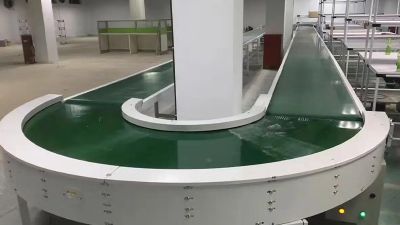
The enhancement of efficiency in automation lines significantly relies on the integration of advanced technologies, with curve belt conveyor systems emerging as a pivotal component. These systems are engineered to facilitate smooth transitions when transporting materials across varying angles. As highlighted in several industry reports, the implementation of curved conveyor systems can lead to efficiency improvements of up to 30% in material handling processes, primarily due to their ability to maintain consistent flow and reduce the need for multiple conveyor sections.

The design of a curve conveyor encompasses a complex interplay of components, including a specialized curved frame, driving devices, and deflection correction systems. The critical function of this design is achieved through a carefully calibrated height difference between the inner and outer roller sides, paired with a guide belt that stabilizes the material during transit. This innovative mechanism not only minimizes the risk of material slippage but also ensures that the conveyor belt maintains its integrity and performance during directional changes. Recent data suggests that businesses adopting these systems report a significant decrease in maintenance costs by approximately 20%, stemming from reduced wear and tear on equipment.

Furthermore, industry insights indicate that the precision engineering of curve conveyors plays an essential role in automating complex workflows. With the capability to seamlessly merge with other automated systems, these conveyors enhance overall operational effectiveness. Companies utilizing curve belt conveyor systems are well-positioned to adapt to the growing demands of production lines, reinforcing their competitive edge in a rapidly evolving market landscape.

FAQS

: How can I identify my specific needs for conveyor belts?

: Examine the materials your business handles. Consider weight, size, and handling requirements.

What environmental factors should I consider for conveyor belts?

Look at temperature, humidity, and dust levels. Extreme conditions may require specialized belts.

How do I know if a conveyor belt is durable?

Evaluate the materials used. PVC, rubber, and polyurethane offer different durability levels.

Why is it important to check a supplier's certifications?

Certifications indicate adherence to industry standards, ensuring product quality and safety.

How can customer reviews help in choosing a supplier?

Reviews provide insights into reliability but can vary. Engage with past customers for more honest feedback.

What should I reflect on about my current conveyor belt system?

Assess limitations like frequent breakdowns and maintenance needs. Understanding pain points helps guide better choices.

How can I assess a supplier’s reliability?

Research their compliance history and engage with other businesses. Networking can reveal their reputation.

What role does testing play in evaluating conveyor belts?

Testing indicates performance under stress. It helps to understand wear resistance and suitability for your needs.

Can conveyor belts turn corners?

Consider this feature based on your operational layout. Adjustable speeds may also be beneficial.

Should I prioritize cost over quality when selecting a supplier?

Quality and reliability are crucial. Building a solid relationship with suppliers is more valuable than just low costs.

Conclusion

Choosing the right custom China conveyor belt supplier is crucial for optimizing industrial processes. Understanding the specific needs of your business is the first step in this selection. Factors such as the quality and durability of the conveyor belt materials, pricing structures, and the supplier's reputation and customer service should be carefully evaluated. It’s also essential to ensure that the suppliers comply with industry standards and certifications to guarantee reliability and performance.

By researching and comparing potential suppliers, businesses can make informed decisions that align with their operational requirements. A well-chosen conveyor belt can significantly enhance productivity, making the selection process a key element in the success of manufacturing and logistics operations.


Liam

Liam

Liam is a skilled marketing professional at a leading automation equipment enterprise, where he plays a pivotal role in communicating the value of the company's integrated services. With a deep understanding of industrial automation, he expertly covers topics related to professional design,......
Previous Why Choose a Conveyor Machine for Your Business Needs?