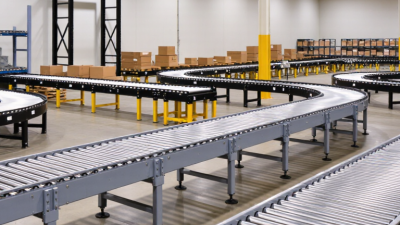
Picking out a roller conveyor for sale in China? Honestly, it takes more than just lining up supplier quotes. You can have a line that glides cartons along perfectly at the factory gate—then the moment package sizes change, it jams up out of nowhere. And the price? That’s shaped by a bunch of things: roller diameter, conveyor width, frame material, load rating, total length, drive type, even how much installation you’re covering. The little design choices end up mattering a lot more than you'd think.
So we've got this report from MHI — their 2024 Annual Industry Report — and it says about 55% of supply-chain folks are planning to put more money into tech. That's a pretty clear sign that automation is still hot, but here's the thing: that doesn't tell you what a conveyor actually costs. You really have to get a quote based on your specific setup — the layout, how much you need to move, and what conditions it'll operate in. Don't just accept any number. Ask to see the bill of materials, check the warranty terms, and get the shipping details. One price tag isn't the whole story.
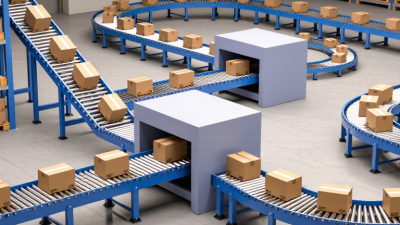
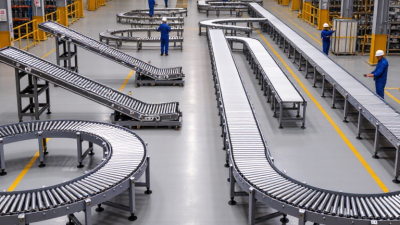
So, when you're picking a basic gravity line, you'll probably want to compare Straight Non-powered Roller Conveyors with the Curved ones. Now, for Inclined Non-powered Roller Conveyors, it's a bit trickier—you've gotta think about the slope, the load, and whether you need some kind of braking system. If you're dealing with temporary packing areas, a Flexible Roller Conveyor could be a lifesaver—super easy to move around. And if floor space is tight, you might try a Double-layer Roller Conveyor to make use of vertical space, which is pretty clever. Oh, and Loop Roller Conveyor setups can really cut down on how far stuff has to travel, while the Frame-type ones are usually a safe bet for simple installations. So, look – these are just starting points, not like set-in-stone recommendations or anything. If it makes sense, definitely ask for drawings and sample load tests – those really help. And honestly, let's be real about the uncertainty here: without actual dimensions, carton weights, and where the shipment's headed, any estimate we give is basically a rough guess. The best price? That's the one tied to a clear specification, not just whoever throws out the lowest number.
What Is a Roller Conveyor and How Does It Work?
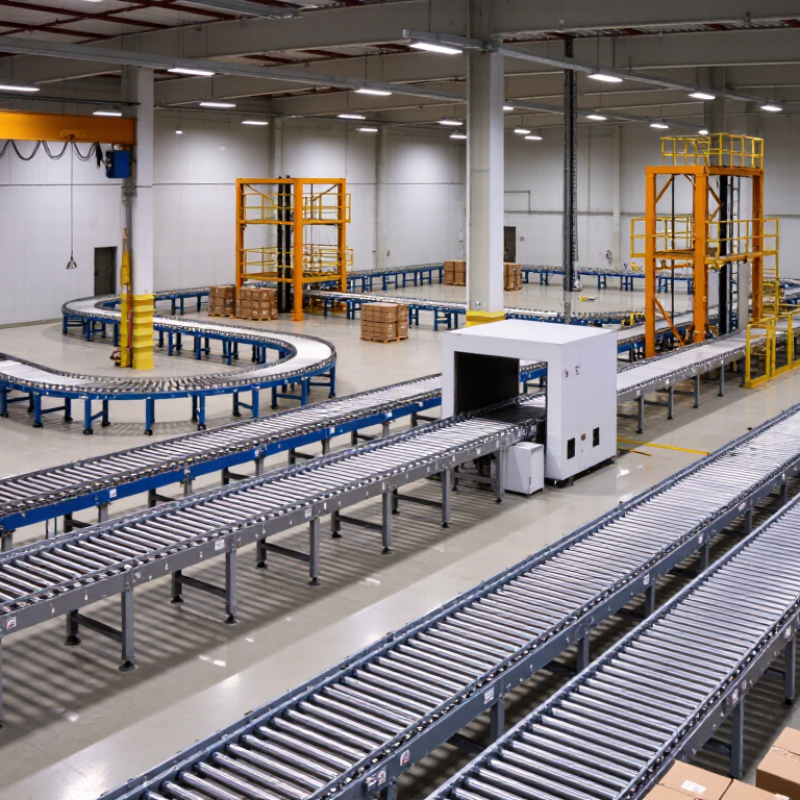
A roller conveyor carries cartons or components on a row of rotating cylinders. The rollers support the load while reducing sliding friction. Gravity models use a slight incline; powered systems use motors or belts to turn the rollers. Operators can control speed and spacing, but poor alignment may cause cartons to drift. It happens more often than expected.
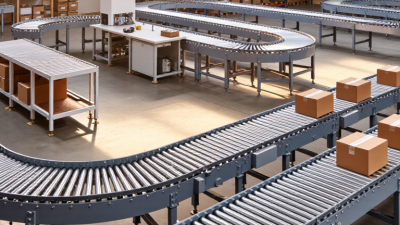
A Powered roller conveyor suits controlled movement between workstations. A Telescopic roller conveyor extends toward a truck or loading bay, while a Curved roller conveyor guides packages around corners. A Double-layer roller conveyor uses vertical space for two product paths. A Heavy-duty roller conveyor has stronger rollers and frames for heavier loads. The 2024 MHI Annual Industry Report found that 55% of respondents planned to increase supply-chain technology investment, reflecting growing interest in automation. Conveyor cost still depends on dimensions, load capacity, controls, and installation.
Tips: Measure the heaviest carton, its base dimensions, and the smallest item before choosing roller spacing. Check the incline with real packages; a design that works on paper may let light cartons stall or heavy ones accelerate too quickly.
China’s roller conveyor options include gravity, powered, accumulation, flexible, and curved systems.
Gravity roller conveyors use a slight slope or manual pushing to move cartons. They suit packing benches and short transfer lines, especially where loads have flat, firm bases. Simple construction can reduce purchase and maintenance costs, but operators must control speed on sloped sections.
Powered roller conveyors use motors to move goods at a steady pace. They are common in sorting areas and production lines, where cartons need consistent spacing. Accumulation models let items pause without stopping the entire line. Flexible conveyors extend or bend around temporary work zones; their wheeled frames make repositioning easier. Curved roller sections guide packages around corners, while transfer units help redirect them between conveyor lanes.
Small details matter. Roller diameter, spacing, frame width, and load capacity should match the actual packages, not just a catalogue example.
For a China-based purchase, compare the conveyor type with your layout, throughput, and maintenance skills. Ask suppliers for load ratings, motor specifications, and drawings before requesting a final price. A lightweight carton line may need only gravity rollers, while heavier goods often require powered sections and stronger frames.
One detail is easy to overlook: irregular or soft-bottomed packages may not travel smoothly on standard rollers. Test representative loads if possible; the cheapest configuration is not always the easiest to operate.
A roller conveyor’s suitability starts with the load, not the price tag. Record each item’s length, width, weight, base shape, and center of gravity. For stable travel, keep at least three rollers beneath the shortest load. A 600 mm carton, for example, may need roller spacing near 200 mm or less. The exact choice depends on carton stiffness and how it is loaded. Small details matter.
Next, match capacity and operating conditions. Check the maximum load per metre, peak throughput, conveyor speed, and whether products must stop or accumulate. Roller diameter and frame width affect support; motor and control choices affect powered systems. Dust, moisture, temperature, and washdown needs can change material and bearing requirements. MHI’s 2024 Annual Industry Report found that 55% of surveyed companies planned to increase supply-chain technology investment. That trend makes integration worth checking: confirm conveyor controls can communicate with upstream and downstream equipment. Ask suppliers for load and throughput calculations, not just a catalogue rating. A line that works with clean, rigid cartons may behave differently with soft bags or uneven cases. I have seen specifications revised after real packages exposed small gaps in support; testing representative loads before ordering can prevent that costly surprise.
The figures below are indicative budget ranges for standard roller conveyor sections supplied from China. Actual quotations depend on dimensions, materials, drive systems, order quantity, and customization.
| Conveyor Type | Typical Specifications | Suitable Applications | Indicative Price (USD) | Key Suitability Considerations |
|---|---|---|---|---|
| Light-duty gravity roller conveyor | Roller diameter: 25–38 mm; usable width: 300–600 mm; load: about 20–50 kg per meter; typical section length: 1–2 m | Cartons, totes, packing stations, and short-distance manual transfer | Approximately $40–$120 per meter | Best for flat-bottomed loads and gentle slopes; check package weight, base contact, and required flow direction. |
| Medium-duty gravity roller conveyor | Roller diameter: 38–50 mm; usable width: 400–800 mm; load: about 50–150 kg per meter; steel rollers and frame commonly available | Distribution areas, assembly lines, and handling of heavier cartons or bins | Approximately $80–$220 per meter | Confirm the maximum load on each roller, frame spacing, and whether the product can roll without tipping or snagging. |
| Heavy-duty gravity roller conveyor | Roller diameter: 50–76 mm; usable width: 600–1,200 mm; load: about 150–500 kg per meter, depending on design | Pallets, drums, dense industrial loads, and robust transfer points | Approximately $150–$450 per meter | Specify the load per roller and per section, support spacing, roller wall thickness, and impact conditions. |
| Powered roller conveyor | Roller diameter: typically 38–76 mm; usable width: 400–1,200 mm; motorized drive; speed often around 5–30 m/min | Automated conveying, longer routes, controlled product movement, and level transfers | Approximately $250–$900 per meter | Price and performance depend on motor power, drive method, speed control, accumulation needs, and electrical requirements. |
| Curved roller conveyor section | Typical turn angle: 30°–180°; inside radius commonly about 600–1,500 mm; gravity or powered options | Changing direction within a line while keeping cartons or containers supported | Approximately $250–$1,200 per section | Product dimensions, center of gravity, minimum turning radius, and side guides determine whether the load will track reliably. |
| Specification | What to Provide | Why It Matters |
|---|---|---|
| Load and load distribution | Maximum item weight, load per meter, and whether loads are evenly or unevenly distributed | Determines roller, shaft, bearing, frame, and support strength. Concentrated loads may require a stronger design than the same total weight spread across a section. |
| Product size and base | Length, width, height, base shape, and the smallest item to be conveyed | The conveyor width and roller spacing must support the product throughout its travel. Irregular or soft-bottomed items may need closer rollers or a different conveyor type. |
| Roller diameter, pitch, and material | Roller diameter, center-to-center spacing, tube material, wall thickness, and surface finish | These affect load capacity, rolling resistance, durability, noise, corrosion resistance, and the minimum product length that can be conveyed reliably. |
| Conveyor dimensions and layout | Overall length, usable width, elevation, incline, curves, and transfer points | Longer sections, non-standard widths, curves, and elevation changes generally increase material, fabrication, and installation requirements. |
| Drive and operating speed | Gravity or powered operation, target speed, duty cycle, accumulation, and start/stop frequency | Powered systems add motors, controls, wiring, and safety components. Required throughput and accumulation behavior influence the drive configuration. |
| Environment and compliance | Indoor or outdoor use, temperature, moisture, washdown, dust, and applicable electrical or safety requirements | Environmental conditions can require stainless steel, protective finishes, sealed components, guards, or specific electrical equipment, increasing cost. |
Price note: USD ranges are indicative budget estimates, not supplier quotations. They generally exclude international freight, import duties, taxes, installation, and commissioning. Confirm the load rating and final price against a detailed layout and application specification.
Roller conveyor prices depend on more than the conveyor’s length. A short, light-duty Non-powered roller conveyor may cost less than a long line built for heavy cartons. Load weight matters. So do package dimensions and roller spacing. A Gravity roller conveyor usually needs a slight slope, while level layouts may require careful manual handling.
Frame material, roller diameter, and bearing quality also affect cost and service life. A Manual roller line with a reinforced frame can suit repeated use, but it may add upfront expense. A Flexible roller conveyor often costs more because its expandable frame and adjustable legs add components. Curved sections need close attention, too. A Curved gravity roller conveyor may require custom geometry to keep cartons moving smoothly. These details are easy to underestimate; comparing quotes without matching specifications can give a misleading price picture.
Tips: Ask suppliers to price the same length, load capacity, roller spacing, and frame material. Include delivery and installation in the comparison. Measure your largest carton first. Small omissions can change the quote.
A China-made roller conveyor has no single market price. For early budgeting, a basic non-powered straight section may fall around US$80–250 per metre; flexible gravity units often range from US$250–800 per metre. These are indicative estimates, not verified supplier quotations. Steel grade, roller diameter, load capacity, leg height, and order quantity can shift the price sharply.
Not a landed price. Freight, export packing, installation, and spare rollers may be excluded.
The MHI 2024 Annual Industry Report found that 55% of surveyed supply-chain professionals planned to invest more than US$1 million in supply-chain technology over the following two years. That figure describes investment plans, not conveyor prices, but it shows why buyers should compare the full system cost.
Ask for a drawing and itemized quote. Specify carton weight, product width, line length, turns, and daily throughput. A Flexible Roller Line or Flexible Roller Conveyor may cost more per metre than a fixed gravity section because it needs adjustable supports and articulated joints.
An Expandable Roller Line, Bendable Roller Assembly Line, and Non-powered Flexible Roller Line should also be priced against load and bend radius. Small details matter. I would not compare quotes until both suppliers list the same specifications; that step is easy to overlook.
When comparing China roller conveyor suppliers, request quotes against one shared specification. MHI and Deloitte’s 2024 Annual Industry Report found that 55% of surveyed supply-chain leaders increased technology investment. That signals growing interest, but it does not prove a conveyor is suitable or fairly priced. Ask each supplier to quote the same line length, usable width, roller diameter, load per roller, frame material, working height, and delivery terms. A price without these details is hard to compare.
Match the design to the actual job. A Powered Flexible Roller Line may suit powered transfer, while a Stainless Steel Flexible Roller Line can be considered for environments needing corrosion resistance. For heavier loads, compare a Carbon Steel Flexible Roller Conveyor; for fragile cartons, ask whether a Rubber-coated Flexible Roller Line is appropriate. Request drawings, rated load data, motor details, lead time, warranty, spare-parts pricing, and installation costs. Check whether quoted capacity assumes evenly distributed loads. Real cartons are rarely perfect.
Tips: Send photos and carton dimensions with the inquiry. State peak throughput and the heaviest package. Ask suppliers to separate equipment, freight, and optional costs. Compare what is included, not just the total. And leave room for doubt: a low quote may exclude useful components.
Indicative equipment budget ranges by conveyor type (USD per meter). Actual supplier quotes depend on specifications and order size.
Gravity roller conveyors generally cost less than powered or accumulation systems. Compare quotes on roller dimensions, frame material, load capacity, drive and controls, quantity, packaging, and delivery terms. The ranges are for planning only and exclude installation, freight, duties, and taxes.
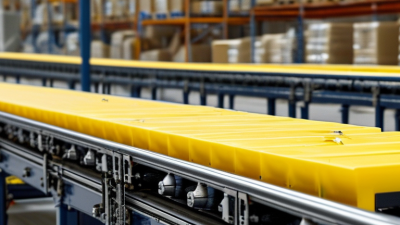
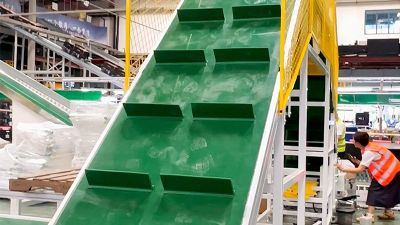
Custom inclined belt conveyors provide a practical way to move materials between workstations at different heights. Designed for continuous handling, they can support production and transfer tasks in warehousing and logistics, food and pharmaceutical processing, and hardware manufacturing. Factory-built systems from China suppliers can be configured to suit different workshop layouts, transfer heights, and operating flows, helping connect stages of a process without unnecessary manual movement.
A suitable conveyor may combine horizontal and inclined sections to guide items smoothly from one point to another. Anti-slip belts help maintain traction on the incline, while side guards reduce the chance of materials shifting off the belt during transport. Belt dimensions, incline, and conveyor length can be selected according to the items handled and the space available. With these options, manufacturers can integrate material lifting and process connections into their facilities while maintaining a steady, organized flow.
It moves cartons or components across rotating cylinders. The rollers support the load and reduce sliding friction. Simple, but alignment matters.
Gravity models use a slight slope or manual pushing. Powered models use motors or belts to turn rollers at a controlled pace. Test the slope with real cartons.
Common options include gravity, powered, accumulation, flexible, and curved systems. Transfer units can redirect goods between lanes. Each type suits a different layout.
It lets items pause without stopping the entire line. This can help near workstations where cartons wait briefly. Spacing still needs attention.
Check the base of your smallest package and the gaps between rollers. Soft or irregular bottoms may snag or stall. Catalogue examples can be misleading.
Length, load capacity, frame material, roller diameter, and bearing quality all affect cost. Curves and flexible frames may add components. Compare matching specifications.
Measure the heaviest carton, its base dimensions, and the smallest item. Include delivery and installation when comparing prices. Small omissions matter.
Run representative packages across the planned incline and spacing. Light cartons may stall, while heavy ones can speed up too much. Paper plans are not enough.
Request load ratings, motor specifications, layout drawings, and frame details. Confirm the conveyor suits your throughput and maintenance skills. I would verify the figures twice.
This guide explains what a roller conveyor is, how rollers move goods along a production or handling line, and which types are commonly available from China. Buyers can compare gravity and powered systems, as well as straight, curved, and flexible designs, according to their workflow. It also outlines the specifications that influence suitability, including conveyor length and width, roller material and diameter, load capacity, drive method, operating environment, and connection requirements.
The cost of a Roller Conveyor For Sale depends on these specifications, the degree of customization, materials, quantity, and shipping arrangements. Rather than relying on a single typical price, buyers should define their application and request itemized quotes. Comparing suppliers on technical compliance, build details, lead time, warranty terms, and after-sales support can help clarify differences between offers. Providing a clear layout, product dimensions, expected throughput, and load information makes it easier to receive accurate, comparable quotations.